
Story
China's Bullfrog Industry Faces Antibiotic Scrutiny; Shanghai Market Remains Resilient
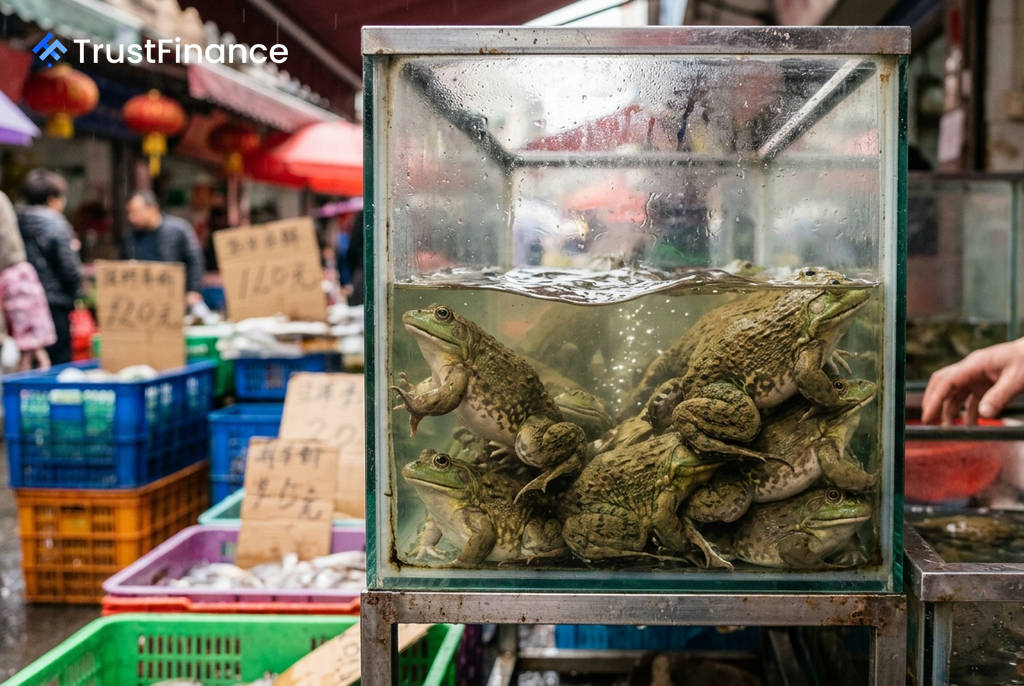
A recent investigation has cast a spotlight on the widespread use of excess antibiotics and banned veterinary drugs in China's booming bullfrog industry, prompting swift regulatory action and the removal of products from major e-commerce platforms. Despite the public outcry, on-the-ground reports from Shanghai suggest that consumer appetite at restaurants and retail outlets has seen little immediate impact.
Scandal Triggers Official Response
The issue gained prominence after a report by The Paper exposed antibiotic residue violations in bullfrog products from multiple regions. In response, market supervision authorities in key production areas, including Shantou and Chaozhou in Guangdong province and Zhangzhou in Fujian province, have reportedly sealed non-compliant products, initiated further testing, and begun tracing the supply chain to identify responsible farms and processors. E-commerce platforms such as Douyin and Pinduoduo have also delisted the affected items, according to a follow-up report by *Time Weekly*.
The bullfrog industry has expanded rapidly over the past decade. A report from the 4th Bullfrog Industry Green Development Conference estimated the sector's total value at approximately 48 billion yuan (approx. $6.6 billion), with annual production reaching 600,000 tons in 2025 to supply over 40,000 specialty restaurants.
Shanghai Consumer Demand Holds Firm
Despite the food safety concerns, field visits by *Time Weekly* in Shanghai found business as usual in many establishments. While some vendors at a major wholesale market noted slow sales, they attributed it to low baseline demand rather than the recent news. Major supermarket chains like Hema and Yonghui Superstores also reported no significant fluctuations in sales of bullfrog products, stating they are cooperating with regulators and monitoring their supplies.
Notably, a popular bullfrog-themed restaurant brand in the city was reportedly operating at near-full capacity during a lunchtime visit. A company representative stated that business data showed no discernible downturn and emphasized that the chain uses a centralized procurement system with mandatory supplier testing protocols established in 2018. This sentiment was echoed by a consumer who, while aware of the issue, felt that occasional consumption at a reputable chain restaurant minimized the risk.
 Ad
Regulatory Hurdles in a Fragmented Sector
The problem of antibiotic overuse in bullfrogs is a persistent one, long identified as a high-risk area for veterinary drug residue. According to past reporting by the *China Consumers Journal*, official inspections conducted between 2014 and mid-2025 found an 18.95% failure rate across 21,518 bullfrog samples.
Experts attribute the issue to systemic challenges within the industry's structure. Yang Huirong, an associate dean at South China Agricultural University cited by CCTV, noted that the sector is dominated by small, scattered individual farmers. This fragmentation makes comprehensive supervision and enforcement both difficult and costly. Other contributing factors identified by food safety engineer Zhang Yongju include:
- High-density farming practices that increase disease risk, leading farmers to misuse antibiotics.
- A lack of specialized knowledge among some farmers regarding proper drug administration and withdrawal periods.
- The higher cost and slower results of sustainable, low-intervention farming methods.
Analysts suggest that effective long-term solutions will require shifting regulatory focus from end-product testing to source-level inspections, implementing a "test-before-sale" system, and establishing a robust, chain-wide traceability mechanism.
Read next
More on Stocks
FTC Orders Walmart, Uber, Delta to Disclose Data on Personalized Pricing
The U.S. Federal Trade Commission is demanding nine major companies, including leading retail, travel, and gig economy firms, to provide information on how they use consumer data for setting individual prices and wages.

Google Launches Gemini 4 Carbon AI Model to Bolster Cybersecurity Capabilities
Alphabet's Google has unveiled Gemini 4 Carbon, its latest AI model specifically designed for advanced cybersecurity tasks like vulnerability detection and secure code generation. The launch escalates competition with rivals OpenAI and Anthropic in the enterprise AI market.

Oracle Shares Surge After Unveiling $225 Billion Revenue Target for 2030
Oracle stock rose sharply after the company presented a long-term financial outlook targeting at least $225 billion in annual revenue by fiscal 2030, driven by its expanding AI infrastructure business.

DOJ Scrutinizes Nvidia's $12.9B Hugging Face Deal Amid Broader Antitrust Probe, Sources Say
The U.S. Department of Justice is reportedly examining Nvidia's planned $12.93 billion acquisition of AI platform Hugging Face as part of a wider, ongoing antitrust investigation into the chipmaker's market conduct.