
Story
Canada Reportedly Considers Accepting Lower US Auto Tariffs in Exchange for Concessions
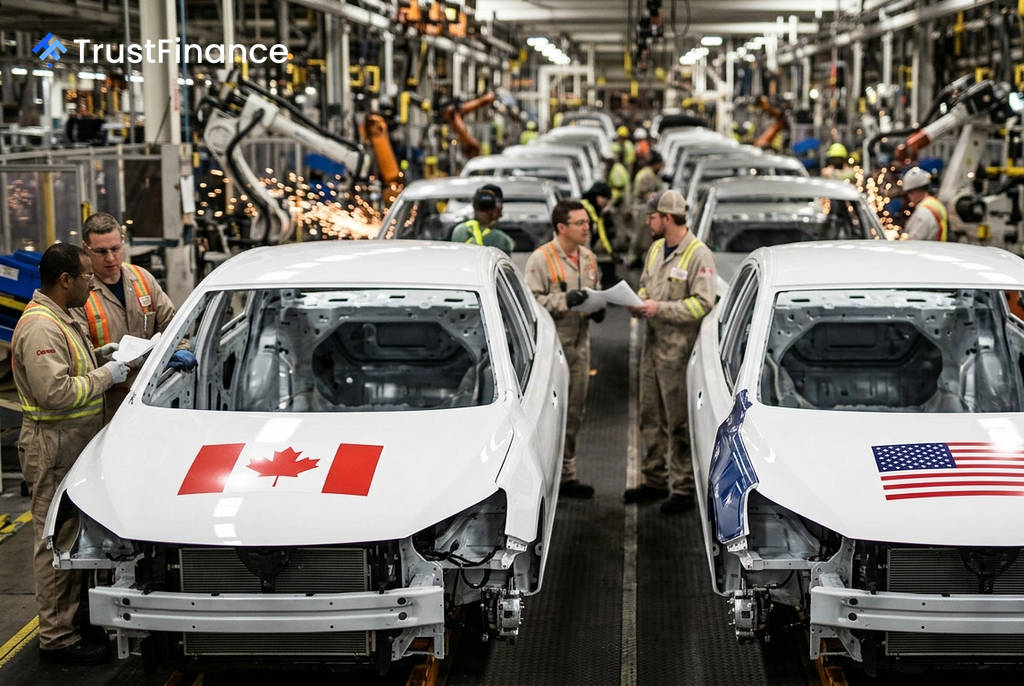
Canadian negotiators are reportedly considering a compromise that would accept U.S. auto tariffs in exchange for a lower rate on vehicles compliant with the United States-Mexico-Canada Agreement (USMCA), The Globe and Mail reported Wednesday.
The proposal aims to break a deadlock in bilateral trade talks by preserving a crucial exemption for the value of American content in cars exported from Canada.
Details of the Proposal
Under the plan being discussed, the current 25% tariff imposed under Section 232 of the Trade Expansion Act would be reduced for USMCA-compliant vehicles. Critically, all U.S. content in Canadian-assembled autos would be excluded from the tariff calculation.
Given the highly integrated nature of the North American auto supply chain, this exemption is significant. Key details include:
- An estimated 50% of the content in a typical Canadian-made car originates in the United States.
- Under the proposal, a tariff would be applied to only half the value of such a vehicle.
- The Canadian auto sector has reportedly indicated it could manage a tariff in the range of 10% to 15% if the U.S. content exemption is secured.
State of Negotiations
 Ad
According to the report, Canadian and American negotiators have discussed the proposal, and Canada's team has also consulted with domestic industry leaders in the auto, steel, and aluminum sectors. However, it remains unclear whether Canadian officials have formally presented the plan to their U.S. counterparts.
The discussions are part of a broader effort to reach a deal by an August 19 deadline, when the U.S. has threatened to impose further tariffs. The auto industry is a central and politically sensitive component of the trade relationship between the two nations.
Market Implications
A potential agreement would remove significant uncertainty for automakers and parts suppliers operating in both countries. While any tariff is a headwind, a reduced and predictable levy would be viewed by the market as a substantial improvement over the current 25% tariff and the threat of further escalations.
Investors will be closely watching for any signs of progress, as the outcome will directly impact costs, profitability, and supply chain strategies for one of North America's most integrated industries. The U.S. is also reportedly seeking concessions on Canadian provincial bans on American alcohol sales as part of a wider deal.
Read next
More on Stocks
FTC Orders Walmart, Uber, Delta to Disclose Data on Personalized Pricing
The U.S. Federal Trade Commission is demanding nine major companies, including leading retail, travel, and gig economy firms, to provide information on how they use consumer data for setting individual prices and wages.

Google Launches Gemini 4 Carbon AI Model to Bolster Cybersecurity Capabilities
Alphabet's Google has unveiled Gemini 4 Carbon, its latest AI model specifically designed for advanced cybersecurity tasks like vulnerability detection and secure code generation. The launch escalates competition with rivals OpenAI and Anthropic in the enterprise AI market.

Oracle Shares Surge After Unveiling $225 Billion Revenue Target for 2030
Oracle stock rose sharply after the company presented a long-term financial outlook targeting at least $225 billion in annual revenue by fiscal 2030, driven by its expanding AI infrastructure business.

DOJ Scrutinizes Nvidia's $12.9B Hugging Face Deal Amid Broader Antitrust Probe, Sources Say
The U.S. Department of Justice is reportedly examining Nvidia's planned $12.93 billion acquisition of AI platform Hugging Face as part of a wider, ongoing antitrust investigation into the chipmaker's market conduct.