
Story
Burlington Stores Stock Falls on Revenue Miss and Plan to Reinvest Tariff Windfall
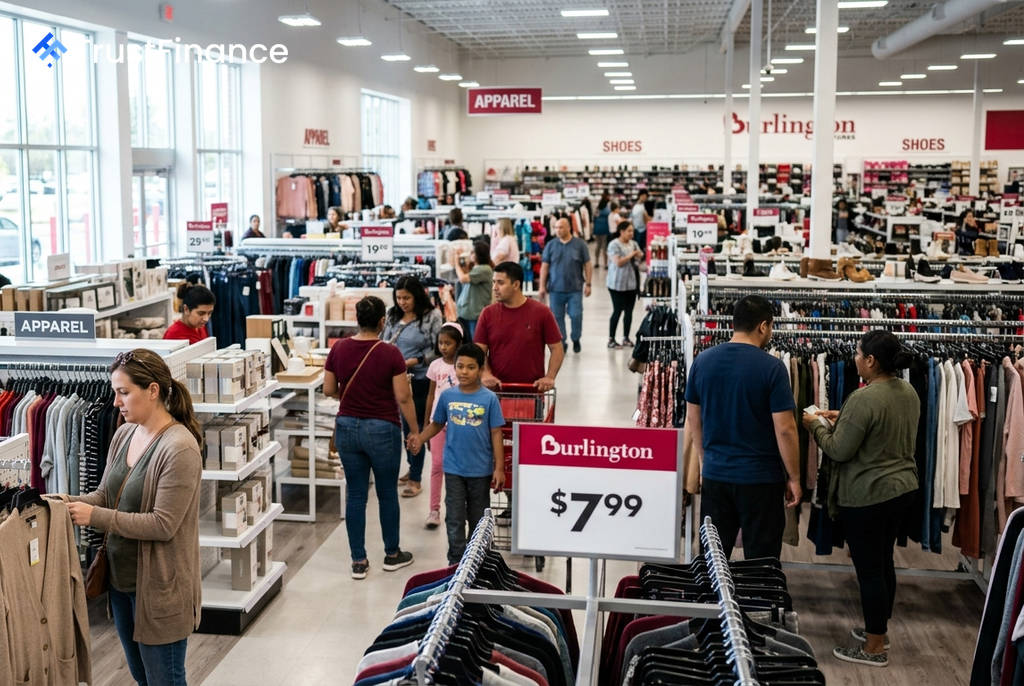
Burlington Stores (NYSE: BURL) stock fell over 6% on Thursday despite the company reporting second-quarter earnings that surpassed analyst expectations. The negative market reaction was driven by a slight revenue miss and a management decision to reinvest a tariff-related windfall into lower prices, which is expected to pressure near-term profitability.
A Mixed Quarterly Report
For its second quarter ending in August, Burlington reported earnings per share (EPS) of $2.37, a 38% year-over-year increase and $0.20 ahead of consensus estimates. However, total revenue of $3.00 billion, while up 11%, fell just short of the expected $3.02 billion.
According to the company's August 27 report, several factors concerned investors:
- Revenue Shortfall: The $20 million gap between actual and expected revenue raised questions about underlying consumer demand.
- Comparable Sales Deceleration: Comparable store sales grew by just 2%, a significant slowdown from the 5% growth reported in the same quarter a year prior.
- Tariff Refund Reinvestment: Management announced it will pass a $55 million tariff refund on to customers through lower prices, rather than retaining it to boost profits. This reinvestment is planned with 40% in Q3 and 60% in Q4.
Guidance and Strategic Outlook
 Ad
Burlington raised its full-year guidance, now projecting total sales growth of 10%-11% and adjusted EPS between $11.77 and $11.97. However, the company's third-quarter forecast reflected the impact of its price investment strategy. It guided for Q3 EPS of $1.60-$1.70, below the $1.80 earned a year ago, with operating margins expected to contract by 60 to 80 basis points.
During the earnings call, management confirmed that its home goods business is showing "promising growth" after a repositioning in late 2025. The company also continues its aggressive expansion, having opened a record 178 new stores in the past year, and remains on track to reach over 1,500 locations by 2028.
Market Focus Shifts to Top Line
While Burlington has now beaten EPS estimates for six consecutive quarters, the stock's decline indicates that investors are increasingly focused on top-line growth and sales momentum. The decision to prioritize market share over short-term margin expansion by lowering prices will be a key factor for performance in the second half of the year.
Investors will be closely watching upcoming catalysts, including third-quarter results in late November and sales trends during the critical holiday season. The effectiveness of the price reductions in driving store traffic and the overall health of Burlington's core lower-income consumer will be crucial to the stock's performance.
Read next
More on Stocks
FTC Orders Walmart, Uber, Delta to Disclose Data on Personalized Pricing
The U.S. Federal Trade Commission is demanding nine major companies, including leading retail, travel, and gig economy firms, to provide information on how they use consumer data for setting individual prices and wages.

Google Launches Gemini 4 Carbon AI Model to Bolster Cybersecurity Capabilities
Alphabet's Google has unveiled Gemini 4 Carbon, its latest AI model specifically designed for advanced cybersecurity tasks like vulnerability detection and secure code generation. The launch escalates competition with rivals OpenAI and Anthropic in the enterprise AI market.

Oracle Shares Surge After Unveiling $225 Billion Revenue Target for 2030
Oracle stock rose sharply after the company presented a long-term financial outlook targeting at least $225 billion in annual revenue by fiscal 2030, driven by its expanding AI infrastructure business.

DOJ Scrutinizes Nvidia's $12.9B Hugging Face Deal Amid Broader Antitrust Probe, Sources Say
The U.S. Department of Justice is reportedly examining Nvidia's planned $12.93 billion acquisition of AI platform Hugging Face as part of a wider, ongoing antitrust investigation into the chipmaker's market conduct.