
Story
Alibaba, Tencent Face Heaviest Short-Selling Value in Hong Kong Market
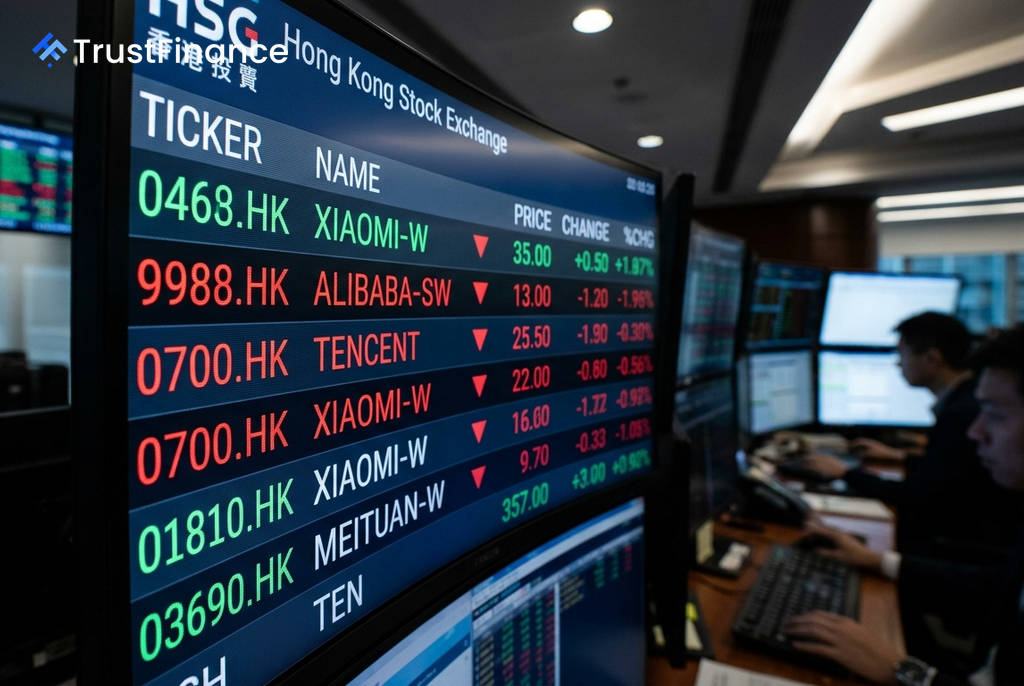
Chinese technology giants Alibaba and Tencent Holdings faced the highest value of short-selling activity in the Hong Kong market on Friday, signaling significant bearish sentiment directed at the sector's biggest names. Data also revealed extremely high short-sale ratios in several other stocks, particularly those traded in Chinese yuan.
Tech Giants Top Short-Selling Value
The largest short-selling positions by monetary value were concentrated in well-known technology and financial stocks. According to data from Zhitong Finance APP, these companies saw the highest volume of bearish wagers:
- Alibaba-W (09988): HK$1.13 billion
- Tencent Holdings (00700): HK$916 million
- Xiaomi Corp-W (01810): HK$8.95 million
Other notable blue-chip companies, including Hong Kong Exchanges and Clearing (00388) at HK$773 million and insurer AIA Group (01299) at HK$547 million, also ranked among the top ten most shorted stocks by value.
Ratios and Deviations Signal Unusual Activity
 Ad
Several stocks, primarily RMB-denominated counters identified by an "-R" suffix, recorded a short-sale ratio of 100%. This indicates that their entire trading turnover for the day consisted of short sales. Among them were Sun Hung Kai Properties-R (80016), China Resources Beer-R (80291), and Li Ning-R (82331).
Another key metric, short-sale deviation, highlighted stocks experiencing a sudden spike in bearish interest compared to their recent history. This value measures the difference between Friday's short-sale ratio and the 30-day average. Kuaishou-WR (81024) led this list with a deviation of 44.78%, followed by BOC Hong Kong-R (82388) at 43.24% and JD.com-SWR (89618) at 41.25%.
What This Means for Investors
Short-selling data is a key indicator of market sentiment, as it reflects bets that a stock's price will fall. The concentration of high short-selling value in major tech firms suggests that some institutional investors may be hedging positions or anticipating a near-term price correction.
The figures are based on data from the Hong Kong Stock Exchange, with the provider noting that they are generated via an automated process and are not guaranteed to be 100% accurate. Investors typically use such data as one of many tools to gauge market dynamics and risk.
Read next
More on Stocks
FTC Orders Walmart, Uber, Delta to Disclose Data on Personalized Pricing
The U.S. Federal Trade Commission is demanding nine major companies, including leading retail, travel, and gig economy firms, to provide information on how they use consumer data for setting individual prices and wages.

Google Launches Gemini 4 Carbon AI Model to Bolster Cybersecurity Capabilities
Alphabet's Google has unveiled Gemini 4 Carbon, its latest AI model specifically designed for advanced cybersecurity tasks like vulnerability detection and secure code generation. The launch escalates competition with rivals OpenAI and Anthropic in the enterprise AI market.

Oracle Shares Surge After Unveiling $225 Billion Revenue Target for 2030
Oracle stock rose sharply after the company presented a long-term financial outlook targeting at least $225 billion in annual revenue by fiscal 2030, driven by its expanding AI infrastructure business.

DOJ Scrutinizes Nvidia's $12.9B Hugging Face Deal Amid Broader Antitrust Probe, Sources Say
The U.S. Department of Justice is reportedly examining Nvidia's planned $12.93 billion acquisition of AI platform Hugging Face as part of a wider, ongoing antitrust investigation into the chipmaker's market conduct.