
Story
White House Delays Decision on Copper Tariffs Amid Inflation Concerns, Sources Say
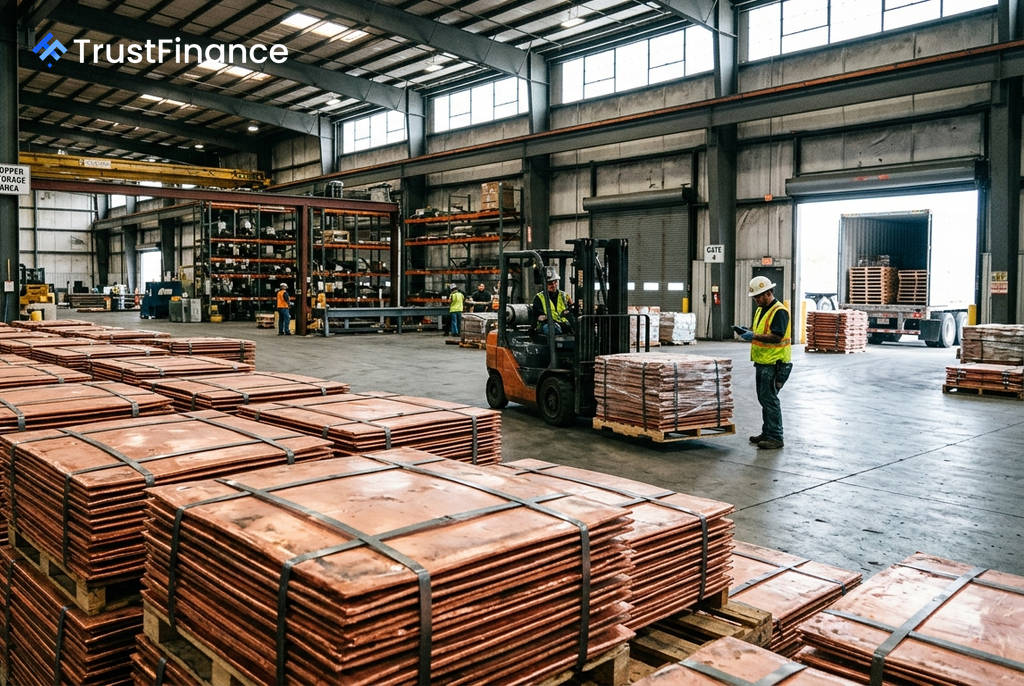
A decision on whether to impose tariffs on refined copper has been delayed by the White House, as officials grapple with concerns that higher prices could increase manufacturing costs and impact affordability ahead of the November midterm elections, according to two people familiar with the matter.
Balancing Domestic Production and Manufacturing Costs
The administration is caught between its goal of reshoring critical manufacturing and the potential economic fallout from new duties. The proposed tariffs are intended to encourage domestic mining and smelting by making imported copper more expensive. The U.S. currently imports about half of its copper needs and has only two operational smelters, owned by Freeport-McMoRan and Rio Tinto.
However, higher copper prices could raise costs for a wide range of U.S. industries that rely on the metal, including construction, transportation, and electronics. This tension has complicated the administration's decision-making process, particularly as it focuses on lowering costs for American consumers and businesses.
Market Impact and Uncertainty
Copper prices had previously surged to record highs on the expectation that tariffs would be imposed on refined products like cathode. In anticipation, traders and industrial buyers have been building up inventories in the United States, creating one of the world's largest stockpiles of the metal.
 Ad
This policy uncertainty is now preventing that copper from flowing to international markets, which further tightens global supply. "As long as (tariff) policy remains unresolved, that possibility reduces the incentive to return metal to international markets," said Jacob White, a minerals analyst at Sprott Asset Management, in comments to Reuters.
Context of the Tariff Proposal
President Donald Trump had tasked Commerce Secretary Howard Lutnick with providing an update on copper markets and recommending by June 30 whether to impose a 15% tariff starting January 1, 2027, which would rise to 30% in 2028. A White House official confirmed that the update was provided but that a final decision has not been made.
This deliberation comes as demand for copper is projected to grow significantly, with S&P Global forecasting a 50% increase by 2040, driven by the AI and defense sectors. Meanwhile, U.S. reliance on foreign copper has grown, with key statistics highlighting the trend:
- U.S. refined copper imports have jumped 16-fold since 2015.
- Domestic production has slipped 20% over the same period, according to U.S. Geological Survey data.
Read next
More on Stocks
FTC Orders Walmart, Uber, Delta to Disclose Data on Personalized Pricing
The U.S. Federal Trade Commission is demanding nine major companies, including leading retail, travel, and gig economy firms, to provide information on how they use consumer data for setting individual prices and wages.

Google Launches Gemini 4 Carbon AI Model to Bolster Cybersecurity Capabilities
Alphabet's Google has unveiled Gemini 4 Carbon, its latest AI model specifically designed for advanced cybersecurity tasks like vulnerability detection and secure code generation. The launch escalates competition with rivals OpenAI and Anthropic in the enterprise AI market.

Oracle Shares Surge After Unveiling $225 Billion Revenue Target for 2030
Oracle stock rose sharply after the company presented a long-term financial outlook targeting at least $225 billion in annual revenue by fiscal 2030, driven by its expanding AI infrastructure business.

DOJ Scrutinizes Nvidia's $12.9B Hugging Face Deal Amid Broader Antitrust Probe, Sources Say
The U.S. Department of Justice is reportedly examining Nvidia's planned $12.93 billion acquisition of AI platform Hugging Face as part of a wider, ongoing antitrust investigation into the chipmaker's market conduct.