
Story
Webull Unveils Managed Bond Portfolios With $500 Minimum, Citing Market Tech Advances
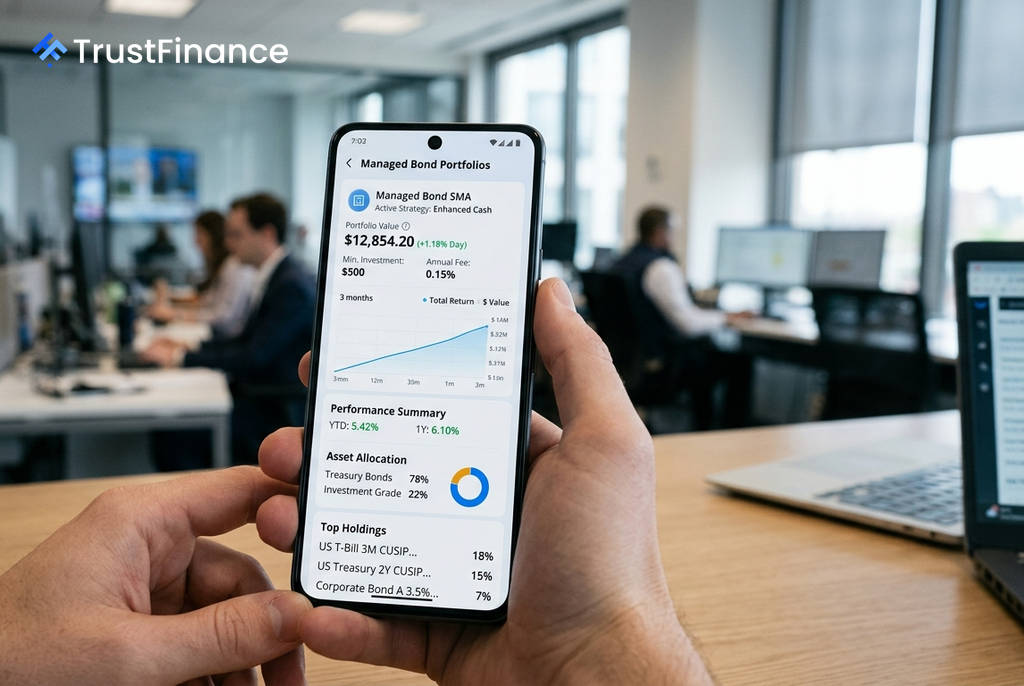
Webull has launched a new managed bond portfolio service with an account minimum as low as $500, a move aimed at giving retail investors access to an asset class traditionally reserved for high-net-worth individuals. The platform is using recent technological and structural improvements in the fixed-income market to offer diversified bond portfolios at a fraction of the typical cost, the company told Investing.com.
Portfolio Strategy and Mechanics
Webull's approach centers on reducing the minimum holding size for individual bonds. The platform can execute trades for as little as $100 per CUSIP with $1 increments, a stark contrast to the traditional market where effective execution often requires $10,000 or more per position, according to Matt Peterson, Webull's head of fixed income.
This structure enables the firm to offer two distinct strategies:
- Webull Enhanced Cash: A $500 minimum portfolio with a 0.15% annual fee, holding five to 15 individual U.S. Treasury CUSIPs.
- High Income Strategy: A $2,000 minimum portfolio with a 0.30% annual fee, spanning 20 to 50 corporate bond positions. High-yield exposure is capped at 49%.
Both strategies are subject to a $1 monthly minimum fee. “With minimum holding sizes of just $100 per CUSIP, investors can achieve a level of diversification and oversight with just a few thousand dollars that would typically be reserved for $250k+ accounts,” Peterson said.
Market Context and Rationale
 Ad
The launch is made possible by significant changes in the bond market's infrastructure over the past five years. Peterson noted that improved retail liquidity data and execution technology now allow for small-sized trades to clear without the wide markups that historically penalized individual investors. This allows for an algorithmic portfolio construction model with oversight from the Webull Advisors Investment Committee, which monitors credit minimums, duration targets, and concentration limits daily.
"Traditional bond SMAs require a portfolio manager for hand-selecting bonds per account," Peterson explained. "These economics only work at $100k–$250K+ minimums." The new offerings were developed in response to customer demand for higher-yielding cash alternatives and for diversification tools to reduce drawdowns during market pullbacks.
Implications for Retail Investors
These products are designed specifically for Webull's user base, which the company says skews younger and has a lower average net worth than the typical bond investor. By automating the portfolio management process, Webull aims to solve a key problem for retail participants who, according to Peterson, often lack the "time, knowledge, or desire to build these portfolios on their own."
The move represents a further democratization of financial products, allowing smaller investors to access professionally managed, diversified fixed-income strategies that were previously out of reach due to high capital requirements.
Read next
More on Stocks
FTC Orders Walmart, Uber, Delta to Disclose Data on Personalized Pricing
The U.S. Federal Trade Commission is demanding nine major companies, including leading retail, travel, and gig economy firms, to provide information on how they use consumer data for setting individual prices and wages.

Google Launches Gemini 4 Carbon AI Model to Bolster Cybersecurity Capabilities
Alphabet's Google has unveiled Gemini 4 Carbon, its latest AI model specifically designed for advanced cybersecurity tasks like vulnerability detection and secure code generation. The launch escalates competition with rivals OpenAI and Anthropic in the enterprise AI market.

Oracle Shares Surge After Unveiling $225 Billion Revenue Target for 2030
Oracle stock rose sharply after the company presented a long-term financial outlook targeting at least $225 billion in annual revenue by fiscal 2030, driven by its expanding AI infrastructure business.

DOJ Scrutinizes Nvidia's $12.9B Hugging Face Deal Amid Broader Antitrust Probe, Sources Say
The U.S. Department of Justice is reportedly examining Nvidia's planned $12.93 billion acquisition of AI platform Hugging Face as part of a wider, ongoing antitrust investigation into the chipmaker's market conduct.