
Story
Webull UK CEO Warns London Stock Market Is 'Approaching Irrelevance'
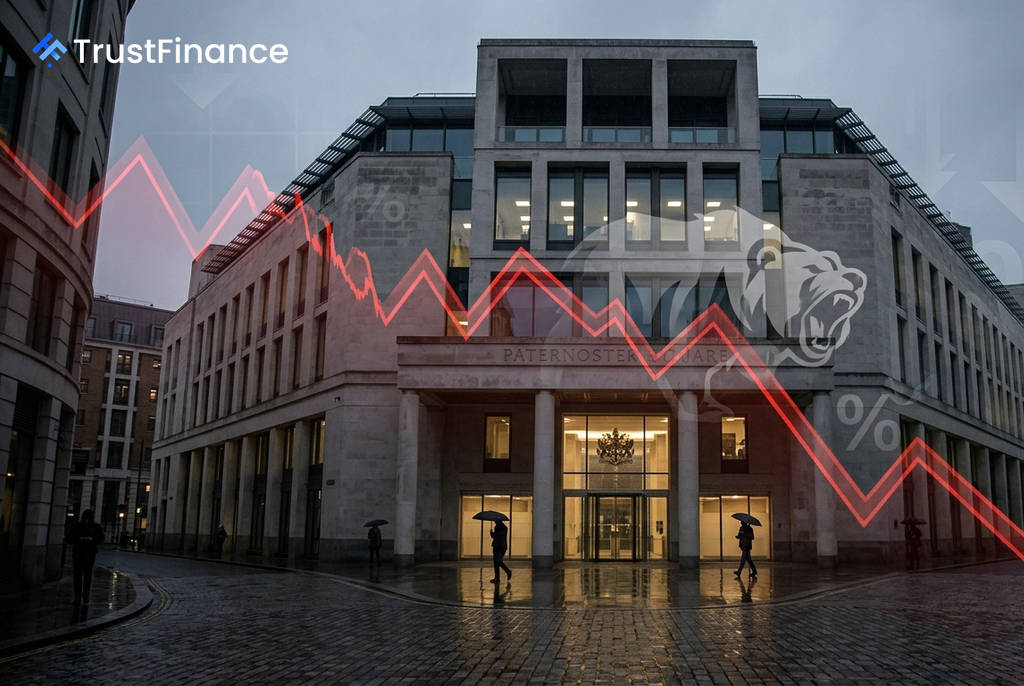
The U.K. stock market is “approaching irrelevance” for retail investors as a growing number of companies depart London and the pool of recognizable listed names diminishes, according to Nick Saunders, chief executive of Webull U.K. In comments made to Investing.com, Saunders warned that the trend is causing both institutional and retail investors to look for opportunities elsewhere, creating a cycle of lower interest and reduced market liquidity.
A Shrinking Market
Saunders' remarks coincide with a recent spate of London-listed companies moving to exit the public market. He pointed to several recent examples, including recommended all-cash offers for Gamma Communications by private equity firm Epiris and for Capricorn Energy by Norway’s DNO ASA, as well as an agreed takeover of Bodycote by U.S. investment firm Veritas.
"The UK market is approaching irrelevance, as fewer quoted stocks, particularly fewer household names, lowers market participation," Saunders told Investing.com. He argued that as companies leave the London market, investors have fewer reasons to participate, which in turn harms liquidity for the remaining listed equities.
Retail Investor Headwinds
For retail investors specifically, the U.K. market holds little appeal for single-stock picking, according to Saunders. He noted that while larger U.K. names may form part of a broader portfolio, his clients' attention is concentrated on the U.S. market, where they perceive greater potential for growth, particularly in small-cap stocks.
 Ad
A significant deterrent is the 0.5% stamp duty charged on U.K. share purchases, a tax that does not apply to U.S. equities. "Stamp duty is the real killer for retail investors," Saunders said. However, he did note that investor appetite remains for U.K.-listed exchange-traded funds (ETFs), especially for long-term strategies.
Market Structure Criticized
Saunders was also critical of the London Stock Exchange Group's (LSEG) focus, arguing its priorities do not align with fostering a deep and active retail market. "LSEG has for several years been more concerned with revenue from selling data products than investing in a functioning market," he stated.
Furthermore, he contended that proposals to extend U.K. trading hours would be counterproductive. Rather than creating new liquidity, he believes it would stretch the existing volume over a longer period, resulting in a "decline in liquidity density." This would force market makers to widen their spreads to compensate for increased risk, ultimately raising the effective cost of trading for all participants and potentially worsening execution quality for market orders.
Read next
More on Stocks
FTC Orders Walmart, Uber, Delta to Disclose Data on Personalized Pricing
The U.S. Federal Trade Commission is demanding nine major companies, including leading retail, travel, and gig economy firms, to provide information on how they use consumer data for setting individual prices and wages.

Google Launches Gemini 4 Carbon AI Model to Bolster Cybersecurity Capabilities
Alphabet's Google has unveiled Gemini 4 Carbon, its latest AI model specifically designed for advanced cybersecurity tasks like vulnerability detection and secure code generation. The launch escalates competition with rivals OpenAI and Anthropic in the enterprise AI market.

Oracle Shares Surge After Unveiling $225 Billion Revenue Target for 2030
Oracle stock rose sharply after the company presented a long-term financial outlook targeting at least $225 billion in annual revenue by fiscal 2030, driven by its expanding AI infrastructure business.

DOJ Scrutinizes Nvidia's $12.9B Hugging Face Deal Amid Broader Antitrust Probe, Sources Say
The U.S. Department of Justice is reportedly examining Nvidia's planned $12.93 billion acquisition of AI platform Hugging Face as part of a wider, ongoing antitrust investigation into the chipmaker's market conduct.