
Story
US Urges EU to Weaken Corporate Sustainability Rules, Citing Trade Pact
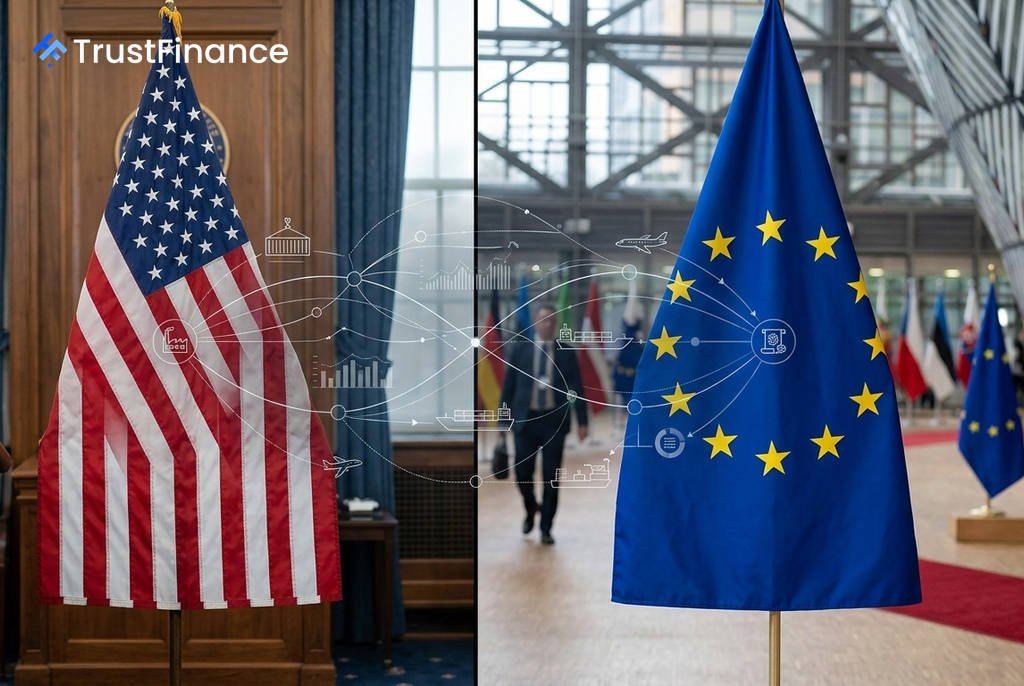
The United States is pressuring the European Union to modify its comprehensive corporate sustainability regulations, citing commitments made during prior trade negotiations and warning of negative impacts on American companies. The request marks a significant point of friction in transatlantic trade relations, moving beyond tariffs to focus on regulatory and environmental rules.
US Cites Non-Tariff Barriers
In a statement on the social media platform X, U.S. Ambassador to the EU Andrew Puzder called for the 27-member bloc to honor promises made during trade discussions in July 2025. He argued that the EU's rules on corporate accountability function as non-tariff barriers to trade.
"Under the Framework Agreement, the EU committed 'to ensure' that its Corporate Sustainability Due Diligence Directive and Corporate Sustainability Reporting Directive 'do not pose undue restrictions on transatlantic trade'," Puzder wrote. He added that the "extraterritorial provisions harm American businesses and workers."
Washington's specific concerns center on EU regulations that include:
- The Corporate Sustainability Due Diligence Directive (CSDDD), which holds companies accountable for social and environmental abuses in their supply chains.
- The Corporate Sustainability Reporting Directive (CSRD), which mandates detailed disclosures on environmental and social impacts.
- The Carbon Border Adjustment Mechanism (CBAM), which imposes a levy on carbon-intensive imports.
EU Defends Regulatory Autonomy
 Ad
The European Union has firmly rejected the U.S. call to alter its legislative framework. A European Commission spokesperson, in comments cited by Reuters, affirmed the bloc's stance while signaling a willingness to cooperate on other matters.
"We have been very clear and consistent on the fact that neither our rules framework nor our regulatory autonomy are up for negotiation," the spokesperson stated. The EU maintains it is prepared to work with the U.S. to expand trade where possible but will not compromise its own regulatory standards.
Market and Investor Implications
This dispute highlights a growing divergence between the U.S. and EU on environmental, social, and governance (ESG) standards. For U.S. multinational corporations, the EU's rules represent a significant compliance challenge, requiring extensive reporting and due diligence across global supply chains.
The outcome of these discussions could have broad implications for investors. A failure to find common ground may lead to increased compliance costs for American firms operating in the EU, potentially impacting their profitability and creating an uneven playing field. The standoff signals a potential escalation in trade tensions focused on regulatory policy rather than traditional tariffs.
Read next
More on Stocks
FTC Orders Walmart, Uber, Delta to Disclose Data on Personalized Pricing
The U.S. Federal Trade Commission is demanding nine major companies, including leading retail, travel, and gig economy firms, to provide information on how they use consumer data for setting individual prices and wages.

Google Launches Gemini 4 Carbon AI Model to Bolster Cybersecurity Capabilities
Alphabet's Google has unveiled Gemini 4 Carbon, its latest AI model specifically designed for advanced cybersecurity tasks like vulnerability detection and secure code generation. The launch escalates competition with rivals OpenAI and Anthropic in the enterprise AI market.

Oracle Shares Surge After Unveiling $225 Billion Revenue Target for 2030
Oracle stock rose sharply after the company presented a long-term financial outlook targeting at least $225 billion in annual revenue by fiscal 2030, driven by its expanding AI infrastructure business.

DOJ Scrutinizes Nvidia's $12.9B Hugging Face Deal Amid Broader Antitrust Probe, Sources Say
The U.S. Department of Justice is reportedly examining Nvidia's planned $12.93 billion acquisition of AI platform Hugging Face as part of a wider, ongoing antitrust investigation into the chipmaker's market conduct.