
Story
US Treasury May Tap $950 Billion Cash Account to Fund Bond Buybacks
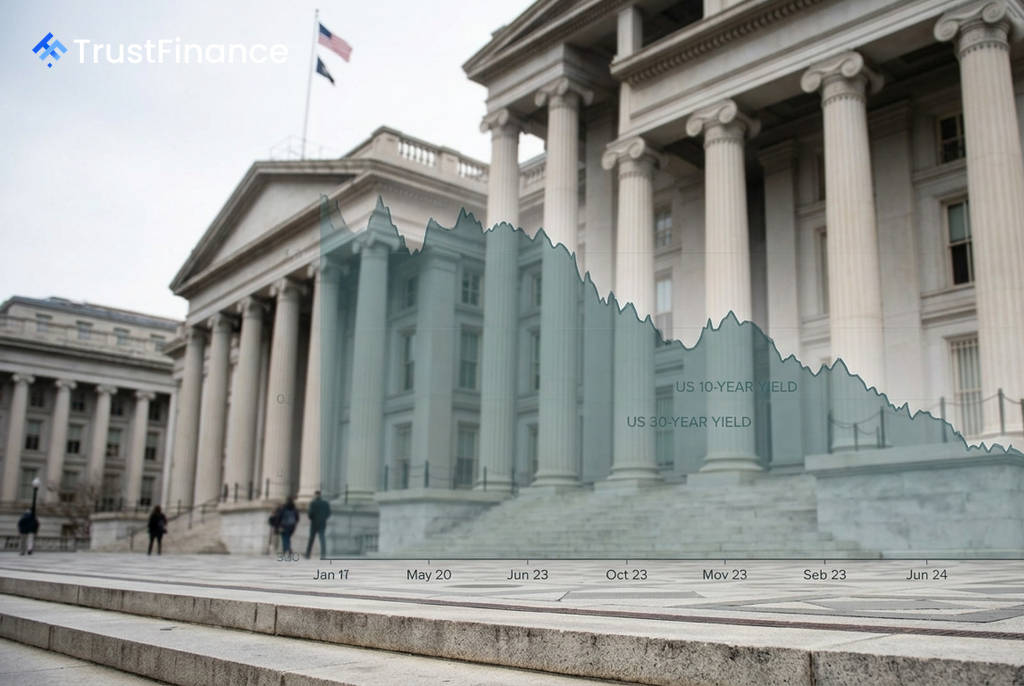
The U.S. Treasury may deploy its substantial $950 billion cash reserve to finance an expanded government bond buyback program aimed at taming multi-decade high borrowing costs. The development, reported by CNBC citing two senior Treasury officials, significantly increases the potential firepower of a program that was initially met with market skepticism.
A Shift in Funding Strategy
The officials confirmed to CNBC that the Treasury General Account (TGA), the government's primary operating account at the Federal Reserve, is considered available to fund the repurchase of long-dated bonds. The TGA's current balance is well above the $550 billion to $600 billion target maintained under the prior administration, creating significant latent capacity for the operation.
This revelation reframes the buyback plan, which Treasury Secretary Scott Bessent had described as a "Treasury Twist." Markets had previously assumed the program—which involves buying long-term bonds while selling short-term bills—would be funded solely through new bill issuance. The officials did not specify how much of the TGA might be used or when a formal announcement could occur, according to the report.
Market Reaction and Yields
The news prompted a rally in government bonds, pushing the 10-year Treasury yield down to 4.651% and the 30-year yield to 5.196%, according to Investing.com data. The move reverses a period of intense selling that saw the 30-year yield surge to a 19-year high of 5.337% on August 19.
Last week, the Treasury surprised markets by announcing it would double the per-operation cap on its buybacks of long-dated bonds to at least $4 billion, with operations scheduled from September 9 through November 4. An initial bond rally following that news quickly faded as investors questioned the program's overall size and funding.
 Ad
Analyst Scrutiny and Outlook
Despite the potential for larger-scale intervention, some Wall Street analysts remain cautious. Evercore ISI previously labeled the plan a "weak form Operation Twist" that could backfire, while Deutsche Bank analysts warned of "soft-form financial repression" that could weaken the U.S. dollar.
Key concerns from market observers include:
- The temporary nature of the intervention versus the need for structural fiscal consolidation, as noted by ING.
- The potential for a weaker dollar if the buybacks are seen as capping yields, forcing an adjustment in the currency's value for foreign investors.
- The lack of public comment from Federal Reserve Chair Kevin Warsh, which Deutsche Bank flagged as a potential "dollar negative driver."
Investors are now looking ahead to a press conference scheduled for Monday afternoon, where Secretary Bessent may provide further commentary on the buyback program's size and scope.
Read next
More on Stocks
FTC Orders Walmart, Uber, Delta to Disclose Data on Personalized Pricing
The U.S. Federal Trade Commission is demanding nine major companies, including leading retail, travel, and gig economy firms, to provide information on how they use consumer data for setting individual prices and wages.

Google Launches Gemini 4 Carbon AI Model to Bolster Cybersecurity Capabilities
Alphabet's Google has unveiled Gemini 4 Carbon, its latest AI model specifically designed for advanced cybersecurity tasks like vulnerability detection and secure code generation. The launch escalates competition with rivals OpenAI and Anthropic in the enterprise AI market.

Oracle Shares Surge After Unveiling $225 Billion Revenue Target for 2030
Oracle stock rose sharply after the company presented a long-term financial outlook targeting at least $225 billion in annual revenue by fiscal 2030, driven by its expanding AI infrastructure business.

DOJ Scrutinizes Nvidia's $12.9B Hugging Face Deal Amid Broader Antitrust Probe, Sources Say
The U.S. Department of Justice is reportedly examining Nvidia's planned $12.93 billion acquisition of AI platform Hugging Face as part of a wider, ongoing antitrust investigation into the chipmaker's market conduct.