
Story
US Prescription Volume Growth Slowed to 1.5% in Late July, Morgan Stanley Reports
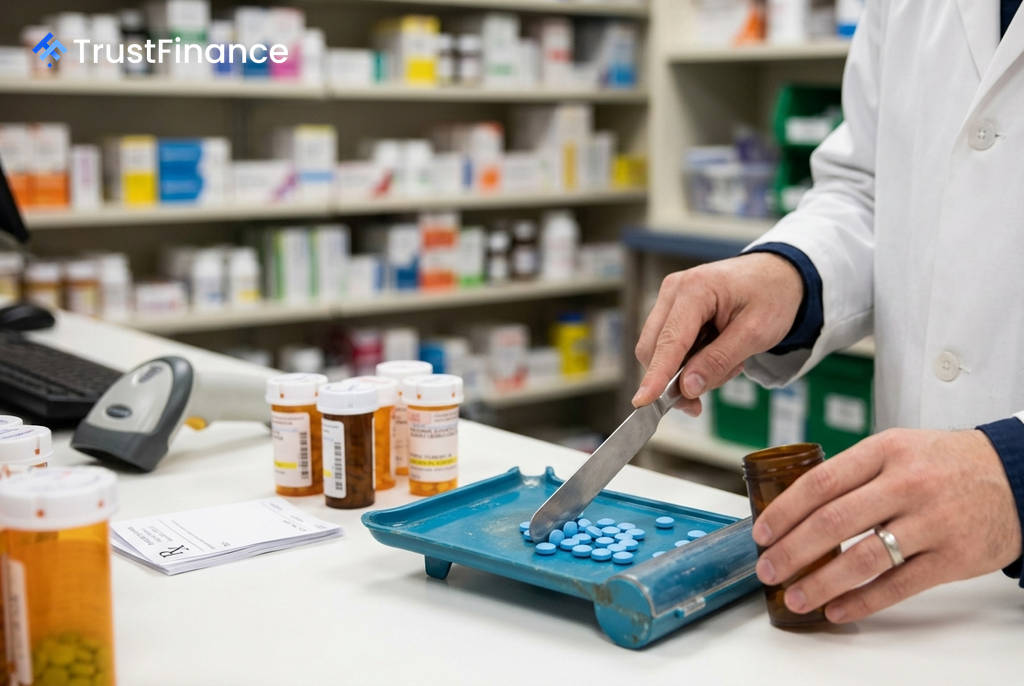
U.S. prescription drug volume growth slowed in the final week of July, rising 1.5% year-over-year, according to a weekly market analysis from Morgan Stanley. The data, for the week ending July 31, represents a deceleration from the 2.0% growth recorded in the prior week but remains above the 12-week average growth rate of 1.3%.
Overall Market Trends
The report highlighted several key metrics for the U.S. pharmaceutical market. On a week-over-week basis, total prescriptions declined by 0.5%, following a 0.4% dip in the preceding week. The rolling four-week total prescription volume showed a slight year-over-year contraction of -0.2%.
Extended units, a measure of the total quantity of medication dispensed, grew 1.1% year-over-year, lagging the growth in total prescription numbers. This suggests a potential shift in the mix of drugs being prescribed.
New Drug Launch Trajectories
Morgan Stanley's analysis provided updates on the commercial launches of several key drugs, which are closely watched by investors:
 Ad
- Bristol Myers Squibb (BMY): Prescriptions for its schizophrenia treatment, Cobenfy, reached approximately 3,370, up from about 3,290 the previous week. The bank estimates that to meet the 2026 consensus sales forecast of $271 million, total prescriptions would need to reach roughly 186,000, assuming a net price of around $1,450.
- Gilead Sciences (GILD): Total prescriptions for Yeztugo were largely flat at 1,890. The drug maintains a strong persistence rate of over 70% and has secured 95% payer coverage. Morgan Stanley's U.S. sales estimate of $1.049 billion is notably higher than the market consensus of $988 million.
- Vertex Pharmaceuticals (VRTX): Journavx, a treatment for acute pain, saw prescriptions rise to 26,970 from 26,450. Vertex noted that this IQVIA data does not capture hospital prescriptions, which are expected to account for about 45% of the drug's volume.
- Johnson & Johnson (JNJ): Icotyde, for moderate-to-severe plaque psoriasis, saw weekly scripts edge up to 880. Management reports that over 18,000 prescriptions have been written for approximately 11,000 patients, with commercial insurance coverage now exceeding 50%.
Biosimilar Market Share Shifts
The report also shed light on the evolving competitive landscape for biosimilars, which are near-identical copies of original biologic drugs.
In the market for Stelara biosimilars, Biocon's Yesintek holds a dominant 78% share, while Amgen's (AMGN) Wezlana accounts for about 19%. For Prolia biosimilars, Sandoz's (SDZ) Jubbonti has captured a 26% share of total prescriptions, and Celltrion's Stoboclo holds about 14%. The original drug, Prolia, retains a majority share of approximately 53%.
Read next
More on Stocks
FTC Orders Walmart, Uber, Delta to Disclose Data on Personalized Pricing
The U.S. Federal Trade Commission is demanding nine major companies, including leading retail, travel, and gig economy firms, to provide information on how they use consumer data for setting individual prices and wages.

Google Launches Gemini 4 Carbon AI Model to Bolster Cybersecurity Capabilities
Alphabet's Google has unveiled Gemini 4 Carbon, its latest AI model specifically designed for advanced cybersecurity tasks like vulnerability detection and secure code generation. The launch escalates competition with rivals OpenAI and Anthropic in the enterprise AI market.

Oracle Shares Surge After Unveiling $225 Billion Revenue Target for 2030
Oracle stock rose sharply after the company presented a long-term financial outlook targeting at least $225 billion in annual revenue by fiscal 2030, driven by its expanding AI infrastructure business.

DOJ Scrutinizes Nvidia's $12.9B Hugging Face Deal Amid Broader Antitrust Probe, Sources Say
The U.S. Department of Justice is reportedly examining Nvidia's planned $12.93 billion acquisition of AI platform Hugging Face as part of a wider, ongoing antitrust investigation into the chipmaker's market conduct.