
Story
U.S. National Debt Surpasses $40 Trillion, Prompting Treasury Intervention in Bond Market
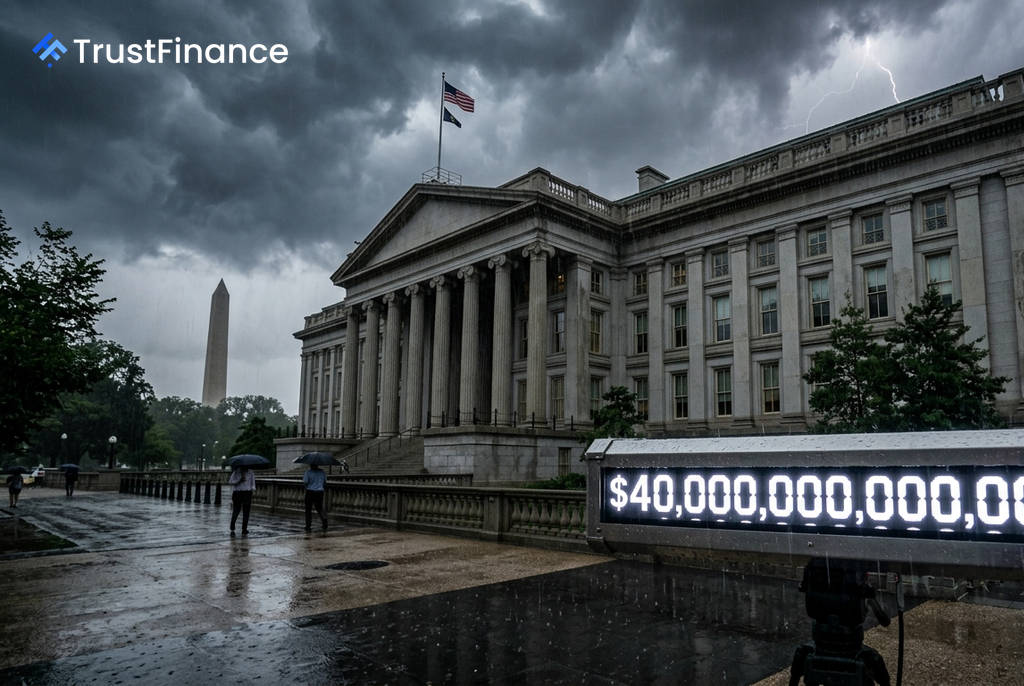
The United States national debt officially surpassed the $40 trillion threshold this week, a historic milestone that triggered a sharp selloff in government bonds and prompted an intervention from the U.S. Treasury Department. The event highlights the mounting fiscal pressures facing the country as interest rates remain elevated and borrowing costs accelerate.
Debt Milestone Triggers Market Intervention
On Tuesday, August 18, 2026, U.S. gross national debt registered $40.047 trillion, according to published reports. The news spurred a selloff in the Treasury market that pushed the 30-year bond yield to its highest level since 2007.
In response to the market instability, Treasury Secretary Scott Bessent authorized a doubling of long-end bond buyback operations to a minimum of $4 billion each. However, analysts at J.P. Morgan noted that the intervention does little to address "underlying structural challenges including unsustainable fiscal deficits and firming inflation expectations," according to a research note cited in the source material.
The Soaring Cost of Servicing
The escalating debt level is accompanied by a rapid increase in the cost to service it. According to BofA strategist Michael Hartnett, trailing 12-month interest payments on the national debt reached $1.4 trillion as of mid-August.
This headline figure translates into several key metrics for investors:
 Ad
- Annual Interest Cost: $1.4 trillion
- Daily Interest Payments: Approximately $3.84 billion
- Projected Daily Debt Increase: Roughly $8.05 billion, based on BofA's forecast for the debt to reach $50 trillion by 2029.
These costs are accelerating as cheaper debt issued during the pandemic-era matures and must be refinanced in a higher-rate environment. The 30-year Treasury yield currently stands at 5.19%, even after the Treasury's recent market support.
Broader Market and Policy Implications
The $1.4 trillion annual interest payment now represents one of the largest line items in the federal budget, competing with established programs like defense and Social Security. The fiscal strain is compounded by the Federal Reserve's policy stance, with minutes from the July FOMC meeting revealing that three members supported another rate hike, which would further increase borrowing costs.
This is not solely a U.S. phenomenon. A broader repricing of sovereign debt is underway globally, with German and Japanese government bond yields also reaching multi-year highs. For portfolio managers, the Treasury's need to intervene in its own market signals a new dynamic, while the elevated 30-year yield serves as a critical indicator for equity duration risk.
Read next
More on Stocks
FTC Orders Walmart, Uber, Delta to Disclose Data on Personalized Pricing
The U.S. Federal Trade Commission is demanding nine major companies, including leading retail, travel, and gig economy firms, to provide information on how they use consumer data for setting individual prices and wages.

Google Launches Gemini 4 Carbon AI Model to Bolster Cybersecurity Capabilities
Alphabet's Google has unveiled Gemini 4 Carbon, its latest AI model specifically designed for advanced cybersecurity tasks like vulnerability detection and secure code generation. The launch escalates competition with rivals OpenAI and Anthropic in the enterprise AI market.

Oracle Shares Surge After Unveiling $225 Billion Revenue Target for 2030
Oracle stock rose sharply after the company presented a long-term financial outlook targeting at least $225 billion in annual revenue by fiscal 2030, driven by its expanding AI infrastructure business.

DOJ Scrutinizes Nvidia's $12.9B Hugging Face Deal Amid Broader Antitrust Probe, Sources Say
The U.S. Department of Justice is reportedly examining Nvidia's planned $12.93 billion acquisition of AI platform Hugging Face as part of a wider, ongoing antitrust investigation into the chipmaker's market conduct.