
Story
US-Canada Aluminum Tariff Cut to Create Sector Winners and Losers, Deutsche Bank Says
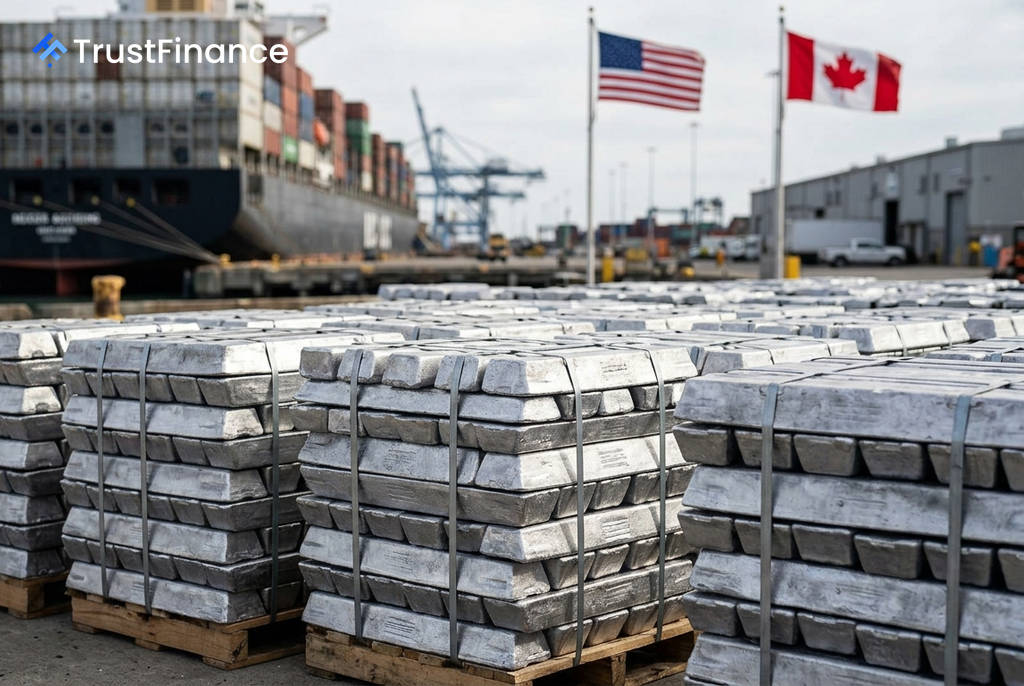
A potential trade agreement between the U.S. and Canada to halve import tariffs on Canadian aluminum could create a mixed impact across the sector, benefiting Canadian producers while pressuring U.S. smelters, according to a recent analysis by Deutsche Bank.
The Proposed Tariff Reduction
According to multiple reports cited by the bank, the two countries are close to a deal that would lower the tariff on Canadian aluminum to 25% from its current 50%. The U.S. is structurally dependent on aluminum imports, having sourced about 80% of its primary needs from abroad before tariffs took effect in early 2025, with Canada supplying roughly three-quarters of that volume.
Impact on Premiums and Supply
Deutsche Bank analysts forecast the move would reduce the U.S. Midwest aluminum premium from its current level of 107 cents. However, they expect the premium to remain elevated, settling in a range of 80-90 cents at current London Metal Exchange (LME) prices.
 Ad
The bank noted that the premium is unlikely to fall further because the marginal tonne of aluminum entering the U.S. would still face a 50% tariff. Global supply constraints, partly attributed to the U.S.-Iran conflict, have also kept premiums above levels implied by the tariff alone. The lower tariff would likely increase Canadian import volumes, easing supply tightness in the U.S.
Corporate Winners and Losers
Analysts at the bank identified clear potential winners and losers from the policy shift:
- Canadian Producers: Companies like Rio Tinto (RIO) and Alcoa (AA) are poised to benefit from reduced tariff costs while premiums remain relatively high. Deutsche Bank estimates the tariff cut could boost Rio Tinto's group EBITDA by approximately 3%, as about 65% of its primary aluminum production is from Canadian smelters.
- U.S. Operations: Conversely, U.S. domestic smelters would face significant headwinds from the lower Midwest premium. Downstream operators could also be affected, with Norsk Hydro (NHY) potentially seeing its group EBITDA fall by NOK 1-2 billion as spreads in its U.S. recycling and extrusions businesses normalize.
Read next
More on Stocks
FTC Orders Walmart, Uber, Delta to Disclose Data on Personalized Pricing
The U.S. Federal Trade Commission is demanding nine major companies, including leading retail, travel, and gig economy firms, to provide information on how they use consumer data for setting individual prices and wages.

Google Launches Gemini 4 Carbon AI Model to Bolster Cybersecurity Capabilities
Alphabet's Google has unveiled Gemini 4 Carbon, its latest AI model specifically designed for advanced cybersecurity tasks like vulnerability detection and secure code generation. The launch escalates competition with rivals OpenAI and Anthropic in the enterprise AI market.

Oracle Shares Surge After Unveiling $225 Billion Revenue Target for 2030
Oracle stock rose sharply after the company presented a long-term financial outlook targeting at least $225 billion in annual revenue by fiscal 2030, driven by its expanding AI infrastructure business.

DOJ Scrutinizes Nvidia's $12.9B Hugging Face Deal Amid Broader Antitrust Probe, Sources Say
The U.S. Department of Justice is reportedly examining Nvidia's planned $12.93 billion acquisition of AI platform Hugging Face as part of a wider, ongoing antitrust investigation into the chipmaker's market conduct.