
Story
TSX Futures Edge Higher After U.S. Pauses Planned Tariffs on Canada
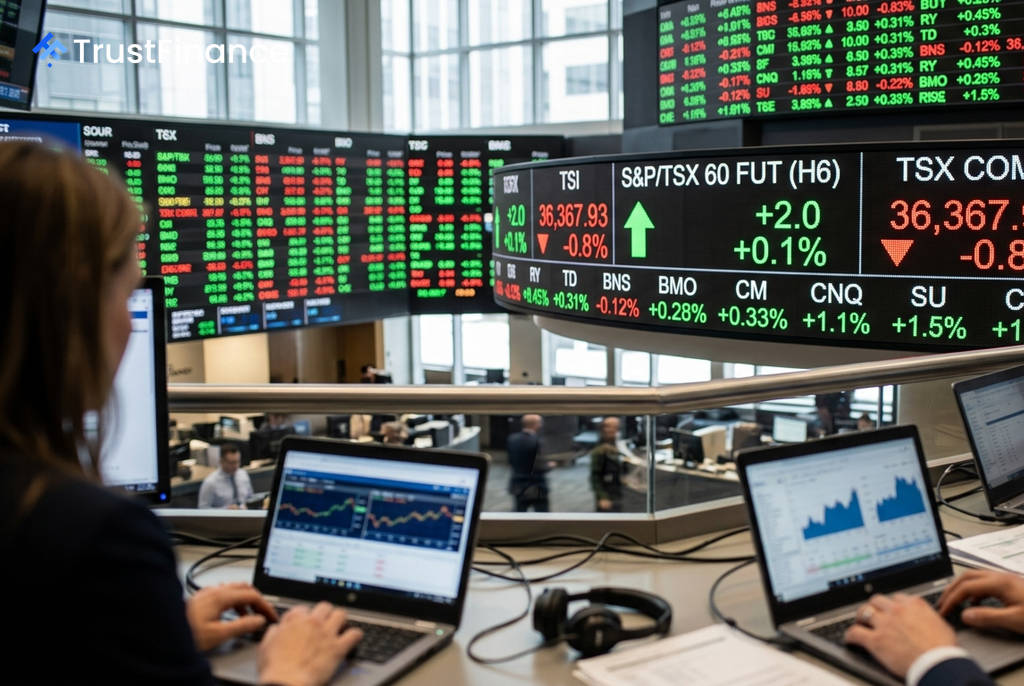
Futures contracts for Canada's benchmark stock index edged higher on Wednesday after U.S. President Donald Trump paused the implementation of new tariffs on Canadian goods, citing progress in trade negotiations between the two countries.
By 07:37 ET, the S&P/TSX 60 index standard futures contract had gained 2 points, or approximately 0.1%. The move follows a session on Tuesday where the S&P/TSX composite index fell by 0.8% to close at 36,367.93, its lowest level since August 6.
U.S. Halts Tariff Threat
President Trump announced in a social media post that he would temporarily halt a planned 50% tariff on about $20 billion worth of Canadian products, which was set to take effect shortly. He stated that the U.S. and Canada have a "deal," which is subject to the "finalization of documents."
The Trump administration had threatened the tariffs in July, targeting a range of goods including wine, furniture, and hockey sticks. According to the Office of the U.S. Trade Representative, the new agreement would provide improved access to Canadian markets for American products and establish "alignment" on digital trade matters.
 Ad
In response, Canadian Prime Minister Mark Carney acknowledged progress in the discussions but noted that "important work" still needs to be done. Carney also reiterated his commitment to building a more "independent" and "competitive" Canadian economy.
Broader Market Pressures
The slight optimism in Canadian futures contrasted with a more muted tone in U.S. markets, where futures were mixed. As of 07:47 ET, Dow futures were up 0.1%, while S&P 500 futures were flat and Nasdaq 100 futures had declined 0.2%.
Investors remain focused on several market headwinds, including rising bond yields and persistent inflation concerns. On Tuesday, the tech-heavy Nasdaq Composite saw its steepest decline since July 29, falling 1.3%, as higher Treasury yields increased pressure on high-growth stock valuations. Elevated oil prices, with Brent crude trading above $91 per barrel amid Middle East tensions, are also contributing to worries about inflation.
Read next
More on Stocks
FTC Orders Walmart, Uber, Delta to Disclose Data on Personalized Pricing
The U.S. Federal Trade Commission is demanding nine major companies, including leading retail, travel, and gig economy firms, to provide information on how they use consumer data for setting individual prices and wages.

Google Launches Gemini 4 Carbon AI Model to Bolster Cybersecurity Capabilities
Alphabet's Google has unveiled Gemini 4 Carbon, its latest AI model specifically designed for advanced cybersecurity tasks like vulnerability detection and secure code generation. The launch escalates competition with rivals OpenAI and Anthropic in the enterprise AI market.

Oracle Shares Surge After Unveiling $225 Billion Revenue Target for 2030
Oracle stock rose sharply after the company presented a long-term financial outlook targeting at least $225 billion in annual revenue by fiscal 2030, driven by its expanding AI infrastructure business.

DOJ Scrutinizes Nvidia's $12.9B Hugging Face Deal Amid Broader Antitrust Probe, Sources Say
The U.S. Department of Justice is reportedly examining Nvidia's planned $12.93 billion acquisition of AI platform Hugging Face as part of a wider, ongoing antitrust investigation into the chipmaker's market conduct.