
Story
Trump's Order to Split MMR Vaccine Faces Decade-Long Hurdle, Experts Say
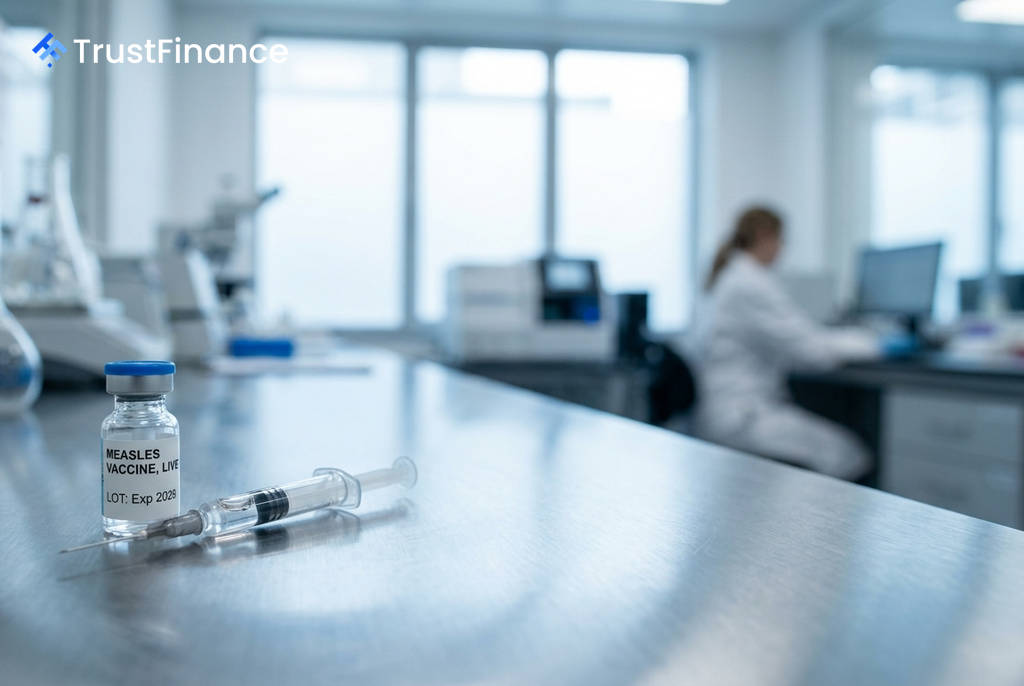
An executive order by President Donald Trump directing that the combined measles, mumps, and rubella (MMR) vaccine be replaced by three separate shots faces a major obstacle: no individual versions are currently licensed for use in the United States. Pharmaceutical manufacturers and health experts project it could take as long as a decade to develop, approve, and commercialize them, according to a Reuters report.
Regulatory and Manufacturing Hurdles
The two U.S. licensed manufacturers of the combined MMR vaccine, Merck & Co (NYSE:MRK) and GSK (NYSE:GSK), do not currently produce single-disease shots for the U.S. market. Merck, which ceased production of the individual vaccines in 2008, stated that bringing them back would be a lengthy and complex process.
"Even under current expedited review pathways, it could take years – potentially as many as 10 - to meet the safety and efficacy requirements to obtain FDA approval and then begin manufacturing and commercialization," Merck said in a statement. Experts noted that each vaccine component would require its own manufacturing line and regulatory testing, a costly and time-consuming undertaking.
Jesse Goodman, a former Chief Scientist at the FDA, explained that the process would involve a massive scaling of production. "They’d be making three times as many vials or vaccines and filling three times as many," he said, adding that companies might need to build new capacity rather than use idle facilities.
Market Impact and Company Stance
 Ad
Both Merck and GSK affirmed their confidence in the existing combined MMR vaccine, citing decades of evidence supporting its safety and a lack of scientific data to justify separating the doses. The current medical consensus, supported by the CDC and the American Academy of Pediatrics, favors the combined shot as it reduces the number of injections for children.
Given the significant investment and long timeline, some analysts believe the pharmaceutical companies may adopt a wait-and-see approach. Dorit Reiss, a law professor at UC Law San Francisco specializing in vaccine policy, suggested that manufacturers might be hesitant to commit resources. "The companies might say, ‘Well, we are going to wait this administration out... Maybe it’s not worth investing,'" Reiss said.
Policy Context
The executive order, signed Monday, aims to provide parents with more vaccination options. A White House official stated the administration would use "market-based solutions" to work with the private sector to make separate vaccines available. The move comes amid concerns from some public health experts that the order could fuel vaccine hesitancy.
Read next
More on Stocks
FTC Orders Walmart, Uber, Delta to Disclose Data on Personalized Pricing
The U.S. Federal Trade Commission is demanding nine major companies, including leading retail, travel, and gig economy firms, to provide information on how they use consumer data for setting individual prices and wages.

Google Launches Gemini 4 Carbon AI Model to Bolster Cybersecurity Capabilities
Alphabet's Google has unveiled Gemini 4 Carbon, its latest AI model specifically designed for advanced cybersecurity tasks like vulnerability detection and secure code generation. The launch escalates competition with rivals OpenAI and Anthropic in the enterprise AI market.

Oracle Shares Surge After Unveiling $225 Billion Revenue Target for 2030
Oracle stock rose sharply after the company presented a long-term financial outlook targeting at least $225 billion in annual revenue by fiscal 2030, driven by its expanding AI infrastructure business.

DOJ Scrutinizes Nvidia's $12.9B Hugging Face Deal Amid Broader Antitrust Probe, Sources Say
The U.S. Department of Justice is reportedly examining Nvidia's planned $12.93 billion acquisition of AI platform Hugging Face as part of a wider, ongoing antitrust investigation into the chipmaker's market conduct.