
Story
Teva's Tourette Syndrome Drug Ecopipam Accepted for FDA Review
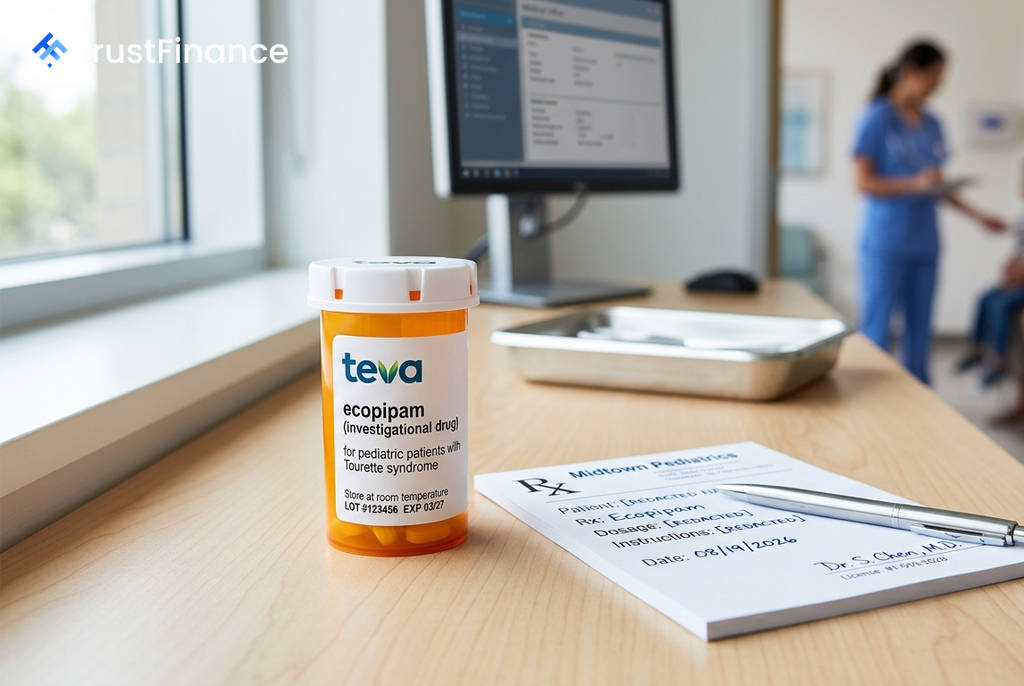
Teva Pharmaceuticals (NYSE:TEVA) announced that the U.S. Food and Drug Administration (FDA) has accepted its New Drug Application (NDA) for ecopipam, an investigational therapy for pediatric patients with Tourette syndrome. The agency has set a target action date for a decision in the late first quarter of 2027, marking a significant regulatory step for the potential new treatment.
A Potential First-in-Class Treatment
If approved, ecopipam would represent a major development in the treatment landscape for this condition. The drug is a first-in-class selective D1 dopamine receptor antagonist, a novel mechanism of action that would be the first of its kind in over 50 years. It also has the potential to be the first new treatment option for pediatric Tourette syndrome patients in more than a decade.
Ecopipam has received Orphan Drug designation from the FDA. According to Teva, Tourette syndrome affects approximately 100,000 children and adolescents in the United States. The company noted that only half of these patients receive prescription medication, and just 20% to 30% continue therapy after one year, indicating a significant unmet medical need.
Supporting Clinical Data
 Ad
The NDA submission is supported by positive results from Phase 2b and Phase 3 clinical trials. Key findings that formed the basis of the application include:
- A Phase 2b study demonstrated that patients treated with ecopipam had a statistically significant reduction in tic severity, as measured by the Yale Global Tic Severity Scale-Total Tic Score, compared to placebo at Week 12.
- A Phase 3 randomized withdrawal study, published in *JAMA Neurology*, found that pediatric responders to ecopipam had a 53% decreased risk of relapse over a 12-week period compared to those on placebo.
Safety and Tolerability
Across its clinical trials, ecopipam did not show clinically meaningful changes in body weight, BMI Z-Score, vital signs, or electrocardiogram measurements, according to the company. The most common adverse events reported in pediatric patients were headache, insomnia, fatigue, somnolence, tics, anxiety, nausea, and restlessness.
Read next
More on Stocks
FTC Orders Walmart, Uber, Delta to Disclose Data on Personalized Pricing
The U.S. Federal Trade Commission is demanding nine major companies, including leading retail, travel, and gig economy firms, to provide information on how they use consumer data for setting individual prices and wages.

Google Launches Gemini 4 Carbon AI Model to Bolster Cybersecurity Capabilities
Alphabet's Google has unveiled Gemini 4 Carbon, its latest AI model specifically designed for advanced cybersecurity tasks like vulnerability detection and secure code generation. The launch escalates competition with rivals OpenAI and Anthropic in the enterprise AI market.

Oracle Shares Surge After Unveiling $225 Billion Revenue Target for 2030
Oracle stock rose sharply after the company presented a long-term financial outlook targeting at least $225 billion in annual revenue by fiscal 2030, driven by its expanding AI infrastructure business.

DOJ Scrutinizes Nvidia's $12.9B Hugging Face Deal Amid Broader Antitrust Probe, Sources Say
The U.S. Department of Justice is reportedly examining Nvidia's planned $12.93 billion acquisition of AI platform Hugging Face as part of a wider, ongoing antitrust investigation into the chipmaker's market conduct.