
Story
Target's Grocery Push Drives Strongest Sales in Three Years, But Margin Challenge Looms
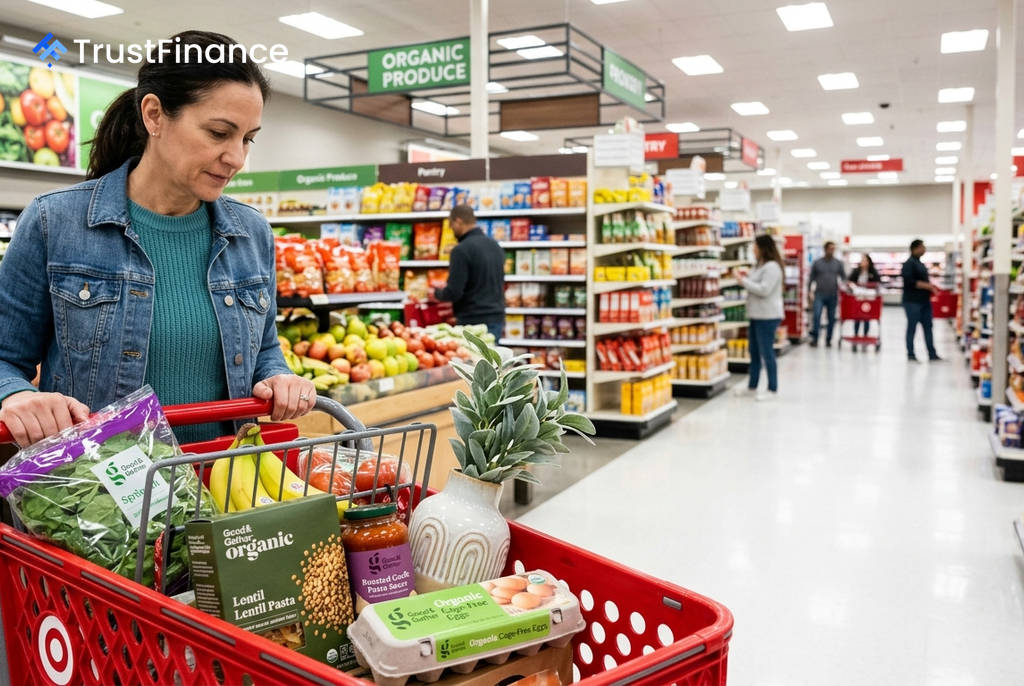
Target's strategic pivot toward groceries is showing early signs of success, driving the fastest growth in its food and beverage business in three years. However, the retailer now faces the critical challenge of converting increased foot traffic from lower-margin food sales into purchases of more profitable discretionary goods.
A Bet on the Grocery Aisle
In its quarter ending August 1, Target (TGT) reported that food and beverage sales grew by 7%, a significant acceleration from previous periods, according to a Reuters report. This growth, a cornerstone of new CEO Michael Fiddelke's strategy, contributed to a 3.6% rise in overall store traffic.
The company has been revamping its grocery departments, focusing on high-growth areas like protein snacks, which saw sales jump 15%. The goal, as Chief Merchandising Officer Cara Sylvester told analysts, is to "make food a destination, not simply a category guests shop while they’re in our stores."
The Crossover Spending Challenge
The success of Target's strategy hinges on its ability to encourage grocery shoppers to buy higher-margin items elsewhere in the store. Food and beverages account for less than a quarter of Target's merchandise sales, a far smaller share than at rival Walmart, where groceries represent 59% of sales.
 Ad
While home furnishings and apparel were roughly flat in the latest quarter, other discretionary categories showed strength. The company's hardlines business grew 10.6% and beauty sales rose about 7%. "The right measure of success is whether Target’s food business grows faster than the category and pulls incremental visits," said Jacob Aiken-Phillips, consumer research director at Melius Research, in comments to Reuters. The strategy "only pays off if those trips carry into the rest of the store."
Private Labels and Future Outlook
To fuel further growth, Target plans to introduce approximately 600 new private-label food and beverage products over the next two years, with 400 under its popular Good & Gather brand. A company spokesperson told Reuters that Target expects these initiatives to generate more than $2 billion in growth in the coming years.
While some analysts caution that merchandising overhauls can produce a temporary lift that fades over time, investors are increasingly optimistic. Sarah Henry, a managing director at shareholder Logan Capital Management, told Reuters that the upcoming back-to-school and holiday shopping seasons will be the real test. Investors will be closely watching whether the traffic driven by groceries translates into a broader, more profitable sales recovery.
Read next
More on Stocks
FTC Orders Walmart, Uber, Delta to Disclose Data on Personalized Pricing
The U.S. Federal Trade Commission is demanding nine major companies, including leading retail, travel, and gig economy firms, to provide information on how they use consumer data for setting individual prices and wages.

Google Launches Gemini 4 Carbon AI Model to Bolster Cybersecurity Capabilities
Alphabet's Google has unveiled Gemini 4 Carbon, its latest AI model specifically designed for advanced cybersecurity tasks like vulnerability detection and secure code generation. The launch escalates competition with rivals OpenAI and Anthropic in the enterprise AI market.

Oracle Shares Surge After Unveiling $225 Billion Revenue Target for 2030
Oracle stock rose sharply after the company presented a long-term financial outlook targeting at least $225 billion in annual revenue by fiscal 2030, driven by its expanding AI infrastructure business.

DOJ Scrutinizes Nvidia's $12.9B Hugging Face Deal Amid Broader Antitrust Probe, Sources Say
The U.S. Department of Justice is reportedly examining Nvidia's planned $12.93 billion acquisition of AI platform Hugging Face as part of a wider, ongoing antitrust investigation into the chipmaker's market conduct.