
Story
Taiwan Central Bank Confirms June Forex Intervention as Reserves Decline
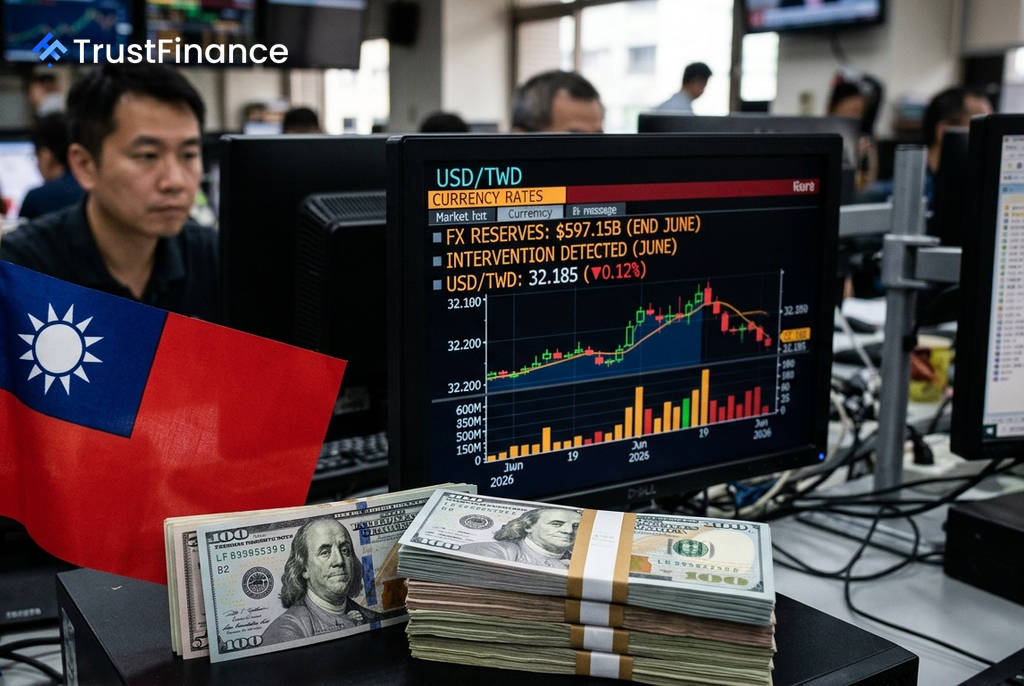
Taiwan's central bank intervened in the foreign exchange market in June, contributing to a drop in the country's foreign reserves, the monetary authority confirmed in a statement. Total reserves fell to $597.15 billion at the end of the month.
Details of the Decline
According to Eugene Tsai, head of the central bank’s foreign exchange department, the decline in reserves was primarily the result of the bank's net selling of foreign currency during June. A significant depreciation of non-U.S. currencies against the dollar also played a role.
The central bank's statement listed several factors affecting the June reserve levels:
- Investment gains
- Intervention activities
- Exchange rate changes against the U.S. dollar
For additional context, the bank's statement noted that its net foreign exchange sales in the first quarter of the year totaled $12.593 billion.
 Ad
Impact of U.S. Monetary Policy
The strengthening of the U.S. dollar was a key driver behind the market dynamics, Tsai explained at a briefing in Taipei. He attributed the dollar's strength to the market's perception of the U.S. Federal Open Market Committee’s (FOMC) June meeting as "relatively hawkish."
This sentiment bolstered the dollar and directly affected foreign exchange selling prices in the market, putting pressure on other currencies.
Central Bank Outlook
Looking ahead, Tsai suggested that the Federal Reserve will likely keep interest rates unchanged at its September meeting, citing easing inflation and a relatively mild U.S. labor market. He added that if the U.S. dollar's strength moderates, market participants may become more willing to sell foreign currency.