
Story
Stock Prices Disconnect from Historic Q2 Earnings Beats, Barclays Says
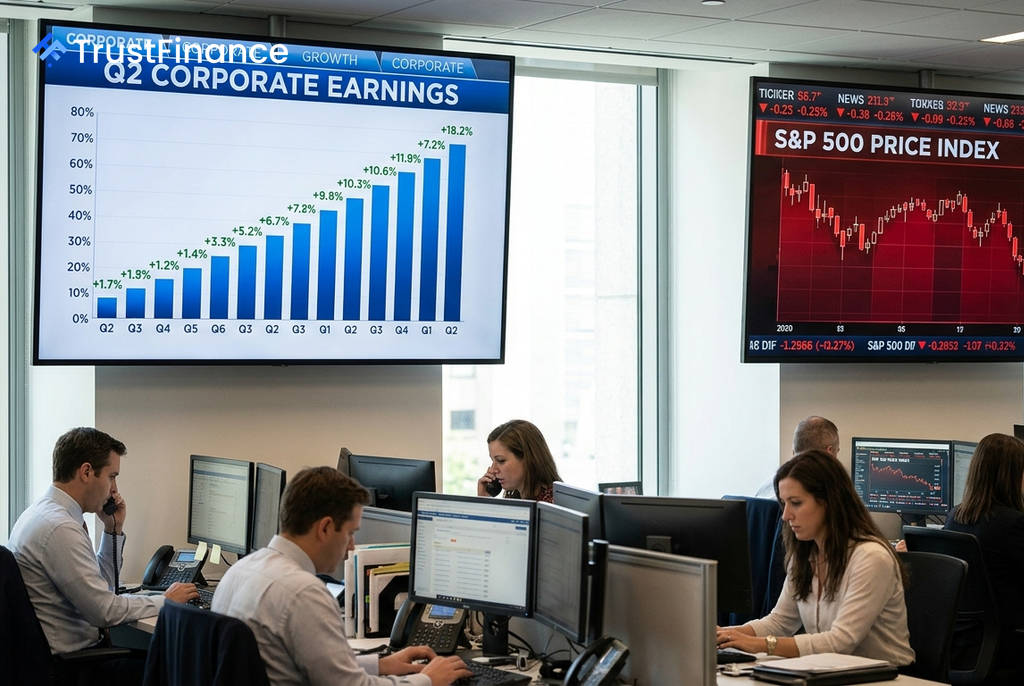
Even as U.S. companies report one of the strongest earnings seasons in years, their stock prices are failing to reflect the positive results. A new analysis from Barclays finds that market reactions have become increasingly disconnected from fundamentals, with both earnings beats and misses now frequently triggering negative price movements.
A Season of Record-Setting Results
The second-quarter earnings season has been exceptional by several measures. According to data from Factset, the S&P 500 is on pace for its highest revenue growth rate since the fourth quarter of 2021, led by double-digit gains in the energy, technology, and communications services sectors.
Barclays analysts, led by Venu Krishna, noted in a Saturday report that the results have surpassed historical averages significantly:
- Earnings Beats: 85% of companies have exceeded earnings estimates, compared to a long-term average of 76%.
- Surprise Margin: The average positive earnings surprise has been 30.7%, dwarfing the long-term trend of 5.2%.
Energy giants provided a stark example of this strength. ExxonMobil reported a $14.5 billion profit, its highest since 2022, while Chevron earned a record $12.1 billion, nearly five times its profit from the prior year.
Investor Expectations Outpace Performance
 Ad
Despite these robust figures, Barclays observed that the "price reaction has become increasingly disconnected from earnings results." In a shift from previous quarters where only misses were heavily penalized, Q2 has seen both positive and negative surprises met with stock declines.
The analysts attribute this phenomenon to several factors, including a run-up in stock prices leading to stretched positioning, elevated expectations from investors, and intense scrutiny of corporate spending, particularly on artificial intelligence.
AI Capital Expenditure in Focus
Guidance on capital expenditures (capex) for AI infrastructure emerged as a critical theme this season. Investors punished companies that signaled aggressive spending increases, including Tesla, Google-parent Alphabet, and Facebook-owner Meta. In contrast, Microsoft was rewarded by the market after it refrained from raising its capex forecast.
Barclays found further evidence in the options market, where implied price moves ahead of earnings were broadly higher than the moves that actually materialized. This suggests investors had priced in near-perfect results, creating a high bar for a positive reaction and "limited tolerance for anything short of a clean beat-and-raise."
Read next
More on Stocks
FTC Orders Walmart, Uber, Delta to Disclose Data on Personalized Pricing
The U.S. Federal Trade Commission is demanding nine major companies, including leading retail, travel, and gig economy firms, to provide information on how they use consumer data for setting individual prices and wages.

Google Launches Gemini 4 Carbon AI Model to Bolster Cybersecurity Capabilities
Alphabet's Google has unveiled Gemini 4 Carbon, its latest AI model specifically designed for advanced cybersecurity tasks like vulnerability detection and secure code generation. The launch escalates competition with rivals OpenAI and Anthropic in the enterprise AI market.

Oracle Shares Surge After Unveiling $225 Billion Revenue Target for 2030
Oracle stock rose sharply after the company presented a long-term financial outlook targeting at least $225 billion in annual revenue by fiscal 2030, driven by its expanding AI infrastructure business.

DOJ Scrutinizes Nvidia's $12.9B Hugging Face Deal Amid Broader Antitrust Probe, Sources Say
The U.S. Department of Justice is reportedly examining Nvidia's planned $12.93 billion acquisition of AI platform Hugging Face as part of a wider, ongoing antitrust investigation into the chipmaker's market conduct.