
Story
Sterling Slips as Geopolitical Tensions and Hawkish Fed Bets Boost US Dollar
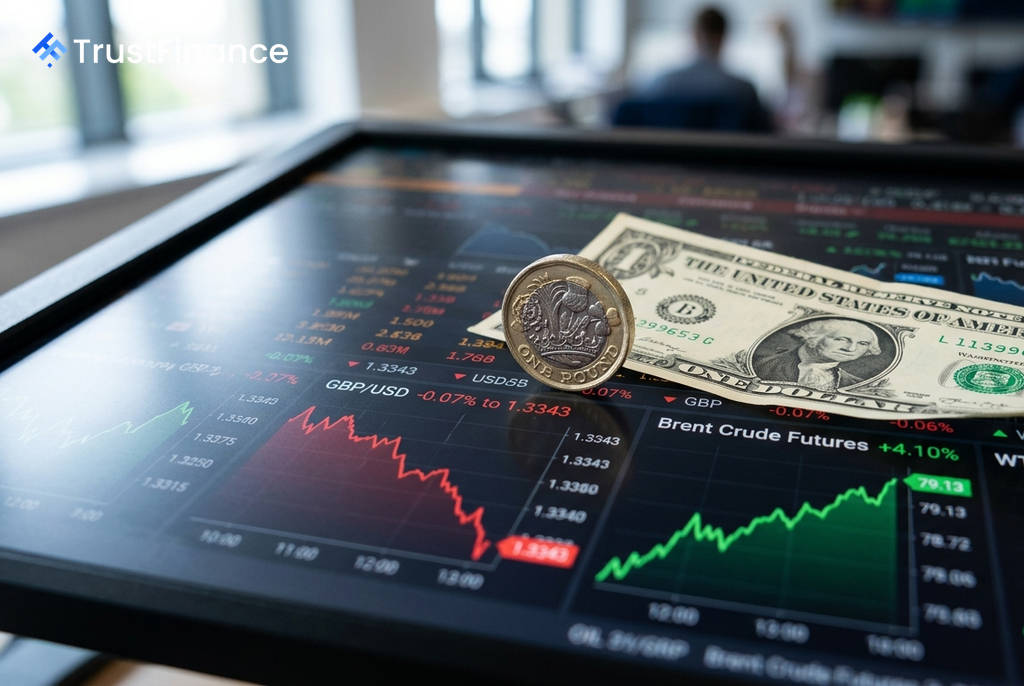
The British pound eased against the U.S. dollar on Wednesday, pressured by a broad-based rally in the greenback fueled by rising oil prices, geopolitical tensions, and investor positioning for potentially hawkish Federal Reserve meeting minutes.
Dollar Strength Weighs on Pound
As of 06:15 ET (10:15 GMT), the GBP/USD currency pair was down 0.07% to trade at $1.3343. The euro also weakened against the dollar, with the EUR/USD pair slipping 0.08% to $1.1403.
The dollar's strength coincided with a sharp rise in energy prices following reports of new U.S. strikes on Iran. Brent crude, the international oil benchmark, surged close to 6% to trade near $79 a barrel, bolstering the U.S. currency's appeal.
Market Focus on Fed and Geopolitics
The U.S. dollar attracted significant safe-haven demand amid the heightened geopolitical risk and general caution in equity markets. "Equity jitters offered the dollar some support yesterday – a reminder of the greenback’s very strong safe-haven appeal," said Francesco Pesole, an FX strategist at ING, in a note cited by the source.
 Ad
Investors are also keenly awaiting the release of minutes from the Federal Reserve's June policy meeting later today. The market widely expects the details to reinforce the central bank's hawkish stance. Pesole noted that "The importance of the Fed’s hawkish shift in June for the dollar cannot be overstated."
Context and Outlook
Despite Wednesday's decline, sterling has recently found support from increasing bets on a Bank of England interest rate hike. According to the source, money markets are now fully pricing in a 25-basis-point increase by the end of the year.
However, the immediate driver for the currency pair remains the dollar's momentum. Futures markets currently imply just 35 basis points of Fed rate cuts by December, highlighting investor conviction in a higher-for-longer interest rate environment in the United States. A significant shift toward a weaker dollar would likely require a dovish surprise in the Fed minutes or weaker-than-expected U.S. economic data, an outcome analysts currently see as unlikely.