
Story
SpaceX Wireless Plans a Net Positive for T-Mobile and Tower Stocks, BofA Says
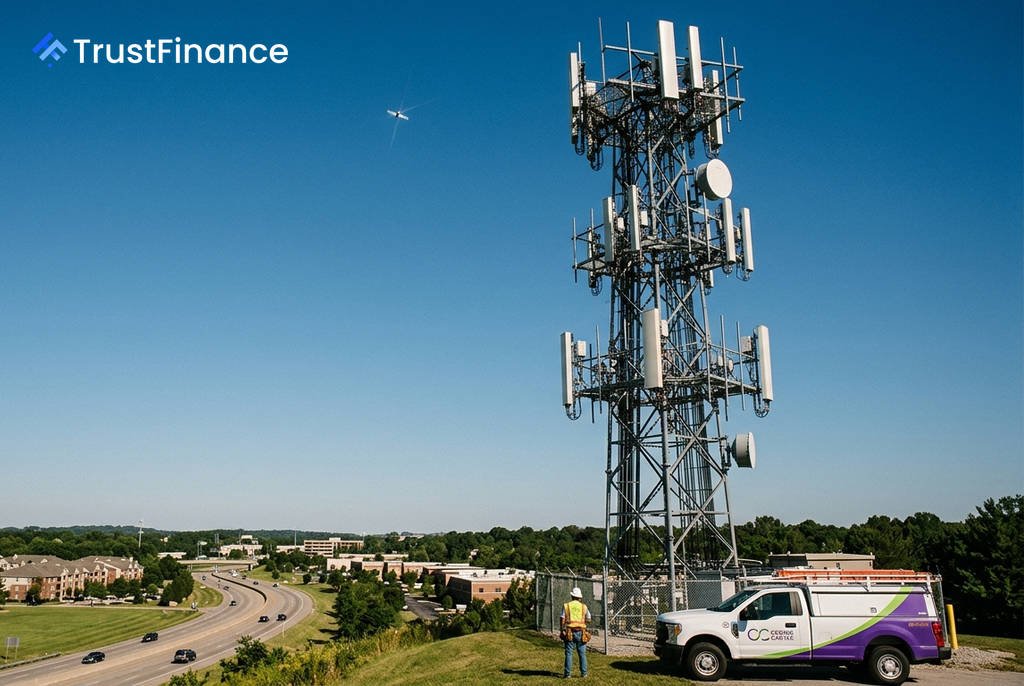
SpaceX's ambitions to build a wireless network are viewed as a positive development for T-Mobile (NASDAQ:TMUS) and telecommunications tower companies, according to a new analysis from Bank of America. The firm's assessment, following discussions with executives from T-Mobile and Crown Castle (NYSE:CCI), suggests the formidable challenges of creating a new terrestrial network would likely force SpaceX to partner with, rather than compete against, established operators.
Analyst Viewpoint
Bank of America analysts contend that for SpaceX to launch a viable terrestrial mobile service, it would need to overcome several major hurdles. These include acquiring significantly more spectrum, investing years in construction and permitting, and making a strategic choice between building its own tower infrastructure or leasing space from existing providers.
Given these obstacles, the bank believes SpaceX's entry is more likely to increase the value of existing assets. Any move by SpaceX would underscore the value of T-Mobile's spectrum holdings and the critical infrastructure provided by tower companies, potentially leading to new leasing or partnership agreements.
Significant Hurdles for a New Network
Industry executives cited in the report dismissed the feasibility of a network built on customer-hosted femtocells, a small, low-power cellular base station. T-Mobile CTO Dr. John Saw stated that such a setup could not replicate the core features of a modern wireless network, such as seamless mobility, reliable indoor coverage, and consistent highway handoffs.
 Ad
Crown Castle executives provided a cost estimate for this approach, suggesting it would require four million femtocells for New York City alone and between 500 million and 1.5 billion units nationwide, at a cost of roughly $1,000 per device. They also noted that SpaceX's limited cellular spectrum would constrain direct-to-cell capacity and that using the same spectrum for both satellite and terrestrial services could create significant interference issues.
Market Implications
The consensus view from the report is that satellite-to-device connectivity is a complementary technology, best suited for providing coverage in remote areas, rather than a replacement for established mobile networks. Tower infrastructure offers essential space, power, fiber, and permitting expertise that enables faster and more efficient network deployment than building from scratch.
While Bank of America acknowledges SpaceX's deep financial resources could allow it to build faster than Dish, which took four years to deploy 20,000 sites, the fundamental challenges remain. Achieving parity with incumbent operators on coverage, capacity, and reliability would still require immense investment and years of disciplined execution, making partnerships the most probable path forward.
Read next
More on Stocks
FTC Orders Walmart, Uber, Delta to Disclose Data on Personalized Pricing
The U.S. Federal Trade Commission is demanding nine major companies, including leading retail, travel, and gig economy firms, to provide information on how they use consumer data for setting individual prices and wages.

Google Launches Gemini 4 Carbon AI Model to Bolster Cybersecurity Capabilities
Alphabet's Google has unveiled Gemini 4 Carbon, its latest AI model specifically designed for advanced cybersecurity tasks like vulnerability detection and secure code generation. The launch escalates competition with rivals OpenAI and Anthropic in the enterprise AI market.

Oracle Shares Surge After Unveiling $225 Billion Revenue Target for 2030
Oracle stock rose sharply after the company presented a long-term financial outlook targeting at least $225 billion in annual revenue by fiscal 2030, driven by its expanding AI infrastructure business.

DOJ Scrutinizes Nvidia's $12.9B Hugging Face Deal Amid Broader Antitrust Probe, Sources Say
The U.S. Department of Justice is reportedly examining Nvidia's planned $12.93 billion acquisition of AI platform Hugging Face as part of a wider, ongoing antitrust investigation into the chipmaker's market conduct.