
Story
S&P 500 Companies Post Strong Q2 Earnings Beat, Barclays Reports
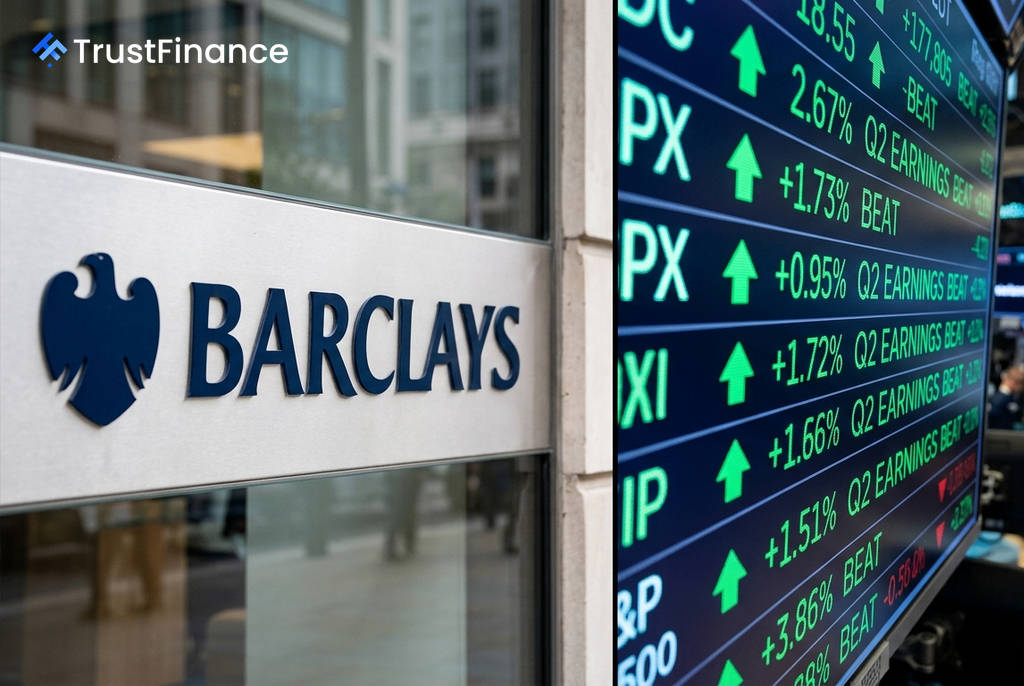
Second-quarter earnings for S&P 500 companies have significantly surpassed analyst expectations, with a high percentage of firms reporting better-than-anticipated results, according to a recent report from Barclays. The analysis comes as the reporting season is well underway, with approximately 63% of the index's constituents having released their figures.
Widespread Earnings Beat
Companies delivered an average earnings surprise of 30.7%, a figure substantially higher than the long-term average of 5.2%, Barclays noted. The beat rate was also robust, with 85% of reporting companies exceeding consensus estimates, compared to a historical trend of 76%.
Key growth metrics showed considerable strength:
- Earnings per share (EPS) grew 25.1% year-over-year.
- Revenue increased 11.2% year-over-year.
Both figures represent an acceleration from the previous quarter and stand above long-term averages, according to the report.
 Ad
Big Tech and Sector Leaders
Big Tech firms were a primary driver of the strong performance. Excluding NVIDIA, which has not yet reported, these companies posted an average earnings surprise of 87%, with EPS growth tracking at 32.4% year-over-year—the highest since the third quarter of 2025. The group's forward price-to-earnings ratio is currently trading around 24.4 times.
Sector performance was led by Communication Services, with a standout contribution from Alphabet, and Consumer Discretionary, led by Amazon. In contrast, the Utilities sector lagged behind its peers. Following the strong results, the Wall Street consensus for full-year 2026 S&P 500 EPS has been revised upward to $351.
Muted Market Reaction
Despite the positive earnings news, the immediate stock price reaction has been counterintuitive. Barclays observed that both earnings beats and misses have, on average, resulted in negative price movements for the reporting companies. This marks the first time such a pattern has occurred since the fourth quarter of 2024, suggesting that high expectations may have already been priced into the market or that forward-looking guidance is tempering investor enthusiasm.
Read next
More on Stocks
FTC Orders Walmart, Uber, Delta to Disclose Data on Personalized Pricing
The U.S. Federal Trade Commission is demanding nine major companies, including leading retail, travel, and gig economy firms, to provide information on how they use consumer data for setting individual prices and wages.

Google Launches Gemini 4 Carbon AI Model to Bolster Cybersecurity Capabilities
Alphabet's Google has unveiled Gemini 4 Carbon, its latest AI model specifically designed for advanced cybersecurity tasks like vulnerability detection and secure code generation. The launch escalates competition with rivals OpenAI and Anthropic in the enterprise AI market.

Oracle Shares Surge After Unveiling $225 Billion Revenue Target for 2030
Oracle stock rose sharply after the company presented a long-term financial outlook targeting at least $225 billion in annual revenue by fiscal 2030, driven by its expanding AI infrastructure business.

DOJ Scrutinizes Nvidia's $12.9B Hugging Face Deal Amid Broader Antitrust Probe, Sources Say
The U.S. Department of Justice is reportedly examining Nvidia's planned $12.93 billion acquisition of AI platform Hugging Face as part of a wider, ongoing antitrust investigation into the chipmaker's market conduct.