
Story
S&P 500 CEO Pay Hits Record $22.8 Million, Fueled by Musk-Style Mega-Deals, Report Finds
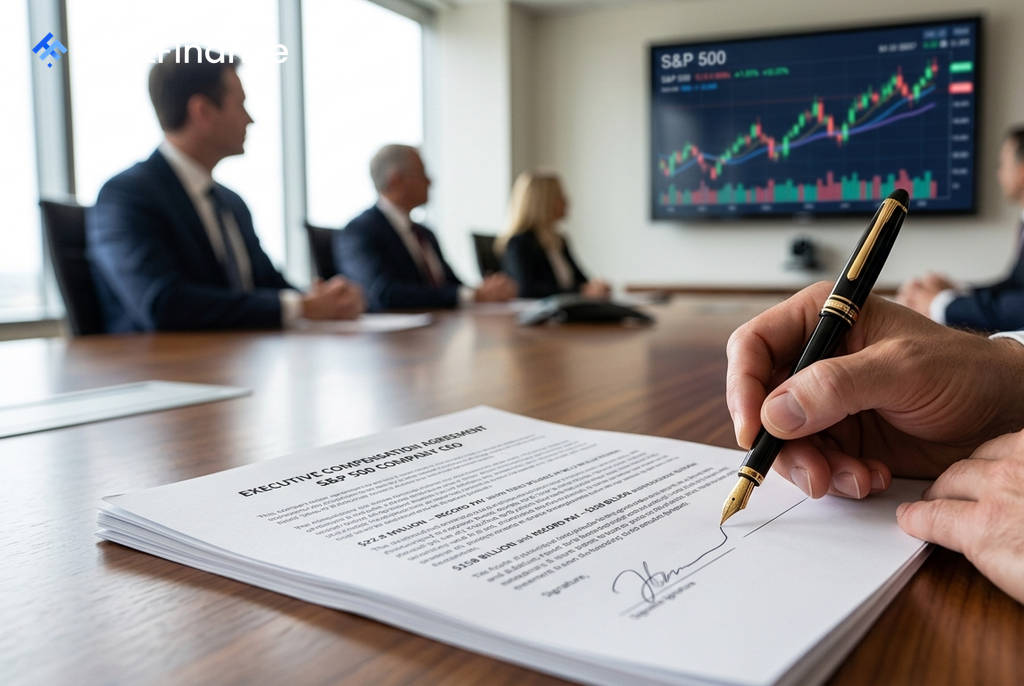
Chief executive compensation at S&P 500 companies soared to a record high in 2025, driven by a proliferation of large-scale pay packages modeled after deals for Tesla CEO Elon Musk. A new study from the American Federation of Labor and Congress of Industrial Organizations (AFL-CIO) found that average CEO pay jumped 21% to $22.8 million last year, even when excluding Musk's own extraordinary compensation.
Record Pay and a Widening Gap
The findings, part of the AFL-CIO's annual Paywatch report, mark the highest level of executive compensation since the labor federation began tracking the data in the 1990s. This surge has significantly widened the gap between executive and employee pay.
The report highlights a stark contrast in wage growth:
- The average ratio of CEO-to-worker pay at S&P 500 firms climbed to 312-to-1 in 2025, up from 285-to-1 in 2024.
- Mean annual wages for all U.S. workers rose by just 3% to $69,770 as of May 2025, according to U.S. Labor Department statistics.
"As we talk to our members, they’re pissed off over what’s happening to them, and they feel as though they should be more vocal in terms of calling attention to inequality," said Fred Redmond, the AFL-CIO’s secretary-treasurer, in an interview with Reuters.
The 'Musk Effect' on Compensation
 Ad
The study attributes the sharp rise in executive pay to the growing prevalence of "mega-pay plans" inspired by Elon Musk's compensation arrangements. Last November, Tesla shareholders approved a restricted stock plan for Musk that the company valued at $158 billion. Including this figure, the average S&P 500 CEO pay for 2025 reached an astronomical $340.1 million, pushing the average pay ratio to 5,387-to-1.
Corporate boards are increasingly using these massive, performance-based awards as a benchmark. Musk’s pay "changes the dynamic when other CEO compensation plans come up, boards use it as a reference," Redmond noted.
Shareholder Scrutiny of Special Awards
While boards often argue that such pay plans are tied to creating shareholder value, some investors are showing signs of pushback, particularly against special, one-off awards. According to compensation consulting firm Semler Brossy, these awards outside of annual programs have become a "hot-button issue."
Though average support for advisory "say on pay" votes remains high at 90.6%, certain large awards have faced significant dissent:
- A $118.9 million retention award for Goldman Sachs CEO David Solomon received support from only 71% of shares cast.
- A long-term award for Welltower CEO Shankh Mitra, valued at $821 million, was supported by just 19% of shares cast.
Read next
More on Stocks
FTC Orders Walmart, Uber, Delta to Disclose Data on Personalized Pricing
The U.S. Federal Trade Commission is demanding nine major companies, including leading retail, travel, and gig economy firms, to provide information on how they use consumer data for setting individual prices and wages.

Google Launches Gemini 4 Carbon AI Model to Bolster Cybersecurity Capabilities
Alphabet's Google has unveiled Gemini 4 Carbon, its latest AI model specifically designed for advanced cybersecurity tasks like vulnerability detection and secure code generation. The launch escalates competition with rivals OpenAI and Anthropic in the enterprise AI market.

Oracle Shares Surge After Unveiling $225 Billion Revenue Target for 2030
Oracle stock rose sharply after the company presented a long-term financial outlook targeting at least $225 billion in annual revenue by fiscal 2030, driven by its expanding AI infrastructure business.

DOJ Scrutinizes Nvidia's $12.9B Hugging Face Deal Amid Broader Antitrust Probe, Sources Say
The U.S. Department of Justice is reportedly examining Nvidia's planned $12.93 billion acquisition of AI platform Hugging Face as part of a wider, ongoing antitrust investigation into the chipmaker's market conduct.