
Story
South Korean Retail Investors Pivot to US Stocks Amid KOSPI Sell-Off
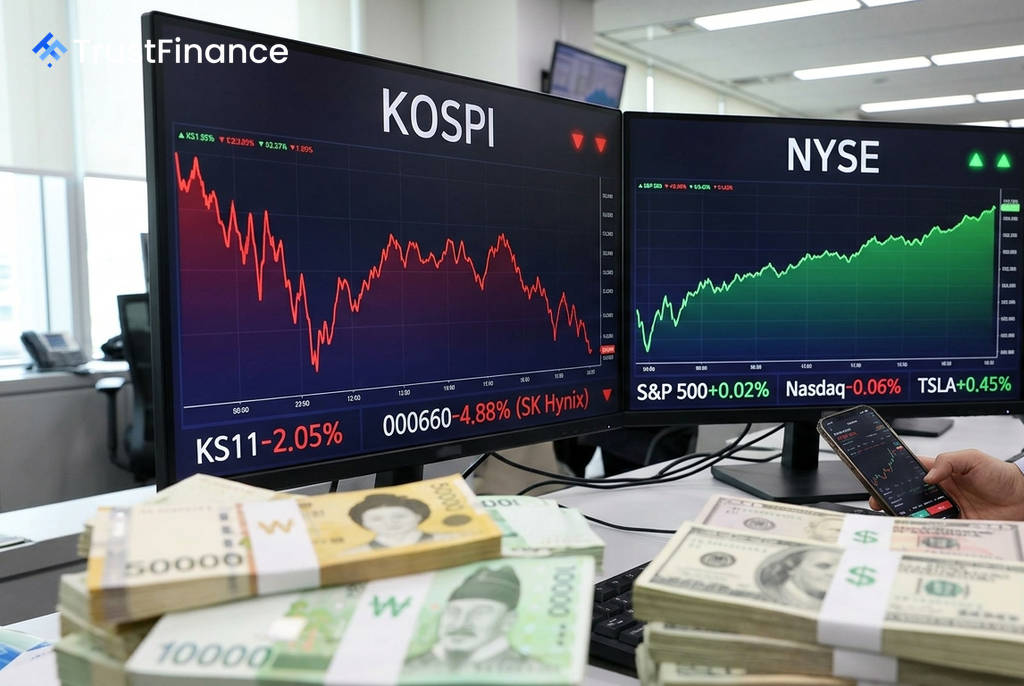
South Korean retail investors, known locally as “ants,” dramatically increased their exposure to U.S. stocks in July, channeling $4.6 billion into Wall Street amid a severe rout in their domestic market. The shift marks a significant setback for government efforts to encourage local investment and signals a return to a long-standing preference for overseas equities.
A Reversal of Capital Flows
The rush into U.S. markets represents the largest such move in six months, according to data from the Korea Securities Depository. July's buying activity was substantially higher than the $2.7 billion monthly average recorded in 2025. According to Reuters calculations, these purchases of U.S. shares surpassed buying of domestic stocks for the first time since February, underscoring a rapid erosion of confidence in the local market.
This outflow reverses a recent trend that saw retail money pour into the domestic market, partly encouraged by government tax incentives for investors who sold foreign shares to buy local ones. However, deposits in these special "Re-shoring Investment Accounts" saw their first monthly decline in July, data from the Korea Financial Investment Association showed.
KOSPI Plunge Drives Exodus
The catalyst for the exodus was the benchmark KOSPI's worst monthly performance since the 2008 global financial crisis. The index has fallen 33% from its June peak, wiping out 2,257.8 trillion won ($1.59 trillion) in market value. Technology giants were at the center of the decline, with chipmakers Samsung Electronics and SK Hynix accounting for 76% of the total loss.
 Ad
Key indicators of the sentiment shift include:
- Domestic stock trading account deposits fell to 102.8 trillion won, down from a record 140 trillion won in early June.
- The Nasdaq, by contrast, remained relatively flat over the same period, highlighting the perceived stability of U.S. markets.
- The trend has continued into August, with retail investors buying a net $278 million of overseas equities so far.
Implications for the Korean Won
Analysts warn that the renewed capital flight poses a risk to the South Korean won (KRW). A pattern of retail savings flowing overseas acts as a persistent drag on the currency. "If Korean equities continue to lag their US counterparts, we worry that domestic retail outflows could re-emerge," Bank of America analysts stated in a note.
Ironically, the won's recent strength has made foreign assets more attractive. The currency jumped 8% in July, its best monthly gain since November 2022, lowering the cost for Korean investors to buy U.S. dollar-denominated stocks. "Outflows slowed because the domestic market was strong, but they re-accelerated as the KOSPI collapsed, fanning investor views that the U.S. is the right decision after all," said Kwon Ah-min, an FX analyst at NH Investment Securities.
Read next
More on Stocks
FTC Orders Walmart, Uber, Delta to Disclose Data on Personalized Pricing
The U.S. Federal Trade Commission is demanding nine major companies, including leading retail, travel, and gig economy firms, to provide information on how they use consumer data for setting individual prices and wages.

Google Launches Gemini 4 Carbon AI Model to Bolster Cybersecurity Capabilities
Alphabet's Google has unveiled Gemini 4 Carbon, its latest AI model specifically designed for advanced cybersecurity tasks like vulnerability detection and secure code generation. The launch escalates competition with rivals OpenAI and Anthropic in the enterprise AI market.

Oracle Shares Surge After Unveiling $225 Billion Revenue Target for 2030
Oracle stock rose sharply after the company presented a long-term financial outlook targeting at least $225 billion in annual revenue by fiscal 2030, driven by its expanding AI infrastructure business.

DOJ Scrutinizes Nvidia's $12.9B Hugging Face Deal Amid Broader Antitrust Probe, Sources Say
The U.S. Department of Justice is reportedly examining Nvidia's planned $12.93 billion acquisition of AI platform Hugging Face as part of a wider, ongoing antitrust investigation into the chipmaker's market conduct.