
Story
South Korean KOSPI Halts Trading After Chip Selloff Batters Samsung, SK Hynix
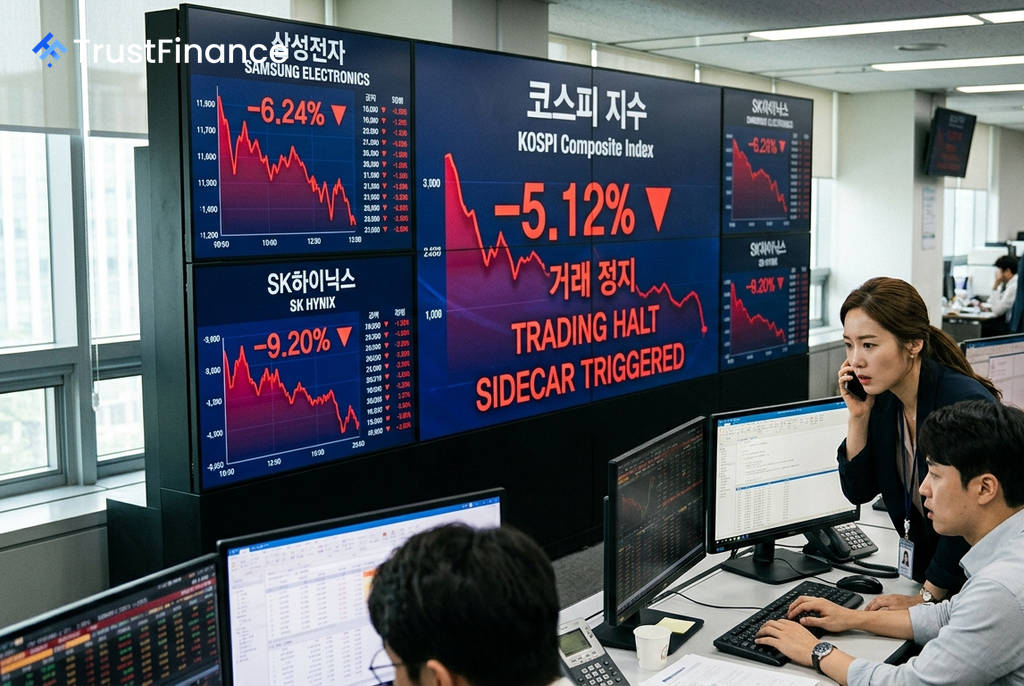
South Korea’s benchmark KOSPI index plunged on Wednesday, triggering a temporary halt in program trading after a steep selloff in global semiconductor stocks battered market heavyweights Samsung Electronics and SK Hynix.
Sharp Selloff Triggers Trading Halt
The sharp decline activated a “sidecar,” a mechanism that briefly pauses program-based selling to stabilize the market during periods of extreme volatility. The KOSPI fell by as much as 6.4% during the session before paring some losses to close down 4.53% at 6,558.41, according to Investing.com data.
The selling was concentrated in the country's dominant chipmakers, which are major constituents of the index:
- SK Hynix Inc shares tumbled 6.56%.
- Samsung Electronics Co Ltd shares dropped 5.40%.
US Chip Rout Spreads to Asia
 Ad
The downturn in Seoul followed a sharp reversal on Wall Street, where technology stocks faced intense selling pressure. The Philadelphia Semiconductor Index (SOX), a key benchmark for the chip sector, plunged 5.6% on Tuesday in its worst session since early July.
Memory chip manufacturers were particularly hard-hit in the U.S. session, with Micron Technology falling 7% and SK Hynix’s U.S.-listed shares declining 9.2%. As leading producers of high-bandwidth memory (HBM) for artificial intelligence applications, Samsung and SK Hynix are highly sensitive to shifts in investor sentiment toward the global AI trade.
Profit-Taking and Rising Yields Add Pressure
The selloff also appears to be driven by a bout of profit-taking. The KOSPI had been on a six-session winning streak prior to Wednesday's drop, giving investors an incentive to lock in recent gains as market sentiment soured.
Broader macroeconomic pressures are also weighing on technology valuations. Rising U.S. government bond yields, with the 30-year Treasury yield climbing to its highest level since 2007, make high-growth stocks less attractive by increasing the discount rate used to value future earnings. Investors also continue to weigh whether the massive capital expenditures in AI infrastructure will generate sufficient near-term returns.
Read next
More on Stocks
FTC Orders Walmart, Uber, Delta to Disclose Data on Personalized Pricing
The U.S. Federal Trade Commission is demanding nine major companies, including leading retail, travel, and gig economy firms, to provide information on how they use consumer data for setting individual prices and wages.

Google Launches Gemini 4 Carbon AI Model to Bolster Cybersecurity Capabilities
Alphabet's Google has unveiled Gemini 4 Carbon, its latest AI model specifically designed for advanced cybersecurity tasks like vulnerability detection and secure code generation. The launch escalates competition with rivals OpenAI and Anthropic in the enterprise AI market.

Oracle Shares Surge After Unveiling $225 Billion Revenue Target for 2030
Oracle stock rose sharply after the company presented a long-term financial outlook targeting at least $225 billion in annual revenue by fiscal 2030, driven by its expanding AI infrastructure business.

DOJ Scrutinizes Nvidia's $12.9B Hugging Face Deal Amid Broader Antitrust Probe, Sources Say
The U.S. Department of Justice is reportedly examining Nvidia's planned $12.93 billion acquisition of AI platform Hugging Face as part of a wider, ongoing antitrust investigation into the chipmaker's market conduct.