
Story
SoFi vs. Robinhood: Fintechs Clash on Profitability and Valuation Metrics
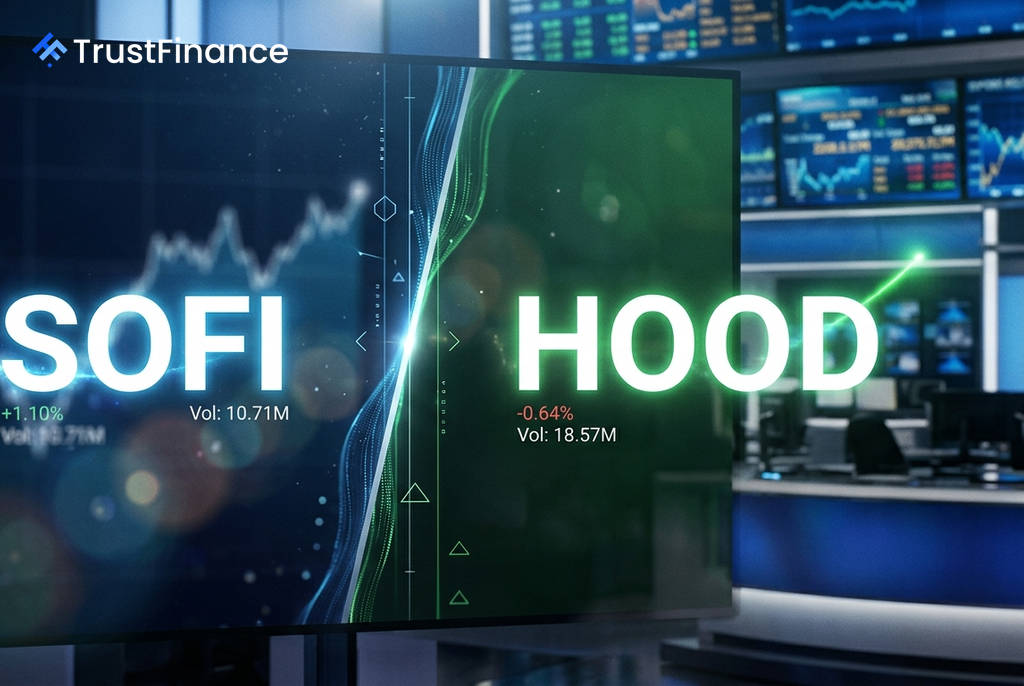
An analysis of key financial metrics for SoFi Technologies (SOFI) and Robinhood Markets (HOOD) highlights a classic investor trade-off between quality and value. Robinhood demonstrates exceptional profitability, while SoFi trades at significantly lower valuation multiples, creating a complex picture for investors evaluating the two fintech disruptors.
A Tale of Two Fintechs
A direct comparison of their financial performance reveals two distinct business models and outcomes. Robinhood's lean, transaction-focused platform generates significantly higher margins and returns on capital.
- Net Margin: Robinhood boasts a 42.0% net margin, dwarfing SoFi's 14.9%.
- Return on Equity (ROE): Robinhood's ROE stands at 23.6%, more than triple SoFi's 7.1%.
- Free Cash Flow (FCF) Yield: Robinhood generates a positive FCF yield of 0.3%, whereas SoFi shows a significant cash burn with a FCF yield of -26.8%.
In contrast, SoFi presents a more compelling case on standard valuation metrics and has a more conservative balance sheet. SoFi, which operates with a bank charter, trades at 2.1 times its book value, while Robinhood commands a much higher premium at 8.7 times book value. Furthermore, SoFi's debt-to-equity ratio is a modest 30.7% compared to Robinhood's highly leveraged 242.3%.
Valuation Models and Analyst Outlook
 Ad
Despite their differences, quantitative fair value models suggest both stocks are currently trading above their intrinsic worth. The model cited by Investing.com indicates SoFi has a potential downside of -22.6%, while Robinhood appears more overvalued with a -39.5% downside to its fair value estimate.
This quantitative view contrasts sharply with Wall Street analyst consensus. Analysts project a significant +31.5% upside for Robinhood's stock. Conversely, they see limited potential for SoFi, with an average price target implying a -3.6% downside.
The Investor Dilemma: Quality vs. Price
The core debate centers on whether Robinhood's superior operational performance justifies its steep valuation premium. Bulls point to its rare combination of high growth and high margins as a reason to own the stock, supported by strong analyst conviction. Bears, however, are cautious of its high leverage and reliance on cyclical trading volumes, arguing perfection is already priced in.
For SoFi, the bull case rests on its relatively cheaper valuation, lower leverage, and the stability provided by its banking charter. The primary concern for bears is its negative free cash flow, which indicates the company is still consuming cash to fund its growth. The resolution of this cash burn is seen as a critical catalyst for the stock.
Read next
More on Stocks
FTC Orders Walmart, Uber, Delta to Disclose Data on Personalized Pricing
The U.S. Federal Trade Commission is demanding nine major companies, including leading retail, travel, and gig economy firms, to provide information on how they use consumer data for setting individual prices and wages.

Google Launches Gemini 4 Carbon AI Model to Bolster Cybersecurity Capabilities
Alphabet's Google has unveiled Gemini 4 Carbon, its latest AI model specifically designed for advanced cybersecurity tasks like vulnerability detection and secure code generation. The launch escalates competition with rivals OpenAI and Anthropic in the enterprise AI market.

Oracle Shares Surge After Unveiling $225 Billion Revenue Target for 2030
Oracle stock rose sharply after the company presented a long-term financial outlook targeting at least $225 billion in annual revenue by fiscal 2030, driven by its expanding AI infrastructure business.

DOJ Scrutinizes Nvidia's $12.9B Hugging Face Deal Amid Broader Antitrust Probe, Sources Say
The U.S. Department of Justice is reportedly examining Nvidia's planned $12.93 billion acquisition of AI platform Hugging Face as part of a wider, ongoing antitrust investigation into the chipmaker's market conduct.