
Story
SK hynix Shares Tumble on U.S.-Korea Chip Investment Uncertainty
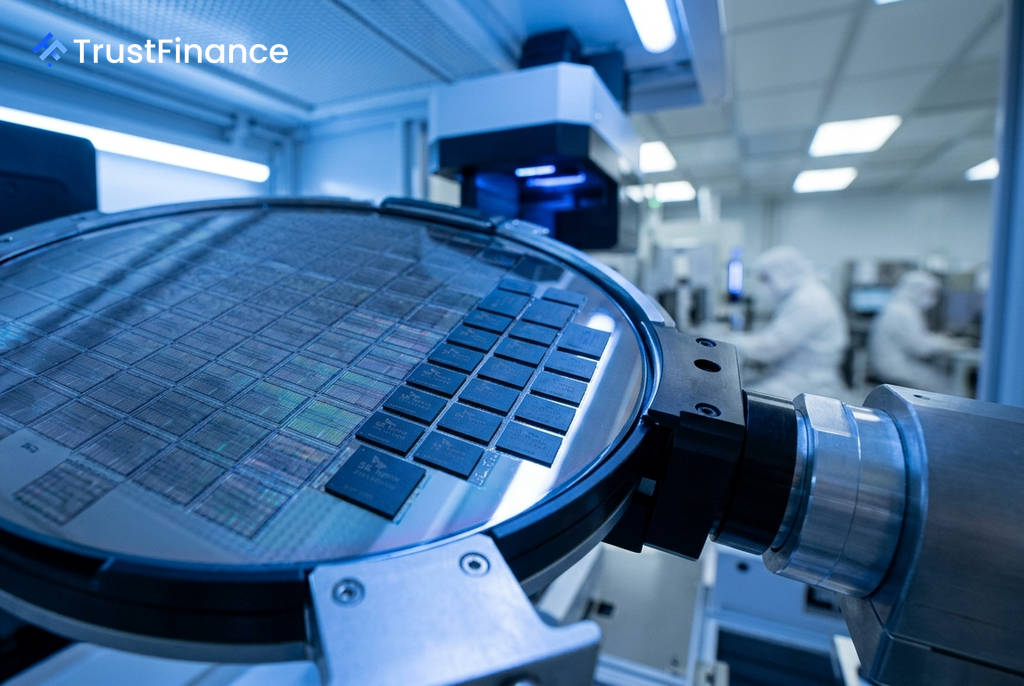
SK hynix Inc. shares fell sharply in morning trading, weighed down by a combination of geopolitical uncertainty, profit-taking, and a broader technology sector downturn. The sell-off was triggered after South Korea’s presidential office denied reports of U.S. pressure regarding the location of new semiconductor plants, creating ambiguity for the memory chipmaker's investment strategy.
Policy Uncertainty Weighs on Shares
Shares of SK hynix (ADR: SKHY) were trading down 5.6% at $161.85. The catalyst for the decline was a statement from South Korea’s presidential office denying reports that Washington had pressured Seoul to make U.S.-based factories the focus of a $350 billion investment commitment, according to a report from Investing.com.
While the office denied the reports, it declined to disclose the details of ongoing negotiations. This lack of clarity has introduced significant uncertainty for SK hynix's capital allocation, particularly after the company recently committed $38 billion to two new fabrication plants in South Korea.
Profit-Taking and Market Headwinds
The stock's decline also follows a strong performance in the prior session, where it surged 5.6% on optimism surrounding demand for its high-bandwidth memory (HBM) chips used in AI applications. Tuesday's move can be partly attributed to profit-taking as the stock met technical resistance near recent highs.
 Ad
Broader market sentiment contributed to the selling pressure. The tech-heavy NASDAQ Composite fell more than 1.1% during the session, with other memory chip manufacturers also trading lower in a sector-wide pullback.
Investor Sentiment Under Scrutiny
Adding to the stock's vulnerability, analysts had noted that South Korean retail investors were recently purchasing SK hynix's American Depositary Receipts (ADRs) at a premium of approximately 10% compared to its shares listed in Korea.
This dynamic was viewed as a potential sign of speculative froth, leaving the ADRs exposed to a sharp correction on any negative news. The combination of the policy headline and a risk-off market provided the catalyst for Tuesday's reversal.
Read next
More on Stocks
FTC Orders Walmart, Uber, Delta to Disclose Data on Personalized Pricing
The U.S. Federal Trade Commission is demanding nine major companies, including leading retail, travel, and gig economy firms, to provide information on how they use consumer data for setting individual prices and wages.

Google Launches Gemini 4 Carbon AI Model to Bolster Cybersecurity Capabilities
Alphabet's Google has unveiled Gemini 4 Carbon, its latest AI model specifically designed for advanced cybersecurity tasks like vulnerability detection and secure code generation. The launch escalates competition with rivals OpenAI and Anthropic in the enterprise AI market.

Oracle Shares Surge After Unveiling $225 Billion Revenue Target for 2030
Oracle stock rose sharply after the company presented a long-term financial outlook targeting at least $225 billion in annual revenue by fiscal 2030, driven by its expanding AI infrastructure business.

DOJ Scrutinizes Nvidia's $12.9B Hugging Face Deal Amid Broader Antitrust Probe, Sources Say
The U.S. Department of Justice is reportedly examining Nvidia's planned $12.93 billion acquisition of AI platform Hugging Face as part of a wider, ongoing antitrust investigation into the chipmaker's market conduct.