
Story
Singapore's Stock Rally Extends on 'Goldilocks' Economy, But Valuations Raise Caution
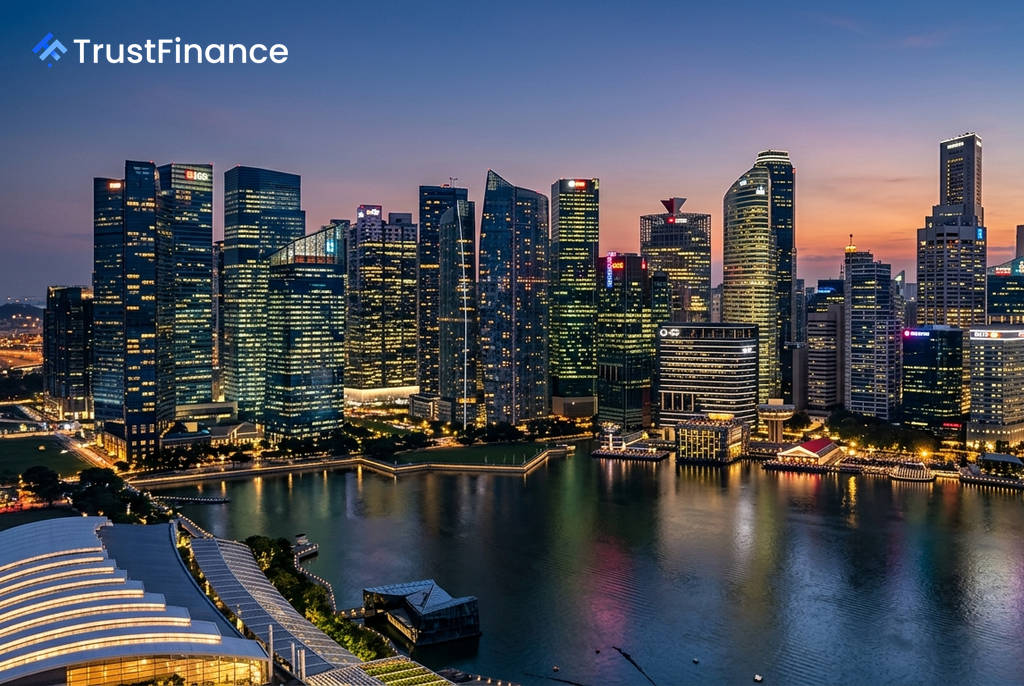
Singapore's stock market is extending a record-breaking rally, buoyed by what analysts describe as a "Goldilocks" economic environment of robust growth and manageable inflation. The benchmark Straits Times Index (STI) has surged 23% this year, matching its advance in 2025 and marking its fifth consecutive quarter of gains—the longest such streak in a decade, according to a Bloomberg report.
Economic Strength Fuels Optimism
JPMorgan analysts have pointed to Singapore's favorable economic backdrop, citing strong technology exports and productivity gains that are boosting corporate earnings without stoking excessive inflation. Reflecting this optimism, the bank raised its target for the STI to 6,500 on August 11, which implies approximately 13% upside from its recent close of 5,743.59.
Fund managers at firms including Jupiter Asset Management and Eastspring Investments also see potential for further gains. They highlight the country's expanding economy, a strengthening currency, and strategic investments in its wealth management sector and AI-related infrastructure as key pillars of support for the market.
Banks and Currency Lead the Charge
The rally has been largely driven by Singapore's three major lenders: DBS Group, Oversea-Chinese Banking Corp. (OCBC), and United Overseas Bank (UOB). All three recently reported second-quarter earnings that surpassed analyst expectations.
 Ad
- OCBC has been the standout performer in the 30-member index, gaining 61% this year.
- The strong performance of the banking sector has been complemented by the resilience of the Singapore dollar. The currency has appreciated nearly 6% against the U.S. dollar over the past three years as global investors sought it out as a haven asset amid geopolitical uncertainty.
Valuation and Concentration Risks Emerge
Despite the bullish sentiment, some investors are growing cautious due to stretched valuations and the market's increasing reliance on a few key stocks. The STI now trades at more than 16 times projected 12-month earnings, a level over two standard deviations above its 10-year average and its highest valuation since the global financial crisis.
This has prompted some fund managers, such as Fidelity International, to begin reducing their exposure to Singapore, noting that share price appreciation has outpaced earnings growth. Furthermore, the concentration of the index in the three major banks has risen significantly, with DBS, OCBC, and UOB now accounting for nearly 60% of the STI's market capitalization, up from 38% in July 2020. This leaves the benchmark's performance heavily dependent on the outlook for the banking sector rather than the broader economy.
Read next
More on Stocks
FTC Orders Walmart, Uber, Delta to Disclose Data on Personalized Pricing
The U.S. Federal Trade Commission is demanding nine major companies, including leading retail, travel, and gig economy firms, to provide information on how they use consumer data for setting individual prices and wages.

Google Launches Gemini 4 Carbon AI Model to Bolster Cybersecurity Capabilities
Alphabet's Google has unveiled Gemini 4 Carbon, its latest AI model specifically designed for advanced cybersecurity tasks like vulnerability detection and secure code generation. The launch escalates competition with rivals OpenAI and Anthropic in the enterprise AI market.

Oracle Shares Surge After Unveiling $225 Billion Revenue Target for 2030
Oracle stock rose sharply after the company presented a long-term financial outlook targeting at least $225 billion in annual revenue by fiscal 2030, driven by its expanding AI infrastructure business.

DOJ Scrutinizes Nvidia's $12.9B Hugging Face Deal Amid Broader Antitrust Probe, Sources Say
The U.S. Department of Justice is reportedly examining Nvidia's planned $12.93 billion acquisition of AI platform Hugging Face as part of a wider, ongoing antitrust investigation into the chipmaker's market conduct.