
Story
Silver's Dual Role Gives It Edge Over Platinum, Palladium for Investors
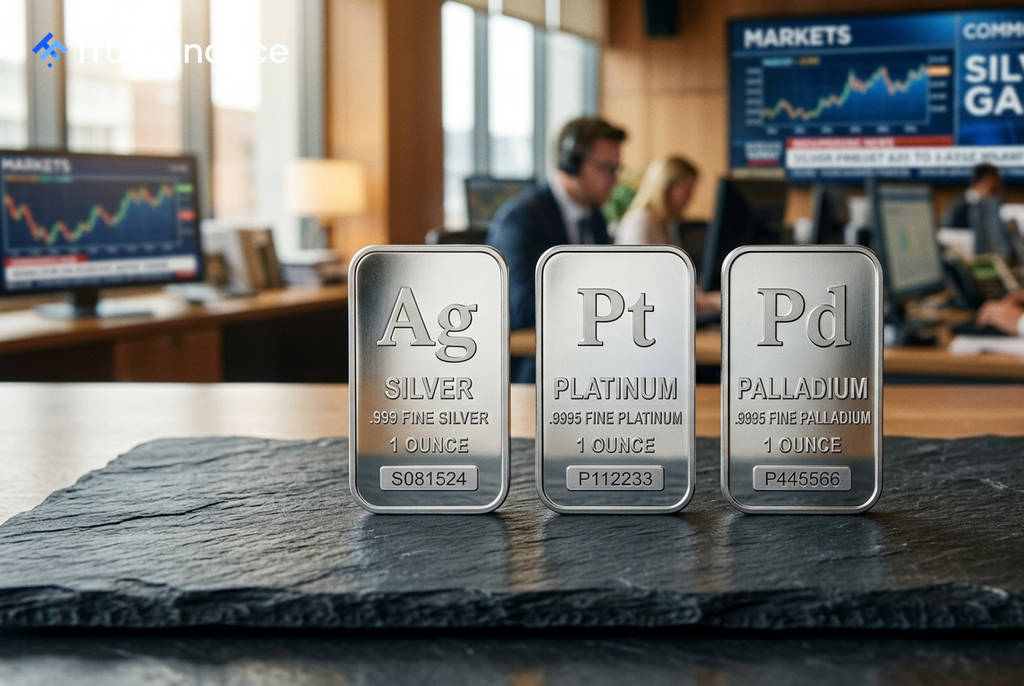
For investors seeking precious metals exposure beyond gold, silver presents a compelling case due to its dual role in both monetary and industrial applications. However, a review of market performance highlights its significant volatility, while platinum and palladium offer more specialized, higher-risk profiles.
Silver: The Balanced but Volatile Core
Silver is often considered the strongest all-around candidate in the precious metals space outside of gold. Its investment case is supported by two distinct drivers: its traditional status as a monetary metal and its growing use in industrial manufacturing, from electronics to solar panels. This gives it a broader base for potential demand compared to other platinum-group metals.
This dual nature also creates high volatility. According to market data from September 2, 2026, silver futures have shown powerful momentum but also significant risk:
- One-Year Gain: +57.61%
- Year-to-Date Performance: -8.31%
- Six-Month Decline: -26.22%
These figures illustrate that while silver can offer strong returns, it is not a less volatile version of gold but rather a more dynamic asset with what the source material describes as an "industrial accelerator—and sharper brakes."
Platinum and Palladium: Contrarian and Speculative Plays
 Ad
For investors with a higher risk tolerance, platinum and palladium offer different opportunities. Platinum is positioned as a contrarian alternative, with potential for scarcity-driven upside. Its price is highly sensitive to industrial and manufacturing cycles, making timing a critical factor. It has underperformed silver over the past year with a gain of +24.89% and a year-to-date decline of -14.80%.
Palladium is viewed as the most speculative of the three, best suited for a small, satellite position in a diversified portfolio. Despite a recent daily gain, its year-to-date performance was down -18.11% as of the data's publication. This profile suggests its primary appeal is as a potential rebound trade rather than a dependable core holding, reflecting a less mature risk-return profile than silver.
Accessing the Market
Investors have several avenues to gain exposure to these metals, each with its own characteristics. For most, physically-backed exchange-traded funds (ETFs) like the iShares Silver Trust (SLV) offer the simplest and most liquid option. Direct ownership of physical metal is another route, typically used for long-term wealth preservation, but it involves costs for storage and insurance.
More leveraged exposure can be found through mining equities, which can outperform the metals during periods of margin expansion but also introduce company-specific operational and financial risks. Instruments like futures and CFDs are generally considered suitable only for sophisticated, tactical traders due to their inherent leverage and complexity.
Read next
More on Stocks
FTC Orders Walmart, Uber, Delta to Disclose Data on Personalized Pricing
The U.S. Federal Trade Commission is demanding nine major companies, including leading retail, travel, and gig economy firms, to provide information on how they use consumer data for setting individual prices and wages.

Google Launches Gemini 4 Carbon AI Model to Bolster Cybersecurity Capabilities
Alphabet's Google has unveiled Gemini 4 Carbon, its latest AI model specifically designed for advanced cybersecurity tasks like vulnerability detection and secure code generation. The launch escalates competition with rivals OpenAI and Anthropic in the enterprise AI market.

Oracle Shares Surge After Unveiling $225 Billion Revenue Target for 2030
Oracle stock rose sharply after the company presented a long-term financial outlook targeting at least $225 billion in annual revenue by fiscal 2030, driven by its expanding AI infrastructure business.

DOJ Scrutinizes Nvidia's $12.9B Hugging Face Deal Amid Broader Antitrust Probe, Sources Say
The U.S. Department of Justice is reportedly examining Nvidia's planned $12.93 billion acquisition of AI platform Hugging Face as part of a wider, ongoing antitrust investigation into the chipmaker's market conduct.