
Story
Semiconductor Sector Pivots to Supply Constraints, Jefferies Conference Reveals
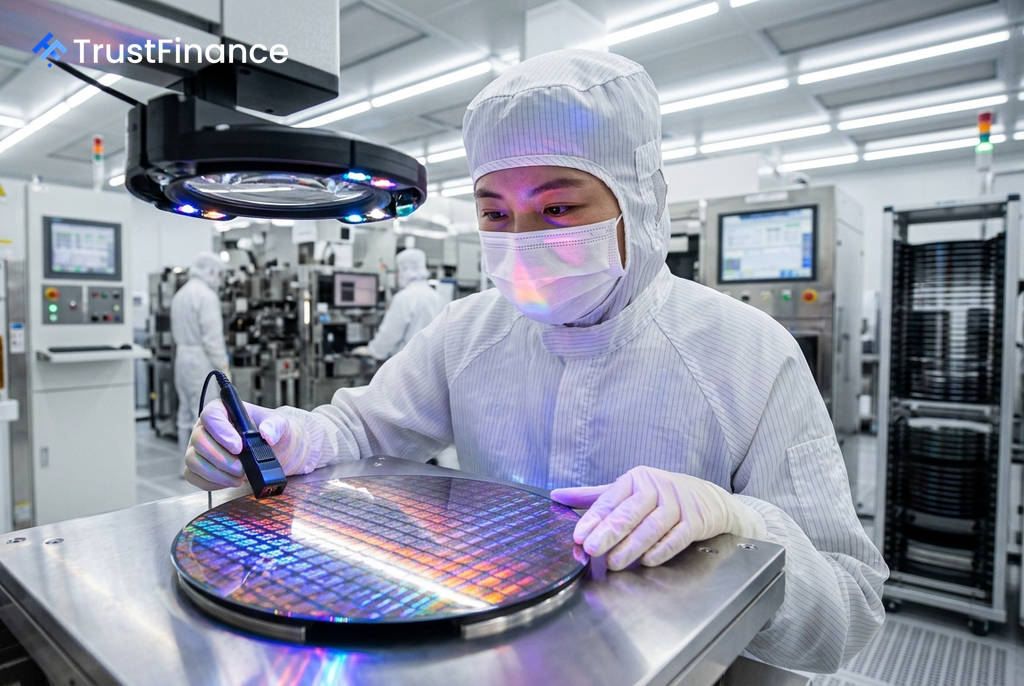
The semiconductor industry's narrative is shifting from a focus on demand to the challenges of supply, according to takeaways from Jefferies' annual Semiconductor Conference. Management teams from nearly 100 companies reported positive business fundamentals, but highlighted that supply constraints are becoming the primary factor shaping the market across compute, optical, and memory segments.
Compute and Optical Segments Face Tight Capacity
For major compute companies, securing components is now the main operational hurdle. According to Jefferies, the situation varies by company:
- Nvidia (NASDAQ:NVDA) is actively working to secure critical inputs such as substrates and DRAM to meet demand.
- Advanced Micro Devices (NASDAQ:AMD) is in a more favorable position, having locked in substrate capacity during the pandemic, and anticipates growth in both units and average selling prices (ASPs).
- Intel (NASDAQ:INTC) is currently facing its own substrate constraints, even as demand for its Clearwater Forest product tracks ahead of expectations.
In the optical components space, demand was described as "extraordinary." Coherent Corp. (NYSE:COHR) reported that demand is expected to exceed supply for at least 12 to 18 months, and the company may need to expand its production capacity further. The firm also noted that the widespread adoption of co-packaged optics (CPO) has likely been delayed until the second half of 2028 or later, creating new opportunities for near-package optics (NPO) solutions in the interim.
 Ad
Broader Market Implications
These supply-side pressures are influencing strategic decisions across the sector. In memory, Nvidia is reportedly evaluating different High Bandwidth Memory (HBM) configurations for its upcoming Rubin Ultra platform. Jefferies analysts interpret this as a move to "stretch a constrained die pool" and maximize the shipment of high-demand accelerator products.
The analog segment continues to see a recovery driven by data center demand, while the automotive market shows modest improvement, particularly in China. However, Tier 1 inventories remain low with limited signs of restocking. The test segment also showed positive trends, with companies like Aehr Test Systems (NASDAQ:AEHR) reporting a growing backlog, signaling continued investment in production and quality assurance.
Read next
More on Stocks
FTC Orders Walmart, Uber, Delta to Disclose Data on Personalized Pricing
The U.S. Federal Trade Commission is demanding nine major companies, including leading retail, travel, and gig economy firms, to provide information on how they use consumer data for setting individual prices and wages.

Google Launches Gemini 4 Carbon AI Model to Bolster Cybersecurity Capabilities
Alphabet's Google has unveiled Gemini 4 Carbon, its latest AI model specifically designed for advanced cybersecurity tasks like vulnerability detection and secure code generation. The launch escalates competition with rivals OpenAI and Anthropic in the enterprise AI market.

Oracle Shares Surge After Unveiling $225 Billion Revenue Target for 2030
Oracle stock rose sharply after the company presented a long-term financial outlook targeting at least $225 billion in annual revenue by fiscal 2030, driven by its expanding AI infrastructure business.

DOJ Scrutinizes Nvidia's $12.9B Hugging Face Deal Amid Broader Antitrust Probe, Sources Say
The U.S. Department of Justice is reportedly examining Nvidia's planned $12.93 billion acquisition of AI platform Hugging Face as part of a wider, ongoing antitrust investigation into the chipmaker's market conduct.