
Story
Russia Deploys Jam-Proof Drones to Target Ukraine's Fortified Power Grid
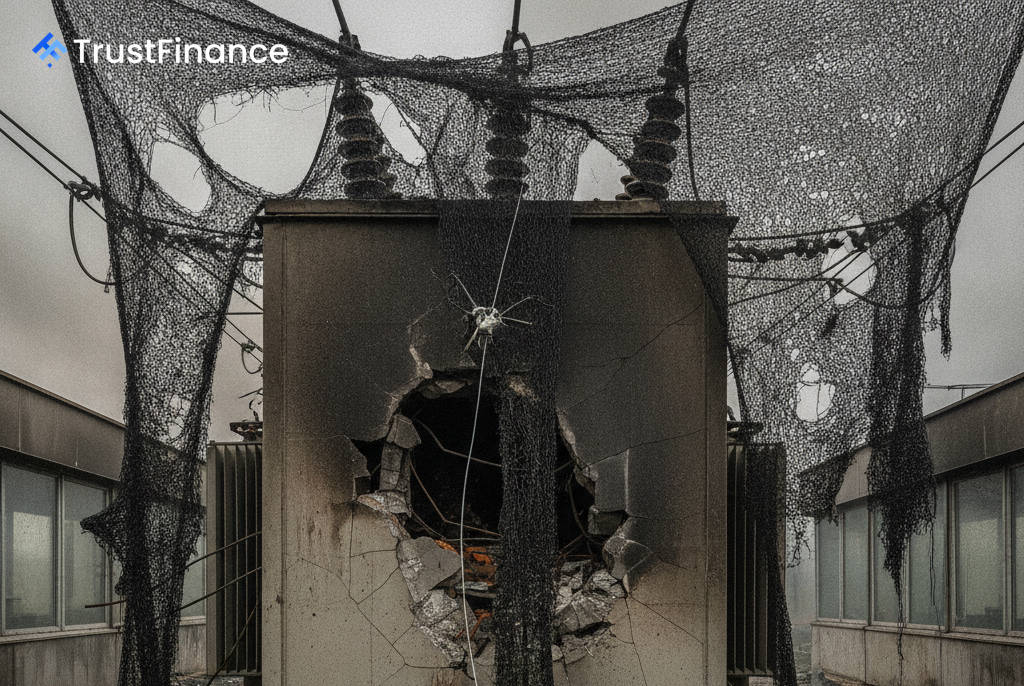
Russia is employing a new tactic using small, fiber-optic-guided drones to successfully bypass Ukrainian defenses and damage high-voltage electricity substations, particularly in the frontline Sumy region. This development, revealed through open-source analysis, marks a significant adaptation in Russia's ongoing campaign against Ukraine's energy infrastructure.
The footage of the attacks was verified by the Centre for Information Resilience (CIR), a London-based investigation group, and confirmed by Reuters. The strikes demonstrate a method to circumvent both physical and electronic countermeasures.
A New Tactic to Bypass Defenses
Ukraine has heavily fortified its energy facilities with concrete sarcophagi and anti-drone nets to protect against missile and drone attacks. The country's frontline regions also utilize extensive electronic warfare systems designed to jam the radio signals that typically guide drones.
However, the new drones, which are physically connected to their operators by a thin fiber-optic cable, are immune to this signal interference. According to Joshua Scriven, an investigator at CIR, Russian forces are using a two-stage approach: a first drone is used to break a hole in the protective netting, allowing a second, fiber-optic drone to fly through the gap. This second drone can then navigate around the protective structures to strike critical equipment inside, such as the autotransformer.
Economic and Strategic Impact
 Ad
The economic disparity of this new tactic is stark. Taking out a single autotransformer in a 330-kilovolt substation, valued at approximately $3.5 million, can disable the entire unit, according to Oleksandr Kharchenko of the Energy Research Centre in Kyiv. In contrast, the FPV drones used in these attacks can cost as little as $2,000.
CIR has verified a series of these strikes since May, highlighting their growing effectiveness:
- Four strikes on large, well-defended 330 kV substations.
- At least four additional strikes on smaller 110 kV substations.
- The attacks on the larger substations occurred 16 to 26 kilometers (10-16 miles) from the frontline, demonstrating the increasing range of these systems.
Analysts believe these attacks are part of a broader Russian strategy to isolate specific Ukrainian regions from the national power grid before targeting local power stations to induce blackouts. Ukrainian Defence Minister Mykhailo Fedorov noted in a statement that the security situation in the Sumy region had deteriorated in June, stating that Russia's goal is to "terrorise people and make life in the border regions unbearable."