
Story
Rodents and Neglected Maintenance Pose Overlooked Threat to AI Data Centers, Expert Warns
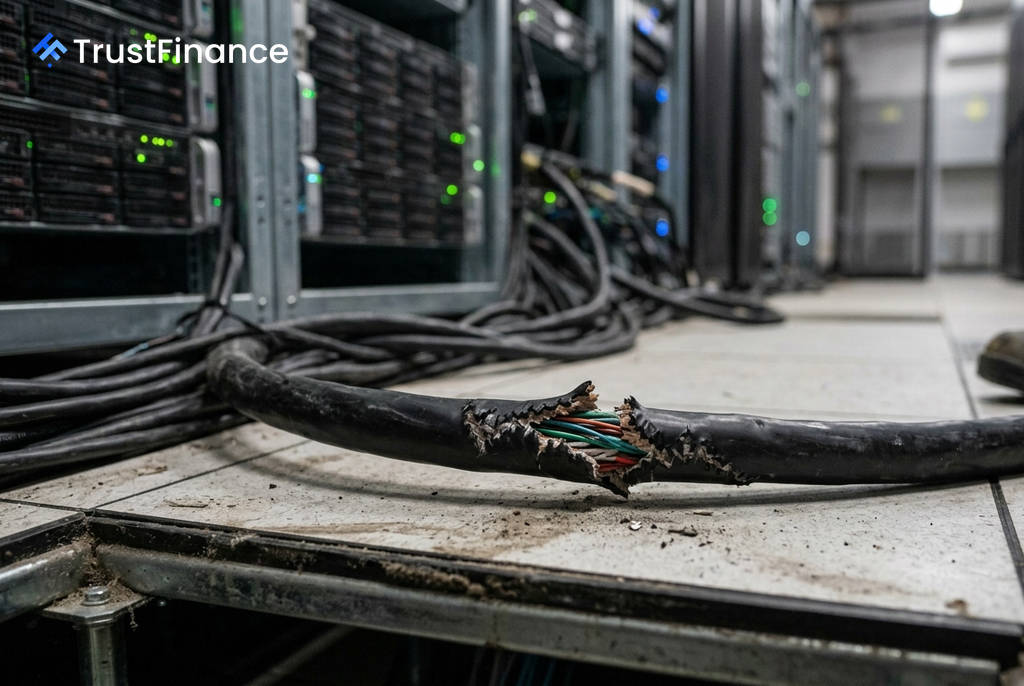
As billions are invested in the AI infrastructure boom, a property services expert warns that mundane physical threats, such as rodents and neglected maintenance, pose a significant and often overlooked risk to data center operations. These low-tech issues could disrupt the highly sophisticated facilities that underpin the artificial intelligence industry, where uninterrupted power and connectivity are paramount.
Mundane Risks Threaten High-Tech Operations
"The biggest risk is not always the things that we're talking about," said Kade Thomas, founder and CEO of Cerv Property Solutions, in an interview with Investing.com. Thomas explained that while the industry focuses on high-level constraints like electricity grids, basic property vulnerabilities can cause significant damage.
He identified several specific physical risks that could lead to costly outages:
- Pests: Rodents can chew through essential wiring and cables, potentially damaging equipment and causing service interruptions.
- Poor Landscaping: Overgrown brush, unmanaged trees, and the build-up of dry leaves can obstruct critical HVAC air intakes, which raises ambient temperatures and creates serious fire hazards.
A Costly Oversight for a Booming Industry
 Ad
The warning comes as data center operators and AI companies pour capital into expanding computing capacity. In this environment, uptime is a critical metric for profitability and service delivery. A failure in routine maintenance can have an outsized impact on a facility packed with expensive, high-density computing equipment.
According to Thomas, these seemingly minor issues can escalate into major problems, particularly in regions with a high concentration of data centers. He pointed to Texas, a major hub with 335 active facilities and 248 more planned, as a climate where such problems can "quickly spiral into catastrophic damage."
Integrating Maintenance into Reliability Planning
The central argument is that basic property management should be treated as an integral part of a data center's reliability and risk management strategy, not as a secondary operational expense. A chewed cable or a blocked air intake may not sound like a primary AI risk, but the consequences for a facility where uptime is critical can be severe.
For investors and operators in the rapidly expanding AI sector, this serves as a reminder that the physical integrity of these valuable assets depends as much on diligent, preventative upkeep as it does on securing access to sophisticated chips and vast amounts of power.
Read next
More on Stocks
FTC Orders Walmart, Uber, Delta to Disclose Data on Personalized Pricing
The U.S. Federal Trade Commission is demanding nine major companies, including leading retail, travel, and gig economy firms, to provide information on how they use consumer data for setting individual prices and wages.

Google Launches Gemini 4 Carbon AI Model to Bolster Cybersecurity Capabilities
Alphabet's Google has unveiled Gemini 4 Carbon, its latest AI model specifically designed for advanced cybersecurity tasks like vulnerability detection and secure code generation. The launch escalates competition with rivals OpenAI and Anthropic in the enterprise AI market.

Oracle Shares Surge After Unveiling $225 Billion Revenue Target for 2030
Oracle stock rose sharply after the company presented a long-term financial outlook targeting at least $225 billion in annual revenue by fiscal 2030, driven by its expanding AI infrastructure business.

DOJ Scrutinizes Nvidia's $12.9B Hugging Face Deal Amid Broader Antitrust Probe, Sources Say
The U.S. Department of Justice is reportedly examining Nvidia's planned $12.93 billion acquisition of AI platform Hugging Face as part of a wider, ongoing antitrust investigation into the chipmaker's market conduct.