
Story
Robotaxi Sector Analysis: Baidu, Uber, and Pure-Play Ventures Offer Divergent Risk Profiles
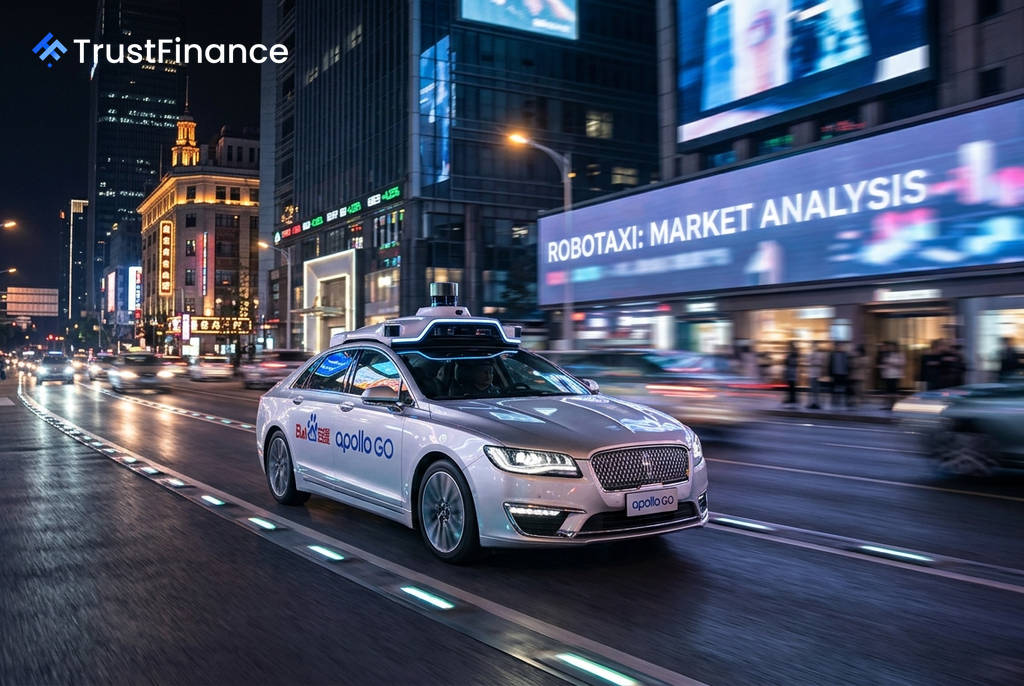
The emerging robotaxi sector presents investors with a wide spectrum of opportunities, each carrying a unique balance of risk, valuation, and growth potential. A comparison of key public companies reveals three distinct profiles: established tech giants offering value or quality, and pure-play startups representing high-stakes bets on the future of autonomous transportation.
Established Players: Quality vs. Value
Among the large-cap companies with significant autonomous vehicle operations, Uber (UBER) and Alphabet (GOOGL) stand out for their strong financial metrics, while China's Baidu (BIDU) presents a deep-value case.
- Uber is positioned as a strong risk-adjusted option, according to an Investing.com analysis. The company is profitable, with a price-to-earnings (P/E) ratio of 16.6x, and generates substantial cash flow, boasting the highest free cash flow (FCF) yield in the peer group at 6.3%. Its 38.4% return on equity (ROE) underscores its operational efficiency.
- Alphabet, parent company of robotaxi pioneer Waymo, offers investors a stake in a technology leader with exceptional profitability. The company has a 60.9% gross margin and a 49.5% ROE. However, Waymo's financial contribution is a small fraction of Alphabet's massive revenue base, making it a less direct play on the theme.
- Baidu emerges as a deep-value candidate, trading at just 1.7 times sales. Despite its Apollo Go unit operating over one million autonomous rides monthly in China, the company faces headwinds, including a 4.2% revenue decline and negative profitability. Analysts see significant potential, with an average target upside of +82.2%, but this is balanced by regulatory and market risks.
The Pure-Play Gamble
For investors seeking direct exposure to the robotaxi industry, startups Pony AI (PONY) and WeRide (WRD) are the primary options. Both companies are in a high-growth phase but are also burning significant amounts of cash, making them venture-capital-style investments.
 Ad
WeRide reported impressive revenue growth of 102.4%, while Pony AI's revenue grew by 45.8%. This growth comes at a cost, with both firms posting negative ROE and FCF yields. The substantial analyst upside targets (+171.0% for Pony AI and +105.1% for WeRide) reflect the binary nature of these investments: they could either scale successfully or fail.
Tesla's Premium Valuation
Tesla (TSLA) is also a key contender in the autonomous vehicle space, but its stock valuation appears to have already priced in future dominance. Trading at a P/E ratio of 364.4x, the company's valuation far exceeds its peers.
Furthermore, its gross margins have compressed to 18.9%, the lowest among the established companies in this comparison. While the launch of its "Cybercab" is anticipated, the current stock price leaves little room for execution error.
Read next
More on Stocks
FTC Orders Walmart, Uber, Delta to Disclose Data on Personalized Pricing
The U.S. Federal Trade Commission is demanding nine major companies, including leading retail, travel, and gig economy firms, to provide information on how they use consumer data for setting individual prices and wages.

Google Launches Gemini 4 Carbon AI Model to Bolster Cybersecurity Capabilities
Alphabet's Google has unveiled Gemini 4 Carbon, its latest AI model specifically designed for advanced cybersecurity tasks like vulnerability detection and secure code generation. The launch escalates competition with rivals OpenAI and Anthropic in the enterprise AI market.

Oracle Shares Surge After Unveiling $225 Billion Revenue Target for 2030
Oracle stock rose sharply after the company presented a long-term financial outlook targeting at least $225 billion in annual revenue by fiscal 2030, driven by its expanding AI infrastructure business.

DOJ Scrutinizes Nvidia's $12.9B Hugging Face Deal Amid Broader Antitrust Probe, Sources Say
The U.S. Department of Justice is reportedly examining Nvidia's planned $12.93 billion acquisition of AI platform Hugging Face as part of a wider, ongoing antitrust investigation into the chipmaker's market conduct.