
Story
Robinhood Launches $225.5M Venture Fund for Retail Investors to Access Y Combinator Startups
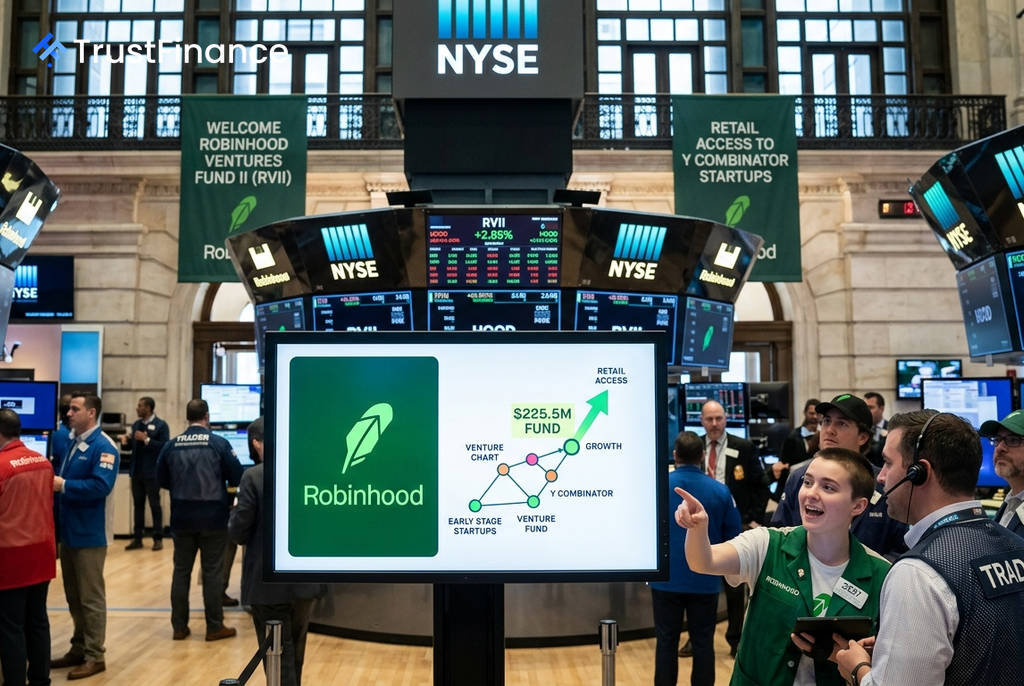
Robinhood Markets (NASDAQ:HOOD) has launched its second venture fund aimed at retail investors, raising $225.5 million in an initial public offering to provide access to early-stage private companies. The new fund, Robinhood Ventures Fund II (NYSE:RVII), will focus on startups emerging from the prominent Y Combinator accelerator program.
Fund Details and Investment Focus
The fund officially listed on the New York Stock Exchange on Thursday after pricing 8 million shares at $25 each, according to a report from Investing.com. RVII's strategy is to invest in both early-stage and growth-stage private companies, an asset class typically reserved for institutional venture capital firms and high-net-worth individuals.
A key part of the fund's mandate is to concentrate on current and former participants of the Y Combinator accelerator. Y Combinator is known for backing highly successful technology companies, including Coinbase (NASDAQ:COIN), Reddit (NYSE:RDDT), and OpenAI. Its portfolio of over 5,000 companies holds a combined valuation exceeding $1.3 trillion.
 Ad
Context and Market Trend
This launch marks another step in Robinhood's mission to broaden access to financial markets, a strategy that began with its commission-free stock trading platform. The company has since expanded into a wider suite of financial products, including retirement accounts and a credit card.
The move also taps into a significant market trend where high-growth startups are remaining private for longer periods before considering a public listing. This has fueled demand from investors seeking exposure to these companies before they conduct an IPO. This is Robinhood's second such vehicle; the company launched its first fund in March, which concentrates on late-stage private companies.
Read next
More on Stocks
FTC Orders Walmart, Uber, Delta to Disclose Data on Personalized Pricing
The U.S. Federal Trade Commission is demanding nine major companies, including leading retail, travel, and gig economy firms, to provide information on how they use consumer data for setting individual prices and wages.

Google Launches Gemini 4 Carbon AI Model to Bolster Cybersecurity Capabilities
Alphabet's Google has unveiled Gemini 4 Carbon, its latest AI model specifically designed for advanced cybersecurity tasks like vulnerability detection and secure code generation. The launch escalates competition with rivals OpenAI and Anthropic in the enterprise AI market.

Oracle Shares Surge After Unveiling $225 Billion Revenue Target for 2030
Oracle stock rose sharply after the company presented a long-term financial outlook targeting at least $225 billion in annual revenue by fiscal 2030, driven by its expanding AI infrastructure business.

DOJ Scrutinizes Nvidia's $12.9B Hugging Face Deal Amid Broader Antitrust Probe, Sources Say
The U.S. Department of Justice is reportedly examining Nvidia's planned $12.93 billion acquisition of AI platform Hugging Face as part of a wider, ongoing antitrust investigation into the chipmaker's market conduct.