
Story
Retail Earnings Reveal Cautious US Consumer Balancing Budgets With Splurges
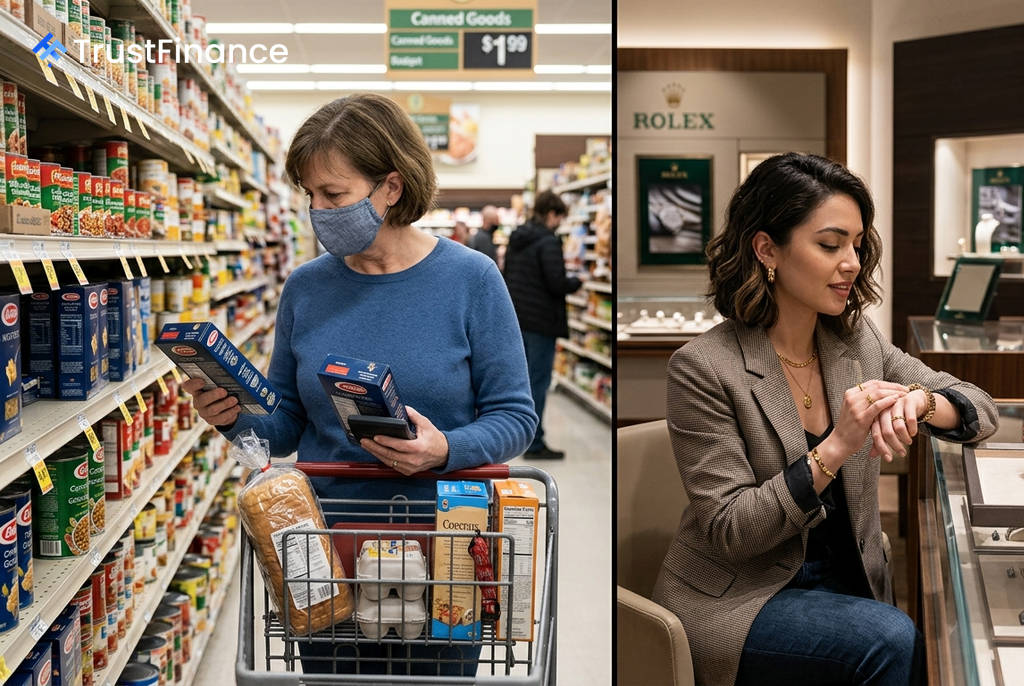
Recent earnings reports from a wide range of U.S. retailers indicate that consumers are becoming increasingly selective with their spending, prioritizing essentials while still making room for affordable treats and occasional luxury purchases.
This trend, highlighted in financial results over the past month, shows a consumer base that is carefully managing household budgets amid elevated gasoline prices and other economic pressures.
A Bifurcated Market
Corporate earnings reveal a clear split in consumer behavior. While value-focused retailers and restaurants are capturing budget-conscious shoppers, high-end brands continue to attract affluent buyers.
- Value and Essentials: Discount retailers like Ross Stores and fast-food chains such as Yum Brands' Taco Bell are benefiting from consumers seeking value. However, even giants like Walmart are feeling the pressure, reporting its slowest same-store sales growth in six years despite price cuts on thousands of items.
- Luxury and Splurges: In contrast, companies known for affordable luxury, including Tapestry, Estee Lauder, and Ralph Lauren, reported strong demand for discretionary items like handbags, prestige beauty products, and high-end apparel.
"Households are becoming much more deliberate about where their money goes," said Lale Akoner, global market strategist at eToro, in a comment to Reuters.
Retailers Adapt to Shifting Habits
 Ad
In response to this selective spending, retailers are adjusting their strategies. Price cuts alone are proving insufficient, as seen when McDonald's discounted meal options failed to significantly boost traffic. Instead, a mix of value, newness, and premium offerings is becoming key.
Retailers like Target are expanding private-label brands such as Good & Gather while also stocking premium products like Bugaboo strollers. Similarly, Walmart noted that its back-to-school season benefited from the presence of "more elevated brands" that appeal to a broader range of shoppers. This dual approach aims to cater to both ends of the economic spectrum.
Economic Warning Signs
A key indicator of consumer caution has emerged in shoppers' basket sizes. Both Walmart and Target reported that while customers continue to visit their stores, they are spending less per trip. This trend coincides with U.S. retail sales in July logging their first decline in nine months, according to reports.
The strain is also visible in the home improvement sector. Home Depot and Lowe's saw demand for smaller maintenance projects but noted that consumers are postponing larger renovations that often require financing, reflecting the impact of higher borrowing costs. "The constraint is increasingly how much disposable income they have left to spend at all," said Axel Rudolph, chief technical analyst at IG Group.
Read next
More on Stocks
FTC Orders Walmart, Uber, Delta to Disclose Data on Personalized Pricing
The U.S. Federal Trade Commission is demanding nine major companies, including leading retail, travel, and gig economy firms, to provide information on how they use consumer data for setting individual prices and wages.

Google Launches Gemini 4 Carbon AI Model to Bolster Cybersecurity Capabilities
Alphabet's Google has unveiled Gemini 4 Carbon, its latest AI model specifically designed for advanced cybersecurity tasks like vulnerability detection and secure code generation. The launch escalates competition with rivals OpenAI and Anthropic in the enterprise AI market.

Oracle Shares Surge After Unveiling $225 Billion Revenue Target for 2030
Oracle stock rose sharply after the company presented a long-term financial outlook targeting at least $225 billion in annual revenue by fiscal 2030, driven by its expanding AI infrastructure business.

DOJ Scrutinizes Nvidia's $12.9B Hugging Face Deal Amid Broader Antitrust Probe, Sources Say
The U.S. Department of Justice is reportedly examining Nvidia's planned $12.93 billion acquisition of AI platform Hugging Face as part of a wider, ongoing antitrust investigation into the chipmaker's market conduct.