
Story
Restaurant Brands Beats Sales Forecasts as Burger King U.S. Growth Surges
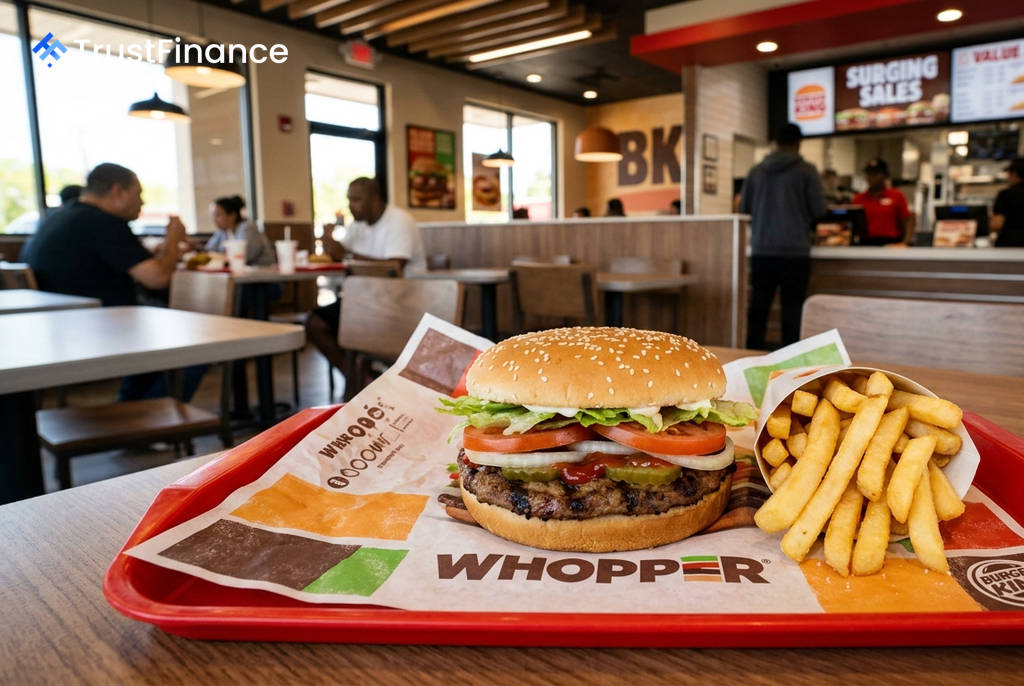
Restaurant Brands International reported second-quarter global same-store sales that topped analyst estimates, driven by a surge in demand at its Burger King chain in the United States. The strong performance highlights the success of the burger chain's value-focused promotions in attracting inflation-weary consumers.
Burger King Drives Growth
Global comparable sales for the quarter ended June 30 grew 3.8%, exceeding the roughly 3.0% expected by analysts, according to data compiled by LSEG. The outperformance was largely credited to the company's U.S. Burger King operations, which have benefited from heavy investment in marketing and restaurant remodels.
Key figures for Burger King's U.S. business include:
- Comparable sales growth: 8.5%
- Analyst expectation: 3.5%
- Prior-year growth: 1.5%
This growth was fueled by value offerings such as the "2 for $5" and "3 for $7" meal deals, which have resonated with diners pulling back on discretionary spending.
Mixed Performance Across Brands
 Ad
While Burger King thrived, the company's Tim Hortons brand showed signs of slowing growth. In Canada, the coffee and donut chain reported a comparable sales increase of just 0.1%, falling short of the 1.5% increase analysts had forecast and marking a significant deceleration from the 3.6% growth reported a year prior.
Overall, Restaurant Brands reported quarterly revenue of $2.52 billion, slightly missing estimates of $2.53 billion. However, adjusted diluted earnings per share rose to $1.07 from 94 cents a year earlier, indicating improved profitability.
Industry Navigates Consumer Squeeze
The results underscore a key trend in the fast-food sector, where value propositions are crucial for attracting customers facing higher living costs. The performance across the industry has been mixed, reflecting varied success in executing value strategies. McDonald’s recently missed its quarterly U.S. sales growth expectations, while Yum Brands, parent of Taco Bell, beat its estimates last week.
Like its peers, Restaurant Brands continues to face cost pressures from rising commodity prices, particularly for beef, which constitutes a significant portion of its food costs. This environment places a premium on effective pricing and promotional strategies to maintain both customer traffic and profit margins.
Read next
More on Stocks
FTC Orders Walmart, Uber, Delta to Disclose Data on Personalized Pricing
The U.S. Federal Trade Commission is demanding nine major companies, including leading retail, travel, and gig economy firms, to provide information on how they use consumer data for setting individual prices and wages.

Google Launches Gemini 4 Carbon AI Model to Bolster Cybersecurity Capabilities
Alphabet's Google has unveiled Gemini 4 Carbon, its latest AI model specifically designed for advanced cybersecurity tasks like vulnerability detection and secure code generation. The launch escalates competition with rivals OpenAI and Anthropic in the enterprise AI market.

Oracle Shares Surge After Unveiling $225 Billion Revenue Target for 2030
Oracle stock rose sharply after the company presented a long-term financial outlook targeting at least $225 billion in annual revenue by fiscal 2030, driven by its expanding AI infrastructure business.

DOJ Scrutinizes Nvidia's $12.9B Hugging Face Deal Amid Broader Antitrust Probe, Sources Say
The U.S. Department of Justice is reportedly examining Nvidia's planned $12.93 billion acquisition of AI platform Hugging Face as part of a wider, ongoing antitrust investigation into the chipmaker's market conduct.