
Story
Quantum Computing Market to Reach $10 Billion by 2030, BTIG Forecasts
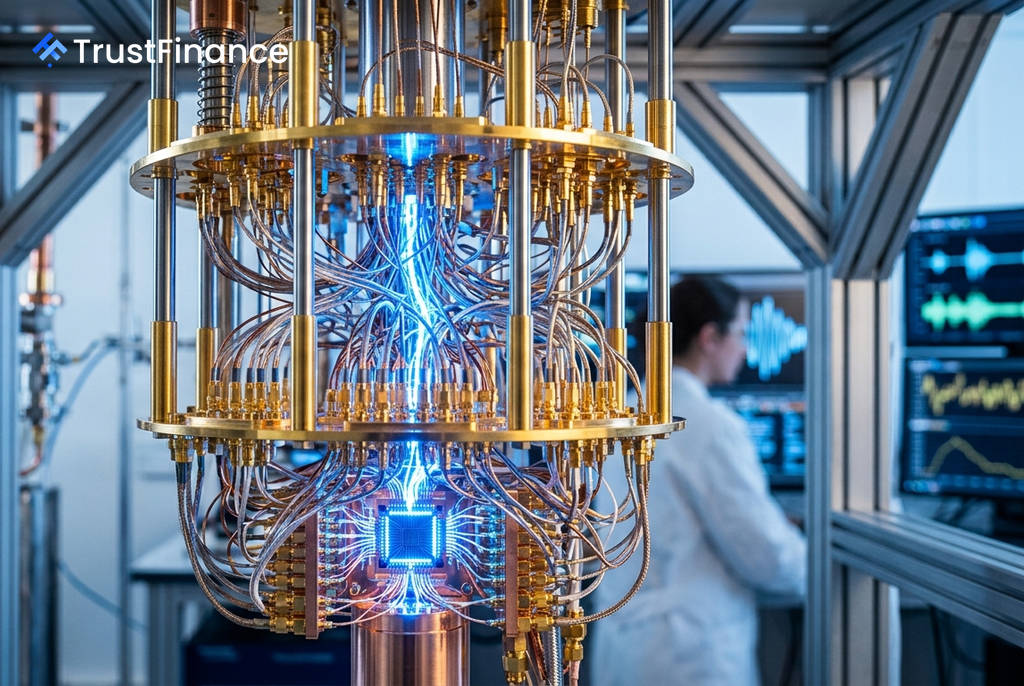
The quantum computing market is projected to grow from approximately $1.75 billion today to between $7 billion and $10 billion by 2030, according to a new forecast from investment firm BTIG. The firm identifies quantum simulation as the technology's first major commercial application, paving the way for significant value creation.
Market Projections and Key Drivers
BTIG's report outlines a substantial growth trajectory for the nascent sector, forecasting the market could reach $43 billion to $71 billion by 2035. This expansion is expected to be driven by the unique ability of quantum computers to model complex quantum systems, a task where classical computers become exponentially inefficient.
The firm highlights quantum simulation as the initial commercial entry point, fulfilling a vision first proposed by physicist Richard Feynman 40 years ago. According to BTIG, as the industry advances toward digital operation and quantum error correction, the technology will expand from simulating simpler physical systems to digitally modeling complex molecules for industries like materials science and pharmaceuticals.
A Three-Stage Evolution
BTIG categorizes the market's development into three distinct stages, offering a framework for investors to track the industry's transition from research to commercial viability. The firm sees the 2028-2030 timeframe as a critical inflection point.
 Ad
- Stage 1 (Present): A "funded science" market characterized by analog systems, zero logical qubits, and revenue primarily from government and corporate research labs.
- Stage 2 (2028-2030): The emergence of early fault-tolerant machines with tens to hundreds of logical qubits, which could begin solving valuable problems in chemistry and materials.
- Stage 3 (Post-2030): The era of full fault-tolerant quantum computing with over 1,000 logical qubits, capable of addressing broad industrial challenges in finance, logistics, and energy.
Industry Landscape and Outlook
The forecast is based on an analysis of public roadmaps from 10 major quantum computing companies developing processors across superconducting, trapped-ion, and neutral atom modalities. BTIG noted that these roadmaps generally align on achieving early fault tolerance around 2028-2030.
The report highlighted Infleqtion (NASDAQ: INFQ) as one company whose timeline aligns with competitors, with an expected 30 logical qubit demonstration this year and a target of 100 logical qubits by 2028. BTIG maintains a Buy rating on Infleqtion with a $22 price target.
While vendor revenue represents a fraction of the total opportunity, BTIG estimates the end-user value pool across major sectors could reach $1.3 trillion to $2.7 trillion by 2035. Other industry analyses from firms like McKinsey and Boston Consulting Group also project a vendor market potentially exceeding $100 billion by 2040.
Read next
More on Stocks
FTC Orders Walmart, Uber, Delta to Disclose Data on Personalized Pricing
The U.S. Federal Trade Commission is demanding nine major companies, including leading retail, travel, and gig economy firms, to provide information on how they use consumer data for setting individual prices and wages.

Google Launches Gemini 4 Carbon AI Model to Bolster Cybersecurity Capabilities
Alphabet's Google has unveiled Gemini 4 Carbon, its latest AI model specifically designed for advanced cybersecurity tasks like vulnerability detection and secure code generation. The launch escalates competition with rivals OpenAI and Anthropic in the enterprise AI market.

Oracle Shares Surge After Unveiling $225 Billion Revenue Target for 2030
Oracle stock rose sharply after the company presented a long-term financial outlook targeting at least $225 billion in annual revenue by fiscal 2030, driven by its expanding AI infrastructure business.

DOJ Scrutinizes Nvidia's $12.9B Hugging Face Deal Amid Broader Antitrust Probe, Sources Say
The U.S. Department of Justice is reportedly examining Nvidia's planned $12.93 billion acquisition of AI platform Hugging Face as part of a wider, ongoing antitrust investigation into the chipmaker's market conduct.