
Story
Polymarket Launches Offshore Oil Perpetual Futures Amid Race for 24/7 Trading
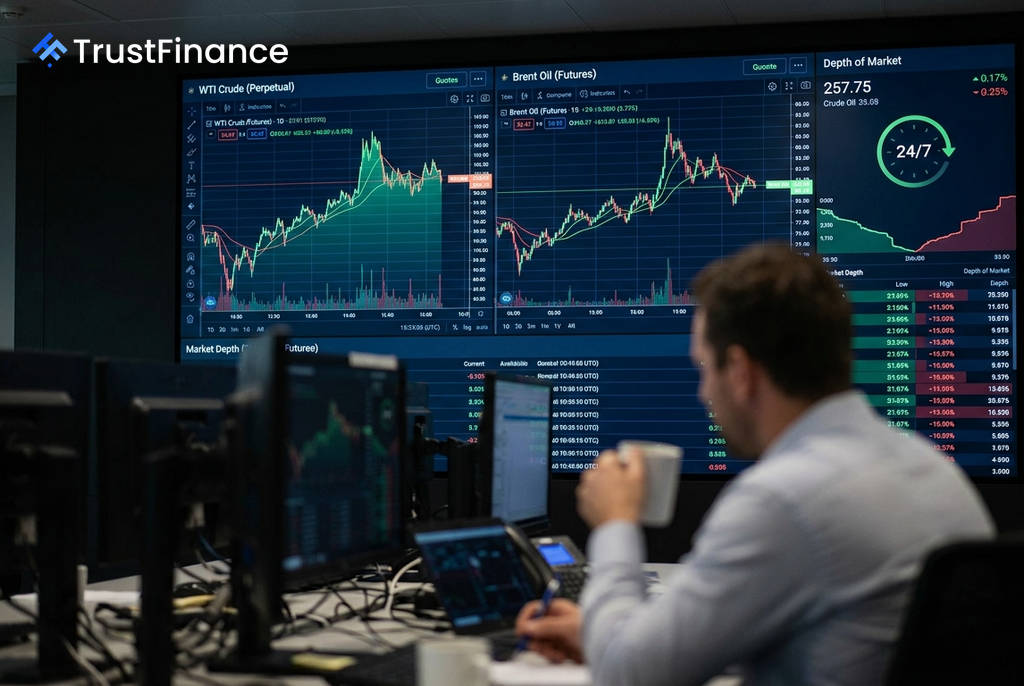
Prediction market platform Polymarket has launched perpetual futures contracts linked to crude oil, entering a competitive field as firms race to offer 24/7 trading for major commodities. The new offerings, announced by the company on Thursday, are part of a broader expansion into perpetuals that also includes cryptocurrencies, stocks, and other commodities like gold and silver.
New Offerings and Market Expansion
Polymarket's new products include two distinct contracts with no expiration date, one tied to the Brent crude benchmark and the other to West Texas Intermediate (WTI). Perpetual futures are a type of derivative that allows traders to speculate on an asset's price without a settlement date, often with significant leverage.
According to a social media post from the platform, the new oil contracts will allow traders to use up to 20x leverage. This feature, which can amplify both gains and losses, is a central point of concern for regulators regarding retail investor access to such instruments.
Competitive and Regulatory Landscape
Polymarket's launch comes just one day after reports that competitor Kalshi Inc. is seeking regulatory approval for its own WTI perpetual futures contract. If approved by the U.S. Commodity Futures Trading Commission (CFTC), Kalshi's product would be the first of its kind to trade on a regulated American platform.
 Ad
In contrast, Polymarket's contracts are offered in offshore markets and are not available to U.S. investors, placing the platform in more direct competition with exchanges like Hyperliquid. Derivatives of this nature are under close regulatory scrutiny due to their potential to influence price discovery mechanisms in the underlying physical markets.
Market Implications and Key Differences
There are significant structural differences between the two firms' offerings. Polymarket's contracts trade continuously, 24/7, while Kalshi's proposed product would operate 24 hours a day for five days a week. This five-day structure was reportedly designed to address regulatory concerns about trading activity outside of traditional market hours.
Perpetual futures gained significant popularity during periods of geopolitical tension, such as the conflict in Iran, as they provided one of the few available venues for trading oil when conventional markets were closed. This has led to ongoing debate about their potential to impact prices when traditional markets reopen.
Read next
More on Stocks
FTC Orders Walmart, Uber, Delta to Disclose Data on Personalized Pricing
The U.S. Federal Trade Commission is demanding nine major companies, including leading retail, travel, and gig economy firms, to provide information on how they use consumer data for setting individual prices and wages.

Google Launches Gemini 4 Carbon AI Model to Bolster Cybersecurity Capabilities
Alphabet's Google has unveiled Gemini 4 Carbon, its latest AI model specifically designed for advanced cybersecurity tasks like vulnerability detection and secure code generation. The launch escalates competition with rivals OpenAI and Anthropic in the enterprise AI market.

Oracle Shares Surge After Unveiling $225 Billion Revenue Target for 2030
Oracle stock rose sharply after the company presented a long-term financial outlook targeting at least $225 billion in annual revenue by fiscal 2030, driven by its expanding AI infrastructure business.

DOJ Scrutinizes Nvidia's $12.9B Hugging Face Deal Amid Broader Antitrust Probe, Sources Say
The U.S. Department of Justice is reportedly examining Nvidia's planned $12.93 billion acquisition of AI platform Hugging Face as part of a wider, ongoing antitrust investigation into the chipmaker's market conduct.