
Story
PN Smart Energy Stock Plummets Over 17%, Triggering Nasdaq Trading Halt
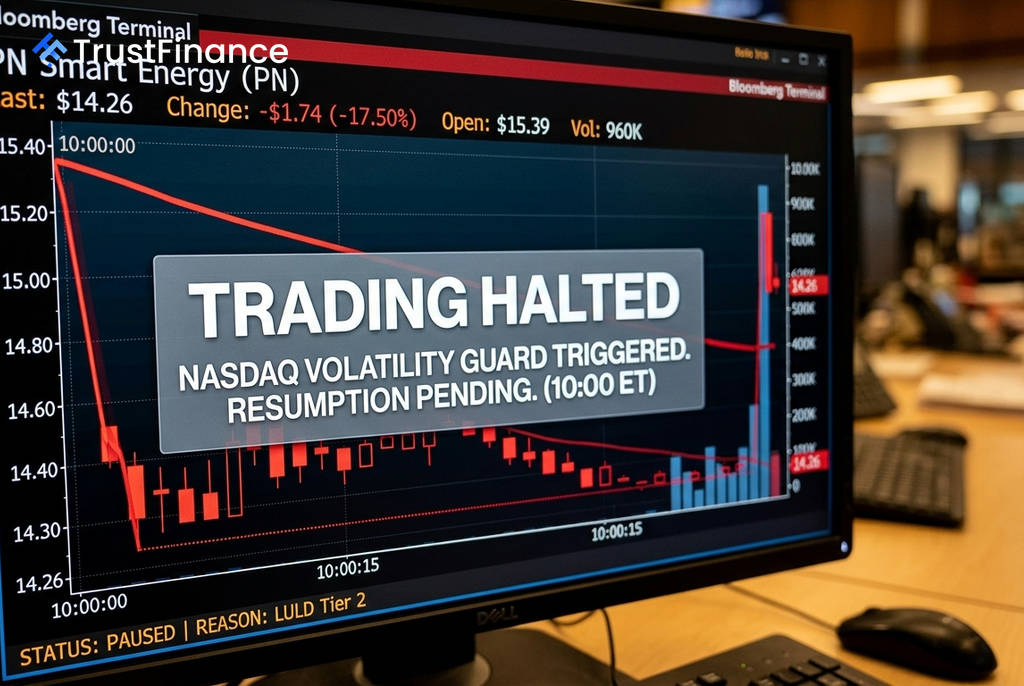
Shares of PN Smart Energy (PN) plunged more than 17% in morning trading Monday, prompting a brief, volatility-driven trading halt by the Nasdaq exchange.
Details of the Decline
The stock fell 17.5% to a price of $14.26 after opening the session at $15.39. According to market data, the extreme intraday price movement triggered a Nasdaq volatility trading pause at approximately 10:00 a.m. ET. Trading in the stock resumed a few minutes later at 10:06 a.m. ET.
No specific corporate press release, analyst rating change, or earnings report was identified as a direct catalyst for the sharp sell-off. The move occurred while the broader market was trading higher, with both the S&P 500 and Nasdaq in positive territory, indicating the selling pressure was specific to PN Smart Energy.
A Pattern of Volatility
 Ad
Today's price action is consistent with the stock's highly speculative profile and history of erratic trading. Formerly known as Skycorp Solar Group Limited, the company has several risk factors that can contribute to such sharp price swings:
- High Volatility: The stock carries an annualized volatility of over 140% and has been subject to multiple trading halts in recent months.
- Shareholder Dilution: The company has executed several dilutive private placements in 2026, which can weigh on investor confidence.
- Wide Trading Range: Its 52-week price range spans from a low of $0.73 to a high of $71.40, illustrating its extreme price dislocations.
- Thin Liquidity: As is common with many micro-cap stocks, thin trading volumes can amplify the impact of buy or sell orders, leading to exaggerated price movements.
In the absence of a fresh fundamental driver, the decline is best understood as a continuation of the stock's established pattern of high-risk volatility rather than a reaction to a single piece of news.
Read next
More on Stocks
FTC Orders Walmart, Uber, Delta to Disclose Data on Personalized Pricing
The U.S. Federal Trade Commission is demanding nine major companies, including leading retail, travel, and gig economy firms, to provide information on how they use consumer data for setting individual prices and wages.

Google Launches Gemini 4 Carbon AI Model to Bolster Cybersecurity Capabilities
Alphabet's Google has unveiled Gemini 4 Carbon, its latest AI model specifically designed for advanced cybersecurity tasks like vulnerability detection and secure code generation. The launch escalates competition with rivals OpenAI and Anthropic in the enterprise AI market.

Oracle Shares Surge After Unveiling $225 Billion Revenue Target for 2030
Oracle stock rose sharply after the company presented a long-term financial outlook targeting at least $225 billion in annual revenue by fiscal 2030, driven by its expanding AI infrastructure business.

DOJ Scrutinizes Nvidia's $12.9B Hugging Face Deal Amid Broader Antitrust Probe, Sources Say
The U.S. Department of Justice is reportedly examining Nvidia's planned $12.93 billion acquisition of AI platform Hugging Face as part of a wider, ongoing antitrust investigation into the chipmaker's market conduct.