
Story
Phoenix Exchange Enables SOL as Collateral for Perpetual Futures
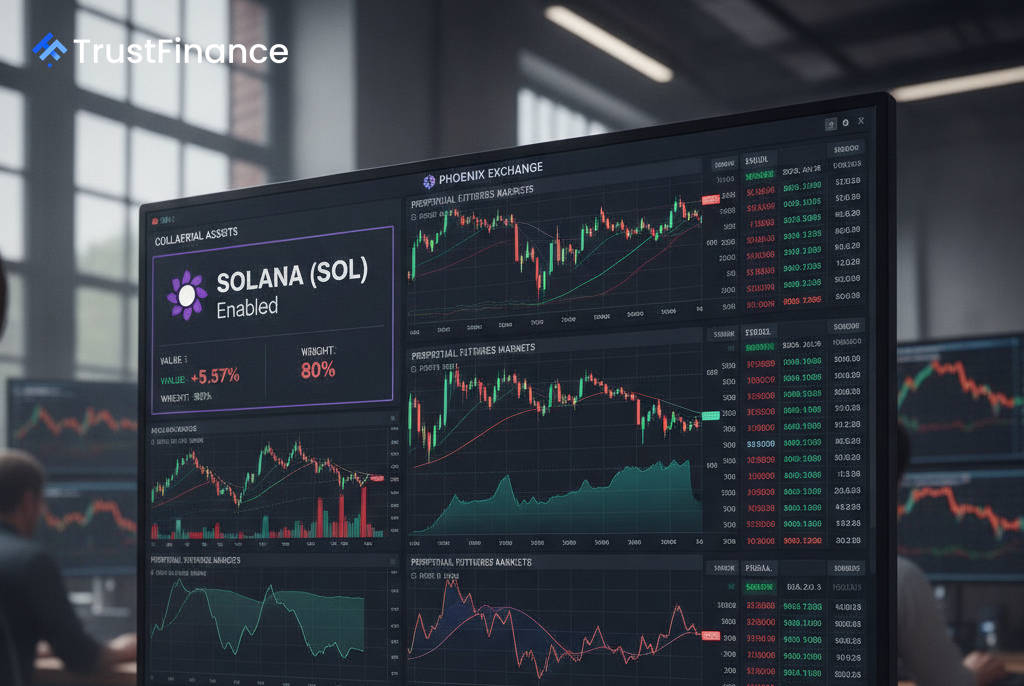
Phoenix, a decentralized perpetual futures exchange on the Solana blockchain, has enabled SOL as an eligible collateral asset for trading. The update allows users to margin their positions with the network's native token alongside the previously accepted USDC stablecoin, according to a September 16 announcement.
How the System Works
Under the new multi-collateral system, traders can now back their positions across Phoenix's more than 80 markets without first having to sell their SOL holdings for stablecoins. The exchange has implemented distinct parameters for each asset:
- SOL is valued at 80% of its market price when used as collateral.
- USDC continues to be valued at 100% of its price.
While traders can post SOL as margin, all profit and loss (P&L) on the platform will continue to be settled in USDC. The exchange's risk engine is designed to automatically reduce an account's positions first if it falls below the required maintenance margin, only selling the necessary amount of SOL collateral to cover any USDC deficit as a last resort.
Implications for Traders
 Ad
The move is intended to enhance capital efficiency for traders within the Solana ecosystem. Previously, a user wanting to trade on Phoenix while holding SOL would have been required to convert their assets into stablecoins to fund their margin account.
"Traders on Solana today should not have to make the tradeoff between holding spot and trading perpetuals," said Eugene Chen, CEO of Ellipsis Labs, the development team behind Phoenix. "SOL collateral solves this tradeoff. A trader can stay long SOL, post it as margin, and run a basis trade or take a position in any Phoenix market without touching USDC."
Background and Future Enhancements
Developed by Ellipsis Labs, Phoenix operates as a fully on-chain, non-custodial exchange where all orders, fills, and liquidations are executed and verifiable on the Solana blockchain. SOL is the first non-stablecoin asset to be added as collateral.
The exchange plans to enable further assets over time, with each new collateral type having its own unique oracle, weight, and liquidation parameters determined by platform demand and risk assessment. All margin parameters are subject to change and are published in the platform's official documentation.
Read next
More on Crypto
Bybit Expands Annual Trading Competition to Stocks, Gold With $10M Prize Pool
Bybit announced its 2026 World Series of Trading will feature a prize pool of up to $10 million USDT and expand beyond cryptocurrency to include traditional assets and a dedicated AI trading category for the first time.

Bitcoin Nears $81,000 as Tech Rally Boosts Risk Assets Ahead of Fed Decision
The leading cryptocurrency recovered from earlier losses, buoyed by a surge in technology stocks. However, gains were limited as investors awaited the Federal Reserve's upcoming interest rate decision and forward guidance.

Bitcoin Stalls Near $80,000 as MicroStrategy Pauses Purchases, Fed Meeting Looms
The price of Bitcoin has dropped below its recent trading range as major corporate holder MicroStrategy halted its weekly purchases and investors grow cautious ahead of a key Federal Reserve policy decision.

Bitget Wallet to Launch USD, Euro Accounts with Automatic Stablecoin Conversion
The self-custody wallet is introducing 'virtual accounts' that convert fiat deposits into USDT or USDC, aiming to lower costs for cross-border payments and remittances.