
Story
Phillips 66, Kinder Morgan, HF Sinclair Sanction $5 Billion West Coast Pipeline
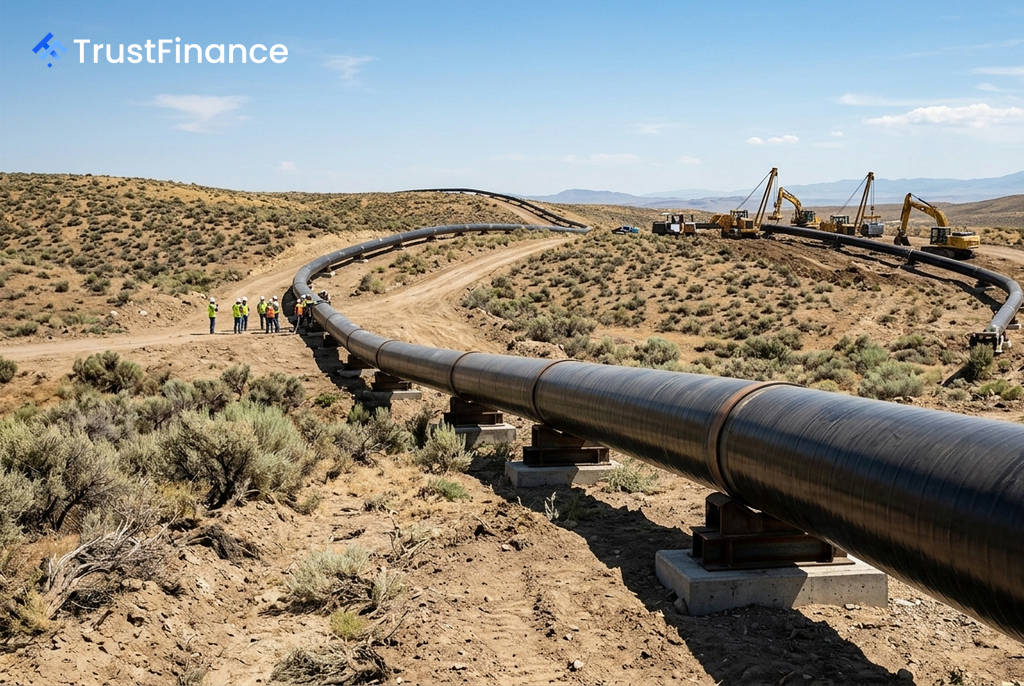
Phillips 66, Kinder Morgan, and HF Sinclair announced Tuesday they have reached a final investment decision to proceed with the proposed $5 billion Western Gateway Pipeline system, according to a report from Reuters. The move finalizes a joint venture agreement to construct a major new fuel artery to the U.S. West Coast.
Project Details and Ownership
The companies confirmed the ownership structure for the pipeline, which is expected to be completed in 2029. The stakes in the joint venture are allocated as follows:
- Phillips 66 (PSX): 49.9%
- Kinder Morgan (KMI): 35.1%
- HF Sinclair (DINO): 15%
This decision marks a significant capital commitment from the three energy infrastructure and refining companies to enhance the U.S. energy grid.
Strategic Rationale
 Ad
The project is a direct response to anticipated shifts in the U.S. West Coast fuel market. Energy companies are moving to secure supply routes ahead of planned refinery closures in California, a market with limited existing pipeline infrastructure connecting it to major refining hubs.
This relative isolation leaves the region vulnerable to supply chain disruptions and subsequent price spikes. The Western Gateway Pipeline aims to mitigate these risks by creating a new, reliable conduit for refined products into this critical market.
Market Implications
For investors, the final investment decision removes uncertainty and signals a long-term strategic play by the partners to address a clear logistical need. The project's success will be a key factor in stabilizing fuel supply and pricing for the West Coast in the coming decade.
Market participants will be monitoring the project's progress through regulatory hurdles and construction timelines, as its completion could significantly alter regional fuel price differentials and the competitive dynamics among suppliers.
Read next
More on Stocks
FTC Orders Walmart, Uber, Delta to Disclose Data on Personalized Pricing
The U.S. Federal Trade Commission is demanding nine major companies, including leading retail, travel, and gig economy firms, to provide information on how they use consumer data for setting individual prices and wages.

Google Launches Gemini 4 Carbon AI Model to Bolster Cybersecurity Capabilities
Alphabet's Google has unveiled Gemini 4 Carbon, its latest AI model specifically designed for advanced cybersecurity tasks like vulnerability detection and secure code generation. The launch escalates competition with rivals OpenAI and Anthropic in the enterprise AI market.

Oracle Shares Surge After Unveiling $225 Billion Revenue Target for 2030
Oracle stock rose sharply after the company presented a long-term financial outlook targeting at least $225 billion in annual revenue by fiscal 2030, driven by its expanding AI infrastructure business.

DOJ Scrutinizes Nvidia's $12.9B Hugging Face Deal Amid Broader Antitrust Probe, Sources Say
The U.S. Department of Justice is reportedly examining Nvidia's planned $12.93 billion acquisition of AI platform Hugging Face as part of a wider, ongoing antitrust investigation into the chipmaker's market conduct.