
Story
Pharmaceutical Giants Commit Hundreds of Billions to Expand US Footprint
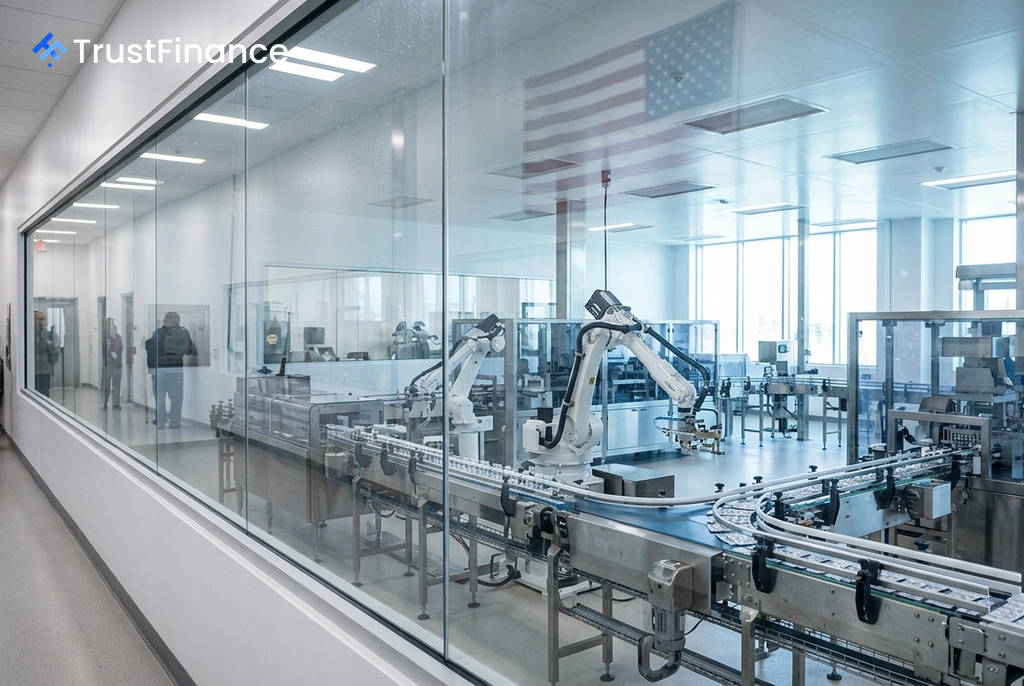
Global pharmaceutical companies are channeling hundreds of billions of dollars into their U.S. operations, launching a wave of investment to expand domestic manufacturing capacity and research and development. According to a tally of recent announcements, drugmakers including Pfizer, Eli Lilly, and Merck have collectively pledged roughly $500 billion to build new facilities, enhance existing sites, and bolster supply chains on American soil.
A Wave of Domestic Investment
The scale of the commitments underscores a significant strategic shift toward onshoring critical healthcare production. These investments span new manufacturing plants, advanced R&D centers, and significant expansions of existing footprints across the country.
Key commitments reported by the companies include:
- AbbVie: Pledged $100 billion over the next decade for U.S.-based R&D as part of a deal with the Trump administration.
- Merck: Investing over $70 billion to expand domestic manufacturing and R&D, including a new $3 billion plant in Virginia.
- Pfizer: Reached a deal to invest $70 billion in U.S. research, development, and domestic manufacturing.
- Johnson & Johnson: Plans to increase its U.S. investments by 25% to $55 billion over four years.
Strategic Drivers: Supply Chains and Policy
 Ad
This trend is driven by a desire to strengthen infrastructure and mitigate supply-chain risks that were exposed during the pandemic. By increasing their U.S. manufacturing footprint, companies aim to create more resilient and reliable supply networks for critical medicines.
U.S. policy has also been a significant catalyst. Several of these investment plans were announced in connection with efforts to avoid pharmaceutical-targeted tariffs and secure government support. For instance, Pfizer's investment was part of a deal that included a three-year grace period exempting its products from such tariffs. Executives at firms like Merck and Sanofi have noted that building up U.S. inventory and manufacturing insulates them from the impact of potential trade disputes.
Broad-Based Expansion Across the Sector
The investments are not limited to U.S.-based firms, highlighting the strategic importance of the American market. European giants have made substantial commitments, including $50 billion from UK-based AstraZeneca, $50 billion from Swiss drugmaker Roche, and $23 billion from Novartis.
These projects are creating thousands of jobs and establishing specialized hubs in states like North Carolina, which will host new or expanded facilities for J&J, Roche, Biogen, Amgen, and Merck. The investments are often targeted at advanced therapies, such as Merck's expansion for its cancer drug Keytruda, Amgen's focus on biologics, and Biogen's increased capacity for gene-targeting therapies.
Read next
More on Stocks
FTC Orders Walmart, Uber, Delta to Disclose Data on Personalized Pricing
The U.S. Federal Trade Commission is demanding nine major companies, including leading retail, travel, and gig economy firms, to provide information on how they use consumer data for setting individual prices and wages.

Google Launches Gemini 4 Carbon AI Model to Bolster Cybersecurity Capabilities
Alphabet's Google has unveiled Gemini 4 Carbon, its latest AI model specifically designed for advanced cybersecurity tasks like vulnerability detection and secure code generation. The launch escalates competition with rivals OpenAI and Anthropic in the enterprise AI market.

Oracle Shares Surge After Unveiling $225 Billion Revenue Target for 2030
Oracle stock rose sharply after the company presented a long-term financial outlook targeting at least $225 billion in annual revenue by fiscal 2030, driven by its expanding AI infrastructure business.

DOJ Scrutinizes Nvidia's $12.9B Hugging Face Deal Amid Broader Antitrust Probe, Sources Say
The U.S. Department of Justice is reportedly examining Nvidia's planned $12.93 billion acquisition of AI platform Hugging Face as part of a wider, ongoing antitrust investigation into the chipmaker's market conduct.