
Story
Nvidia's $279 Billion Memory Commitment Squeezes Rivals and Reshapes Supply Chain
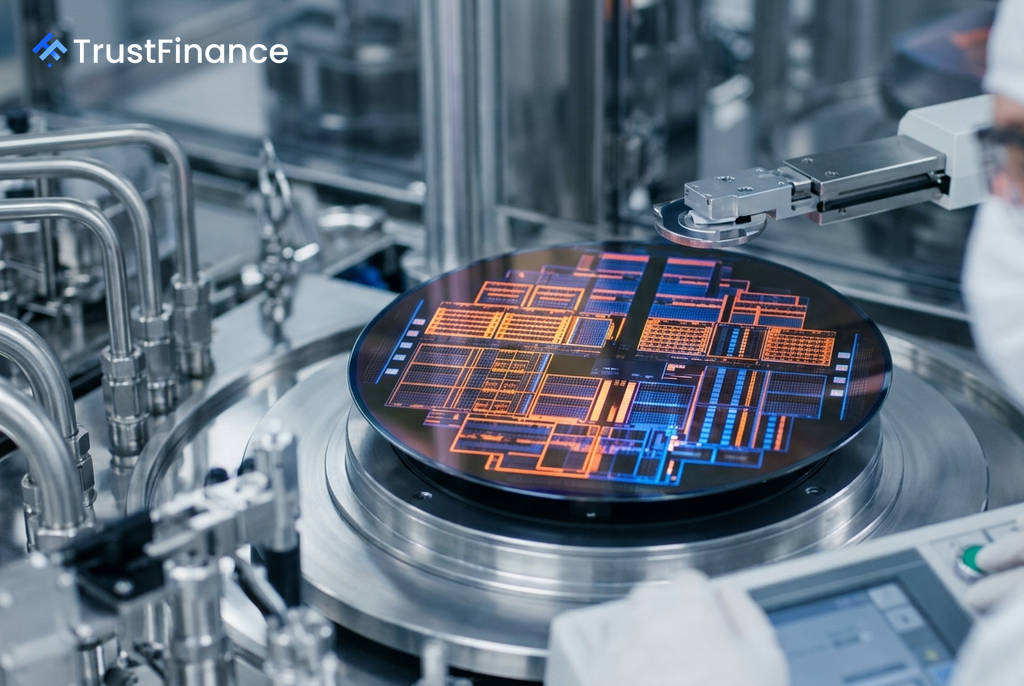
Nvidia has disclosed $279 billion in multi-year purchase commitments, a staggering 135% quarter-over-quarter increase, in a strategic move to secure the supply of high-bandwidth memory (HBM) for its AI accelerators. The decision, revealed in its fiscal Q2 2027 earnings report on August 26, 2026, signals a fundamental shift in the semiconductor industry, where access to supply is becoming a more significant bottleneck than customer demand.
A Strategic Shift to Secure Supply
Nvidia's massive commitment is aimed primarily at locking down HBM, a crucial component for its data center GPUs. This proactive purchasing strategy underscores the company's view that guaranteed access to memory is essential for its future growth and product roadmaps, effectively treating the component like a raw material to be secured years in advance.
The supply constraints are reportedly so acute that Nvidia is evaluating specification changes for its upcoming Rubin Ultra architecture, potentially using 8-Hi HBM4 stacks instead of the more powerful 12-Hi versions. This would allow the company to maximize the number of accelerators it can produce from a limited supply of memory dies, a move that highlights the severity of the bottleneck.
Market Reacts to Supply Squeeze
The announcement sent ripples through the stock market, benefiting memory suppliers while pressuring Nvidia's direct competitors. The market reaction illustrates the new competitive dynamic centered on component access.
 Ad
- Memory Makers: South Korea's SK Hynix (000660) and Samsung Electronics (005930) both saw their shares climb roughly 2.5%, as Nvidia's commitments validate their strong pricing power for years to come.
- Competitors: Advanced Micro Devices (AMD) shares fell 1.87%. The decline reflects investor concern that AMD will now have to compete for leftover memory capacity at potentially higher spot market prices.
- Micron Technology (MU) declined 2.78% despite the positive industry news, in what analysts described as a potential "buy the rumor, sell the news" reaction after the stock's significant gains over the past year.
Reshaping the Competitive Landscape
Nvidia's strategy leverages its immense scale to create a protective "moat" around its supply chain. By pre-paying for critical inputs, the company ensures it receives priority allocation, a dynamic that sources at the Jefferies Semiconductor Conference reportedly confirmed is constraining all compute companies.
This move also comes at a cost to Nvidia itself. The company guided its fourth-quarter gross margins down to a range of 71-72%, attributing the compression to higher memory costs. This indicates that memory producers are now capturing a larger portion of the AI hardware value chain's profits—a margin squeeze that will likely be more severe for competitors without Nvidia's purchasing power.
Read next
More on Stocks
FTC Orders Walmart, Uber, Delta to Disclose Data on Personalized Pricing
The U.S. Federal Trade Commission is demanding nine major companies, including leading retail, travel, and gig economy firms, to provide information on how they use consumer data for setting individual prices and wages.

Google Launches Gemini 4 Carbon AI Model to Bolster Cybersecurity Capabilities
Alphabet's Google has unveiled Gemini 4 Carbon, its latest AI model specifically designed for advanced cybersecurity tasks like vulnerability detection and secure code generation. The launch escalates competition with rivals OpenAI and Anthropic in the enterprise AI market.

Oracle Shares Surge After Unveiling $225 Billion Revenue Target for 2030
Oracle stock rose sharply after the company presented a long-term financial outlook targeting at least $225 billion in annual revenue by fiscal 2030, driven by its expanding AI infrastructure business.

DOJ Scrutinizes Nvidia's $12.9B Hugging Face Deal Amid Broader Antitrust Probe, Sources Say
The U.S. Department of Justice is reportedly examining Nvidia's planned $12.93 billion acquisition of AI platform Hugging Face as part of a wider, ongoing antitrust investigation into the chipmaker's market conduct.