
Story
Norway's $2.3 Trillion Fund Flags Global Decline in Shareholder Rights
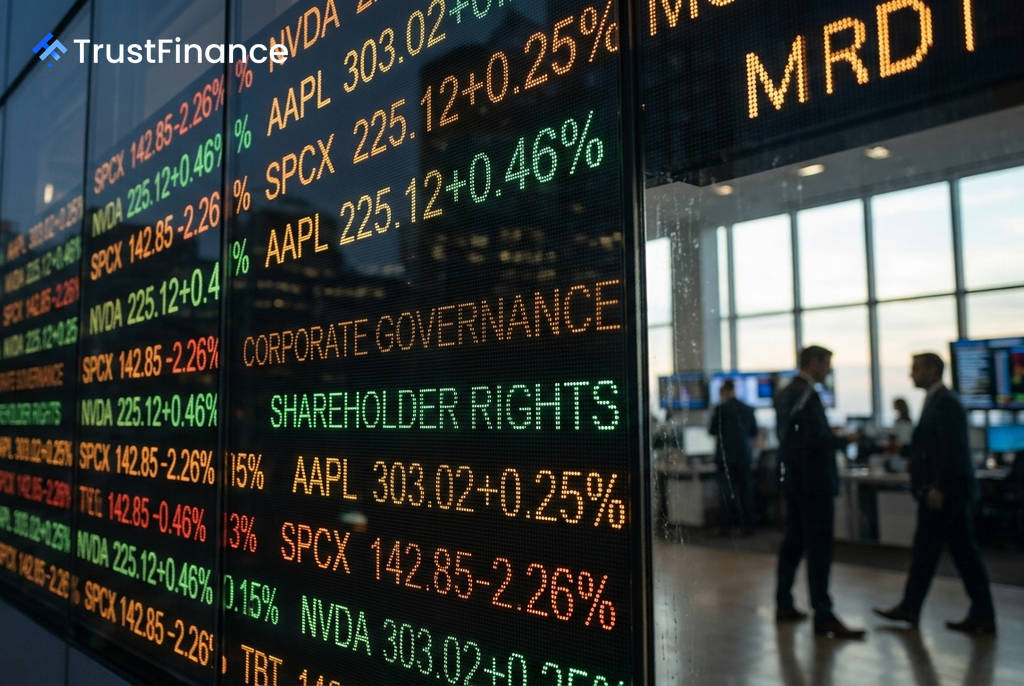
Norway’s $2.3 trillion sovereign wealth fund, the world's largest single stock market investor, is sounding the alarm over a global erosion of shareholder rights. Officials from the fund warned that corporate governance standards are weakening as regulations increasingly favor company founders and insiders over independent investors.
Key Concerns Voiced
Investing Norway's state oil and gas revenue, the fund owns an average of 1.5% of every listed company worldwide, giving its views on corporate governance significant weight. Carine Smith Ihenacho, the fund’s chief governance and compliance officer, told Reuters the trend is widespread.
"We are concerned about shareholder rights generally. We are concerned because we’re seeing it’s been diminished in many markets, not just the U.S., but also in the UK, in Europe, in Hong Kong even," Smith Ihenacho said.
According to the fund, the primary areas of concern include:
- Dual-class shares, which grant disproportionate voting power to founders and insiders.
- Weaker reporting requirements, which are becoming more voluntary.
- Restrictions on legal recourse, limiting the ability of shareholders to sue companies and their boards.
Competition for IPOs Blamed
 Ad
The fund’s CEO, Nicolai Tangen, attributed the trend to heightened competition among global stock exchanges to attract new initial public offerings (IPOs). In a joint interview with Reuters, he explained that this rivalry is leading to lower governance standards.
"There is strong competition to get these new IPOs, and therefore they permit more deviations from normality than we have seen before," Tangen said. This dynamic pressures exchanges to relax rules that protect minority shareholders in an effort to secure lucrative new listings.
Governance in Focus
The fund recently disclosed a 0.05% stake in SpaceX, a company where founder Elon Musk holds over 80% of the voting rights. However, fund officials declined to comment specifically on SpaceX's governance.
Speaking more broadly, Smith Ihenacho emphasized the need for safeguards when unequal voting structures are in place. "We also say if you do have different voting rights, maybe (for) a founder, you need certain guardrails," she stated. To counter the broader trend, the fund is actively advocating its position to stock exchanges, regulators, and companies.
Read next
More on Stocks
FTC Orders Walmart, Uber, Delta to Disclose Data on Personalized Pricing
The U.S. Federal Trade Commission is demanding nine major companies, including leading retail, travel, and gig economy firms, to provide information on how they use consumer data for setting individual prices and wages.

Google Launches Gemini 4 Carbon AI Model to Bolster Cybersecurity Capabilities
Alphabet's Google has unveiled Gemini 4 Carbon, its latest AI model specifically designed for advanced cybersecurity tasks like vulnerability detection and secure code generation. The launch escalates competition with rivals OpenAI and Anthropic in the enterprise AI market.

Oracle Shares Surge After Unveiling $225 Billion Revenue Target for 2030
Oracle stock rose sharply after the company presented a long-term financial outlook targeting at least $225 billion in annual revenue by fiscal 2030, driven by its expanding AI infrastructure business.

DOJ Scrutinizes Nvidia's $12.9B Hugging Face Deal Amid Broader Antitrust Probe, Sources Say
The U.S. Department of Justice is reportedly examining Nvidia's planned $12.93 billion acquisition of AI platform Hugging Face as part of a wider, ongoing antitrust investigation into the chipmaker's market conduct.