
Story
Norway Vows to Continue Arctic Drilling Regardless of EU Stance, Minister Says
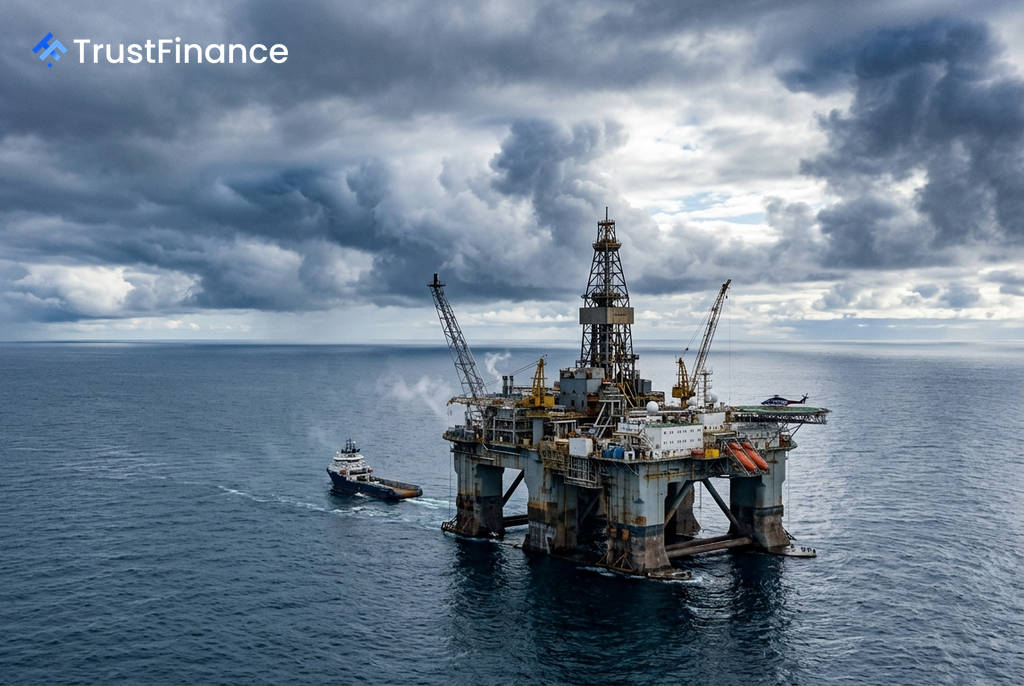
Norway will continue to develop its oil and gas resources in the Arctic Barents Sea regardless of the European Union's position on the matter, according to Energy Minister Terje Aasland. The statement underscores Norway's commitment to maintaining its role as a key energy supplier to Europe, prioritizing national and regional energy security.
Defending Arctic Exploration
In an interview with Reuters, Aasland emphasized that continued activity in the Barents Sea is crucial for both Norwegian and European interests, particularly in the current geopolitical climate. Since Russia's 2022 invasion of Ukraine, Norway has become Europe's largest natural gas supplier, meeting approximately 30% of the gas demand for both the EU and the United Kingdom.
Official forecasts indicate that Norway's oil and gas production will decline sharply after 2030 unless new resources are developed. Aasland stated that the country aims to maintain petroleum production and exports near current levels until at least 2035, a goal that hinges on new discoveries in the Arctic.
Norway has argued to EU officials that the parts of the Barents Sea open to exploration are ice-free, similar to the North Sea, mitigating some environmental risks. "If Norway is to remain a long-term supplier of oil and gas to Europe..., then the Arctic must be part of that discussion," Aasland said.
Market and Geopolitical Implications
This position comes as the European Union re-evaluates its support for a ban on new Arctic drilling, balancing environmental policy with pressing energy security concerns. Aasland asserted Norway's sovereign right to develop its resources, noting that even if the EU were to implement a moratorium on purchasing Arctic energy, the oil and gas would find other markets.
 Ad
- Oil would be sold on global markets.
- Natural gas could be exported worldwide as liquefied natural gas (LNG) from Equinor's (EQNR) Melkoeya plant.
The International Energy Agency's Executive Director, Fatih Birol, has also encouraged the EU to reconsider its opposition, citing the need for future supplies to bolster energy security. However, critics argue that new Arctic projects have long development timelines and would not address Europe's immediate energy challenges.
Shift in Broader Energy Policy
In the same interview, Aasland also signaled a shift in Norway's electricity strategy, dismissing the long-held concept of the country serving as Europe's "green battery." He described the idea as "flawed," stating that Norway alone cannot balance the European power market.
This change in tone follows domestic opposition to new power interconnectors with Britain and Germany, which exposed Norway to volatile and high continental electricity prices. Aasland confirmed that Norway will not build new interconnectors but remains committed to strong power sector cooperation, urging European nations to invest in their own stable power generation.
Read next
More on Stocks
FTC Orders Walmart, Uber, Delta to Disclose Data on Personalized Pricing
The U.S. Federal Trade Commission is demanding nine major companies, including leading retail, travel, and gig economy firms, to provide information on how they use consumer data for setting individual prices and wages.

Google Launches Gemini 4 Carbon AI Model to Bolster Cybersecurity Capabilities
Alphabet's Google has unveiled Gemini 4 Carbon, its latest AI model specifically designed for advanced cybersecurity tasks like vulnerability detection and secure code generation. The launch escalates competition with rivals OpenAI and Anthropic in the enterprise AI market.

Oracle Shares Surge After Unveiling $225 Billion Revenue Target for 2030
Oracle stock rose sharply after the company presented a long-term financial outlook targeting at least $225 billion in annual revenue by fiscal 2030, driven by its expanding AI infrastructure business.

DOJ Scrutinizes Nvidia's $12.9B Hugging Face Deal Amid Broader Antitrust Probe, Sources Say
The U.S. Department of Justice is reportedly examining Nvidia's planned $12.93 billion acquisition of AI platform Hugging Face as part of a wider, ongoing antitrust investigation into the chipmaker's market conduct.