
Story
Morgan Stanley Outlines Four Key Catalysts for SpaceX Through Year-End
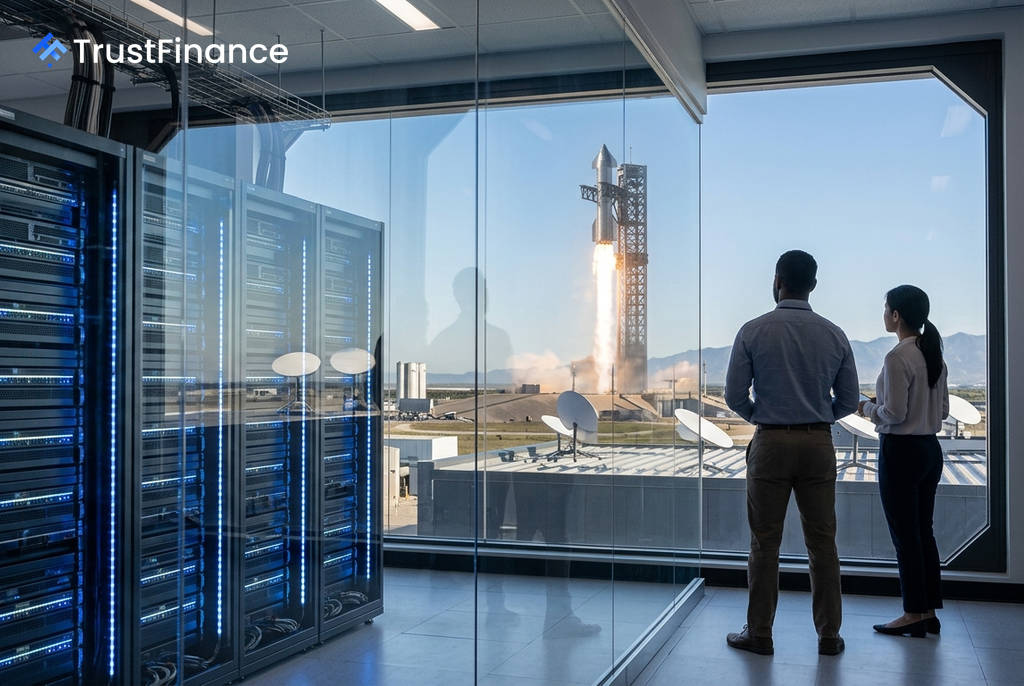
Morgan Stanley has highlighted four potential catalysts for SpaceX that could significantly influence the private aerospace company's valuation through the end of the year. In a recent note, the investment bank reiterated its Overweight rating and $300 price target, pointing to upcoming milestones in artificial intelligence, launch vehicle development, and computing infrastructure.
AI and Starship Developments
Two of the most immediate catalysts involve SpaceX's AI ambitions and its next-generation rocket program. The bank noted the recent release of Grok 4.6, which it said is approaching the frontier of AI performance. Upcoming versions, including Grok 4.7 and Grok 5, are expected within weeks and by year-end, respectively.
Morgan Stanley emphasized that actual usage will be a more critical metric than model performance alone. The bank will be watching for more detail on user adoption following the acquisition of Cursor and in future earnings reports. The second major event is Starship Flight 14, which the bank anticipates in early September, pending a static fire test and FAA approval. Analysts described the test flight as a potential "major volatility event" that could determine if the vehicle becomes fully operational this year.
 Ad
Broader Computing and Market Trends
The firm also identified two broader market trends that could positively impact SpaceX's financial models. The first is the rising price of AI computing services. Analysts pointed to a recent ~25% price increase by cloud provider CoreWeave as an indication that Morgan Stanley's own pricing assumptions for SpaceX's future compute offerings may be too conservative.
The fourth catalyst is a long-term vision for a distributed inference cloud powered by Starlink. Morgan Stanley projects a future where a vast network of connected devices, such as robots, could leverage this network for computing power. The bank's model estimates a potential for 2.2 billion robots by 2040, representing an aggregate compute capacity of 1.1 terawatts that could be connected via Starlink.
Read next
More on Stocks
FTC Orders Walmart, Uber, Delta to Disclose Data on Personalized Pricing
The U.S. Federal Trade Commission is demanding nine major companies, including leading retail, travel, and gig economy firms, to provide information on how they use consumer data for setting individual prices and wages.

Google Launches Gemini 4 Carbon AI Model to Bolster Cybersecurity Capabilities
Alphabet's Google has unveiled Gemini 4 Carbon, its latest AI model specifically designed for advanced cybersecurity tasks like vulnerability detection and secure code generation. The launch escalates competition with rivals OpenAI and Anthropic in the enterprise AI market.

Oracle Shares Surge After Unveiling $225 Billion Revenue Target for 2030
Oracle stock rose sharply after the company presented a long-term financial outlook targeting at least $225 billion in annual revenue by fiscal 2030, driven by its expanding AI infrastructure business.

DOJ Scrutinizes Nvidia's $12.9B Hugging Face Deal Amid Broader Antitrust Probe, Sources Say
The U.S. Department of Justice is reportedly examining Nvidia's planned $12.93 billion acquisition of AI platform Hugging Face as part of a wider, ongoing antitrust investigation into the chipmaker's market conduct.