
Story
Morgan Stanley Forecasts Fed to Hold Rates Through Year-End on Disinflation
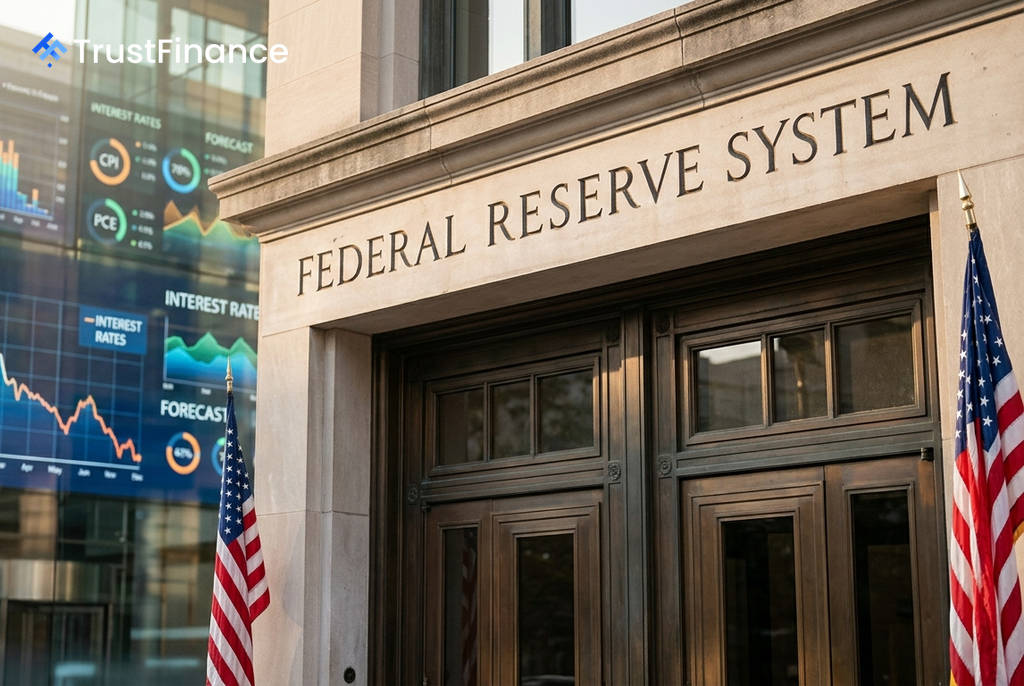
Morgan Stanley analysts expect the Federal Reserve to keep its policy rate on hold through the end of the year, citing a clear and ongoing trend of disinflation. The investment bank's base case sees the central bank maintaining its current stance before beginning a cycle of rate reductions in early 2027.
Fed on Hold Amid Cooling Inflation
In a recent note, Morgan Stanley outlined its forecast for the Fed to remain on the sidelines for the remainder of the year. This view is supported by the firm's projection for July's Personal Consumption Expenditures (PCE) price index, the Fed's preferred inflation gauge.
The bank forecasts a modest 0.14% month-over-month increase in headline PCE and a 0.23% rise in core PCE, which excludes volatile food and energy items. According to the firm's tracking, this would bring the three-month annualized core PCE pace to 2.79%, down from 2.89% in June, reinforcing the disinflationary narrative.
Key Drivers of the Downward Trend
Morgan Stanley's disinflation thesis rests on several key factors that are expected to keep price pressures muted. The firm believes the primary drivers have already taken hold, a view supported by recent Consumer Price Index (CPI) data.
Key factors cited by the firm include:
 Ad
- Completed Tariff Pass-through: Core goods in the CPI have been flat on average since January, with three-month and six-month annualized rates at -0.1% and 0.4% respectively, suggesting the inflationary impact of past tariffs has ended.
- Stable Energy Prices: The bank's baseline scenario assumes West Texas Intermediate (WTI) crude oil will remain around $80 per barrel, preventing a resurgence of energy-driven inflation.
- Moderating Shelter Costs: A continued cooling in housing and rent inflation is also anticipated to contribute to the downward trend.
Analysts noted, however, that strong demand related to artificial intelligence could continue to exert upward pressure on electronics prices.
Outlook for 2027 and Potential Risks
Looking ahead, Morgan Stanley forecasts the Fed will begin easing its policy next year with a total of 50 basis points in cuts. The firm has penciled in two 25-basis-point reductions, one in March and another in June 2027.
This projection is contingent on core PCE inflation falling to 3.0% year-over-year by December of this year and further declining to 2.4% by the end of 2027. The firm acknowledges that risks to its outlook are skewed toward a more restrictive, or "firmer," policy path should supply-side shocks reappear or if AI-related demand intensifies more than expected.
Read next
More on Stocks
FTC Orders Walmart, Uber, Delta to Disclose Data on Personalized Pricing
The U.S. Federal Trade Commission is demanding nine major companies, including leading retail, travel, and gig economy firms, to provide information on how they use consumer data for setting individual prices and wages.

Google Launches Gemini 4 Carbon AI Model to Bolster Cybersecurity Capabilities
Alphabet's Google has unveiled Gemini 4 Carbon, its latest AI model specifically designed for advanced cybersecurity tasks like vulnerability detection and secure code generation. The launch escalates competition with rivals OpenAI and Anthropic in the enterprise AI market.

Oracle Shares Surge After Unveiling $225 Billion Revenue Target for 2030
Oracle stock rose sharply after the company presented a long-term financial outlook targeting at least $225 billion in annual revenue by fiscal 2030, driven by its expanding AI infrastructure business.

DOJ Scrutinizes Nvidia's $12.9B Hugging Face Deal Amid Broader Antitrust Probe, Sources Say
The U.S. Department of Justice is reportedly examining Nvidia's planned $12.93 billion acquisition of AI platform Hugging Face as part of a wider, ongoing antitrust investigation into the chipmaker's market conduct.