
Story
Morgan Stanley: China's Premium Auto Segment Shows Resilience Amid Market Weakness
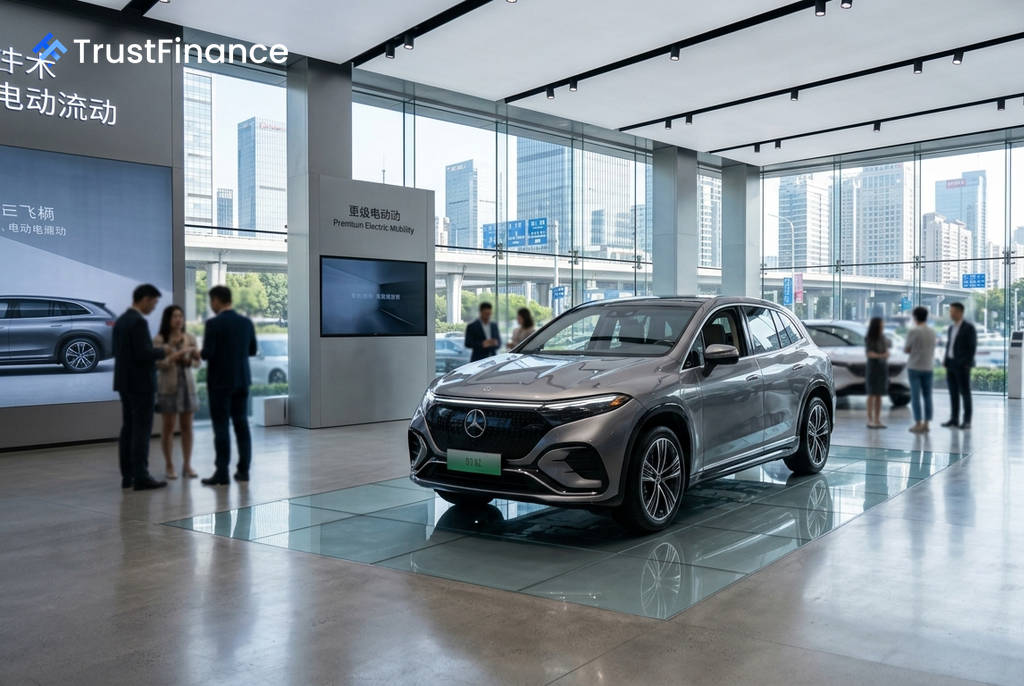
China's premium auto segment is proving more resilient than the mass market amid weak consumer demand and an accelerated pace of new vehicle launches, according to a Wednesday note from Morgan Stanley analysts.
Competitive Landscape Intensifies
Original equipment manufacturers (OEMs) are rushing to introduce new models before the traditional peak sales season, creating an intensely competitive environment, the firm noted. This has put a spotlight on which price segments are positioned for a potential recovery in the second half of 2026.
Filings with the Ministry of Industry and Information Technology show that competition is fiercest in the RMB 200,000-300,000 price range, which accounts for approximately 50% of new launches. Many of these new models are larger five- and six-seat family SUVs with dual powertrain options.
Diverging Fortunes by Price Point
The overall passenger vehicle market remains concentrated in the mass and mid-market segments, but these areas are showing significant weakness. According to the report, sales in the most popular price brackets fell sharply year-over-year in July:
 Ad
- RMB 100,000-150,000: Sales declined by 24%.
- RMB 150,000-200,000: Sales fell by 27%.
In contrast, the premium segment priced at RMB 500,000 and above was the only one to post sales growth, though it represents just 1.3% of total market volume. The RMB 200,000-300,000 segment also showed relative resilience despite the high level of competition.
Powertrain Shift Continues
The transition to New Energy Vehicles (NEVs) continues to accelerate, with their market penetration rising to 63.5% in July from 37.3% in January. Battery electric vehicles (BEVs) have been the most resilient powertrain, with year-to-date sales down just 5% compared to a 19% decline for the overall market.
This robust performance lifted the market share of BEVs to 43% in July from 23% in January. However, plug-in hybrids (PHEVs) remained a weak spot for NEVs, with July sales down 20% year-over-year. Meanwhile, internal combustion engine (ICE) vehicles continued to lose ground, with their market share falling to 31% in July.
Read next
More on Stocks
FTC Orders Walmart, Uber, Delta to Disclose Data on Personalized Pricing
The U.S. Federal Trade Commission is demanding nine major companies, including leading retail, travel, and gig economy firms, to provide information on how they use consumer data for setting individual prices and wages.

Google Launches Gemini 4 Carbon AI Model to Bolster Cybersecurity Capabilities
Alphabet's Google has unveiled Gemini 4 Carbon, its latest AI model specifically designed for advanced cybersecurity tasks like vulnerability detection and secure code generation. The launch escalates competition with rivals OpenAI and Anthropic in the enterprise AI market.

Oracle Shares Surge After Unveiling $225 Billion Revenue Target for 2030
Oracle stock rose sharply after the company presented a long-term financial outlook targeting at least $225 billion in annual revenue by fiscal 2030, driven by its expanding AI infrastructure business.

DOJ Scrutinizes Nvidia's $12.9B Hugging Face Deal Amid Broader Antitrust Probe, Sources Say
The U.S. Department of Justice is reportedly examining Nvidia's planned $12.93 billion acquisition of AI platform Hugging Face as part of a wider, ongoing antitrust investigation into the chipmaker's market conduct.