
Story
Midterm Election Years Historically Bring Second-Half Stock Volatility, RBC Finds
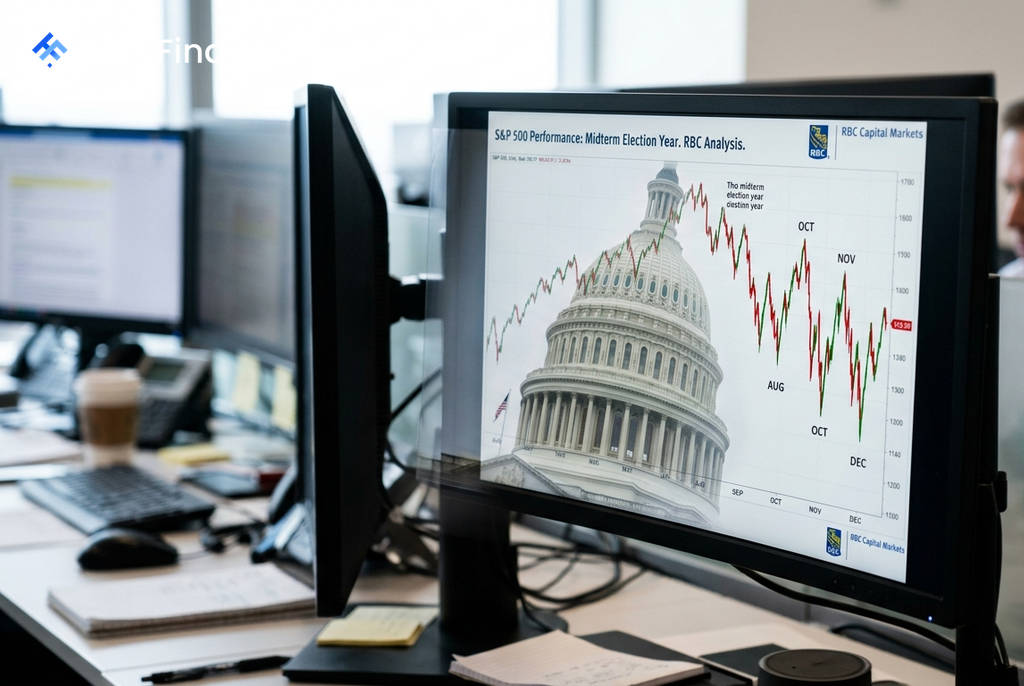
U.S. equity markets have historically experienced significant volatility in the second half of midterm election years, a pattern that could offer a roadmap for potential risks in the months ahead, according to an analysis by RBC Capital Markets.
A History of Choppy Markets
In a review of the last two midterm election cycles, 2018 and 2022, RBC's top strategist Lori Calvasina noted a distinct and choppy trading pattern. In both years, the S&P 500 peaked in the early fall, troughed in October, saw another peak in November, and then fell to a final trough in December.
While these periods involved significant market swings, Calvasina observed that the volatility ultimately helped establish more durable market lows that held into the following year. However, the analysis stressed that elections were just one of several contributing factors, with broader economic concerns also weighing on investor sentiment.
Key Drivers and Sector Rotations
The market turbulence in both periods was not solely due to political uncertainty. RBC pointed to other major drivers, including Federal Reserve policy and interest rate concerns in both 2018 and 2022. Additional pressures included trade policy in 2018 and a tech earnings recession alongside the Russia-Ukraine war in 2022.
 Ad
This dynamic backdrop led to clear sector rotations:
- During drawdowns: Defensive sectors like Consumer Staples and Health Care outperformed.
- During rebounds: Cyclical sectors such as Financials, Industrials, and Materials tended to lead the recovery.
Current Outlook and Tail Risks
RBC clarified that it is not forecasting a repeat of this turbulence but views the historical pattern as a useful exercise for assessing potential tail risks. The firm remains constructive on the S&P 500 over the next year, with the interest rate backdrop cited as the biggest risk to that outlook.
Barring a significant rise in recession risk or an interest rate shock, RBC anticipates that any market pullbacks would likely be contained within a 5% to 10% range. The bank's current factor work also shows high price momentum stocks have begun outperforming again, while forward price-to-earnings ratios for the S&P 500 and Nasdaq 100 are sitting in the middle of their post-COVID range.
Read next
More on Stocks
FTC Orders Walmart, Uber, Delta to Disclose Data on Personalized Pricing
The U.S. Federal Trade Commission is demanding nine major companies, including leading retail, travel, and gig economy firms, to provide information on how they use consumer data for setting individual prices and wages.

Google Launches Gemini 4 Carbon AI Model to Bolster Cybersecurity Capabilities
Alphabet's Google has unveiled Gemini 4 Carbon, its latest AI model specifically designed for advanced cybersecurity tasks like vulnerability detection and secure code generation. The launch escalates competition with rivals OpenAI and Anthropic in the enterprise AI market.

Oracle Shares Surge After Unveiling $225 Billion Revenue Target for 2030
Oracle stock rose sharply after the company presented a long-term financial outlook targeting at least $225 billion in annual revenue by fiscal 2030, driven by its expanding AI infrastructure business.

DOJ Scrutinizes Nvidia's $12.9B Hugging Face Deal Amid Broader Antitrust Probe, Sources Say
The U.S. Department of Justice is reportedly examining Nvidia's planned $12.93 billion acquisition of AI platform Hugging Face as part of a wider, ongoing antitrust investigation into the chipmaker's market conduct.