
Story
Microsoft and Meta Earnings Highlight Diverging AI Investment Returns
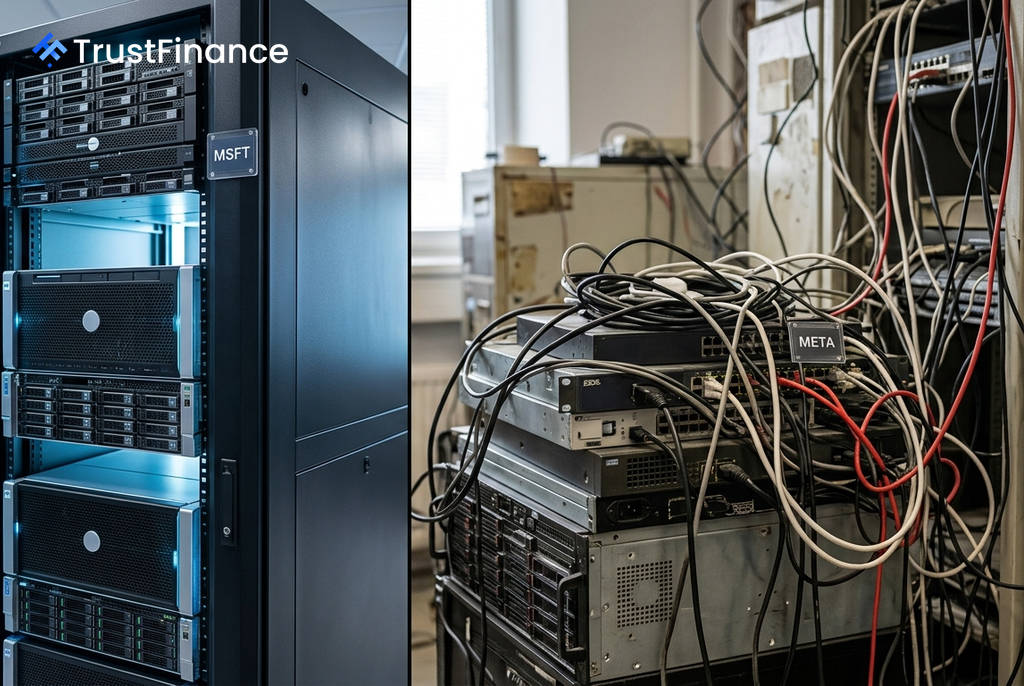
The latest quarterly earnings from Microsoft (MSFT) and Meta Platforms (META) have provided a clear, real-time stress test of the companies' divergent investment strategies, validating a market thesis that has pitted the two tech giants against each other. Microsoft posted its largest single-day stock surge since 2008 following its report, while Meta saw its free cash flow plummet to near break-even levels.
A Tale of Two Earnings Reports
The financial results released on July 29 painted sharply contrasting pictures. Microsoft demonstrated strong execution and immediate returns on its investments, while Meta's heavy spending weighed heavily on its bottom line.
- Microsoft (MSFT): The company beat earnings per share (EPS) estimates by 11.79% ($4.74 vs. an estimated $4.24) and surpassed revenue expectations by $2.4 billion. Its stock reacted by gaining 20.96% in the subsequent week.
- Meta Platforms (META): While narrowly beating revenue consensus, Meta missed EPS estimates by 13.81% ($6.18 vs. an estimated $7.17). The most significant development was the collapse of its free cash flow, a stark reversal for the historically cash-rich company.
Diverging CapEx Strategies
At the core of the divergence is how each company is deploying capital. Microsoft's spending on infrastructure, including the 88 data centers it opened in fiscal 2026, is directly monetizing through its Azure cloud platform, Copilot enterprise licensing, and contracted performance obligations.
 Ad
In contrast, Meta's spending has become a significant financial drain. Analysts at Needham, who maintain a Hold rating, pointed to all-time high stock-based compensation per employee and rising off-balance-sheet financing. This spending pressure is the primary driver behind the company's EPS miss and free cash flow deterioration.
Market Reaction and Investor Dilemma
The market's sharp reaction has complicated the timing for investors looking to act on this divergence. With Microsoft's stock already up significantly, much of the positive news may be priced in, potentially compressing future returns for new long positions.
Conversely, shorting Meta has become riskier. The stock is already down 31% from its 52-week high, creating the potential for a significant short squeeze. Bullish counterarguments persist, with Barclays maintaining an Overweight rating and a $780 price target, citing a potential multi-billion dollar revenue opportunity from Meta's AI strategy. The next major catalyst for the company will be its third-quarter earnings report, scheduled for October 28.
Read next
More on Stocks
FTC Orders Walmart, Uber, Delta to Disclose Data on Personalized Pricing
The U.S. Federal Trade Commission is demanding nine major companies, including leading retail, travel, and gig economy firms, to provide information on how they use consumer data for setting individual prices and wages.

Google Launches Gemini 4 Carbon AI Model to Bolster Cybersecurity Capabilities
Alphabet's Google has unveiled Gemini 4 Carbon, its latest AI model specifically designed for advanced cybersecurity tasks like vulnerability detection and secure code generation. The launch escalates competition with rivals OpenAI and Anthropic in the enterprise AI market.

Oracle Shares Surge After Unveiling $225 Billion Revenue Target for 2030
Oracle stock rose sharply after the company presented a long-term financial outlook targeting at least $225 billion in annual revenue by fiscal 2030, driven by its expanding AI infrastructure business.

DOJ Scrutinizes Nvidia's $12.9B Hugging Face Deal Amid Broader Antitrust Probe, Sources Say
The U.S. Department of Justice is reportedly examining Nvidia's planned $12.93 billion acquisition of AI platform Hugging Face as part of a wider, ongoing antitrust investigation into the chipmaker's market conduct.