
Story
Michelin Guide's Shenzhen Debut Highlights Steep Dining Costs as Guangzhou Awaits 3-Star Rating
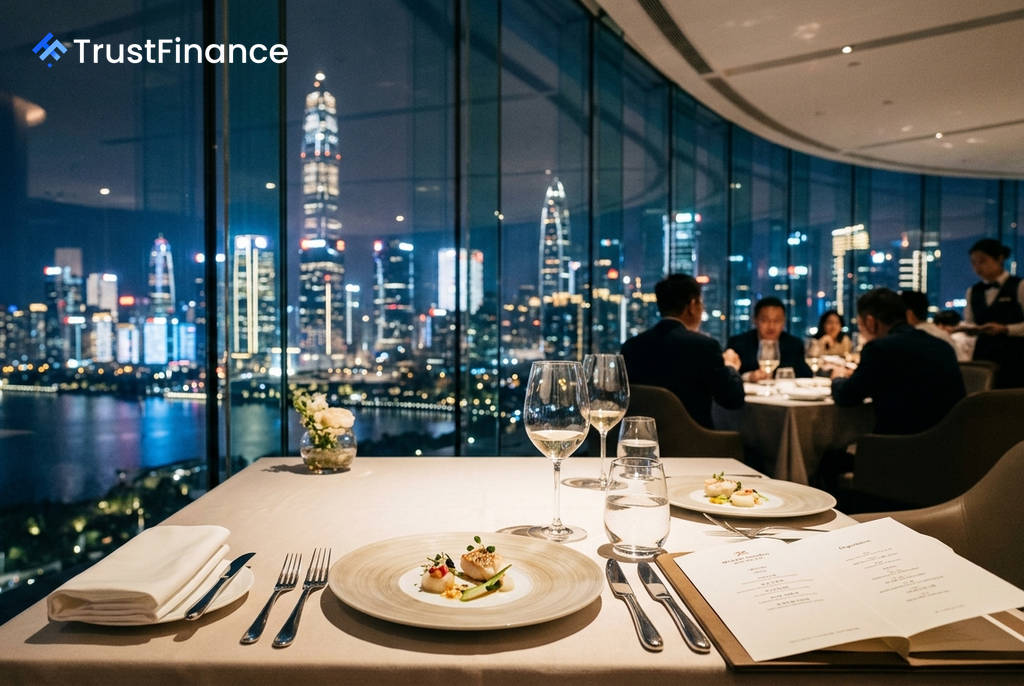
The Michelin Guide has released its first-ever combined restaurant list for the southern Chinese hubs of Guangzhou and Shenzhen, awarding stars to 27 establishments but once again leaving Guangzhou without a top-tier three-star rating. The 2026 guide's inclusion of Shenzhen for the first time highlights the city's burgeoning and costly fine-dining scene.
Shenzhen's High-Priced Honorees
Shenzhen, often dubbed a "food desert" for its fast-paced culture, made a strong debut with seven starred restaurants, including two two-star and five one-star establishments. However, this recognition comes with a significant price tag. According to data from a local lifestyle service platform cited by *Consumer Report*, all seven restaurants have an average per-person cost exceeding ¥800.
Among the most expensive are:
- Ensue (one star): ¥2,164 per person
- Fumée (one star): ¥1,680 per person
- Opus 388 (one star): ¥1,488 per person
The cost at Ensue is reportedly equivalent to the price of 140 bowls of Longjiang pork trotter rice, a popular local staple, underscoring the vast gap between everyday fare and Michelin-level dining in the city.
A Wider Spectrum in Guangzhou
 Ad
In contrast, Guangzhou's 20 starred restaurants exhibit a much broader range of price points. The average cost spans from ¥158 at the casual Xinji Seafood Restaurant, a one-star holder, to ¥2,217 at Lanting, a one-star Sichuan restaurant housed in a historic villa. This demonstrates a more diverse and accessible fine-dining market compared to its neighbor.
Notably, the guide shows that a higher star count does not always equate to a higher price. Several one-star restaurants in both cities, such as Shenzhen's Ensue, have a higher per-person cost than two-star establishments like Dongwan and Yunjing, which average around ¥1,020.
The Business of Stars
The pursuit of Michelin stars has become a significant objective for cities aiming to boost their international profile and attract tourism. The ratings serve as a global benchmark for culinary excellence, influencing tourist decisions and driving significant foot traffic to recognized establishments. Some municipal governments actively encourage this, with cities like Chengdu previously offering rewards of up to ¥1 million for newly starred restaurants.
For Guangzhou, the continued absence of a three-star restaurant nine years after the guide's arrival remains a point of contention, especially as fellow first-tier cities like Beijing and Shanghai secured three-star ratings in their inaugural guides. However, a Michelin star is not a permanent guarantee of success. The 2026 guide saw Guangzhou's one-star Yue restaurant delisted after closing, while Peninsula Famous Cuisine (Tianhe) was downgraded after holding a star for four years.
Read next
More on Stocks
FTC Orders Walmart, Uber, Delta to Disclose Data on Personalized Pricing
The U.S. Federal Trade Commission is demanding nine major companies, including leading retail, travel, and gig economy firms, to provide information on how they use consumer data for setting individual prices and wages.

Google Launches Gemini 4 Carbon AI Model to Bolster Cybersecurity Capabilities
Alphabet's Google has unveiled Gemini 4 Carbon, its latest AI model specifically designed for advanced cybersecurity tasks like vulnerability detection and secure code generation. The launch escalates competition with rivals OpenAI and Anthropic in the enterprise AI market.

Oracle Shares Surge After Unveiling $225 Billion Revenue Target for 2030
Oracle stock rose sharply after the company presented a long-term financial outlook targeting at least $225 billion in annual revenue by fiscal 2030, driven by its expanding AI infrastructure business.

DOJ Scrutinizes Nvidia's $12.9B Hugging Face Deal Amid Broader Antitrust Probe, Sources Say
The U.S. Department of Justice is reportedly examining Nvidia's planned $12.93 billion acquisition of AI platform Hugging Face as part of a wider, ongoing antitrust investigation into the chipmaker's market conduct.